
Car camping has a funny little reputation, doesn’t it? Some people hear it and picture dusty boots, tangled cords, and someone boiling instant noodles beside a tire. Meanwhile, I see something much better. I see cozy blankets, smart storage, quiet mornings, and a setup that says, “Yes, I planned this.”
I’ve found that this topic hits a sweet spot between freedom and full-blown chaos. Living in your car, even for a weekend, sounds wild at first. Then you realize how much sense it can make. No tent poles fighting you. No hotel prices making your wallet blink. Just your vehicle, your gear, your snacks, and a decent plan.
As a mom in Orlando, I tend to notice heat, tight spaces, and overpacked trunks fast. A messy car can turn dramatic when the sun starts acting personal. So, for me, the charm comes from making the space work without making it fussy.
This is where the fun starts. A cute setup matters, but comfort matters more. Good gear matters, but not every gadget deserves your money. A dreamy car camping aesthetic sounds lovely, but nobody wants to sleep beside a tower of tumbling bins.
So let’s talk about the pretty stuff and the practical stuff. We’ll also get into the tiny mistakes that can ruin the vibe before bedtime. Because tiny spaces can be charming, but they demand manners, airflow, and a little restraint.
Some of the links on this page are affiliate links. That means if you click and make a purchase, I may earn a small commission at no extra cost to you. If you’re curious about the fine print, you can check out my full disclosure.
Car Camping Setup That Doesn’t Look Like Chaos
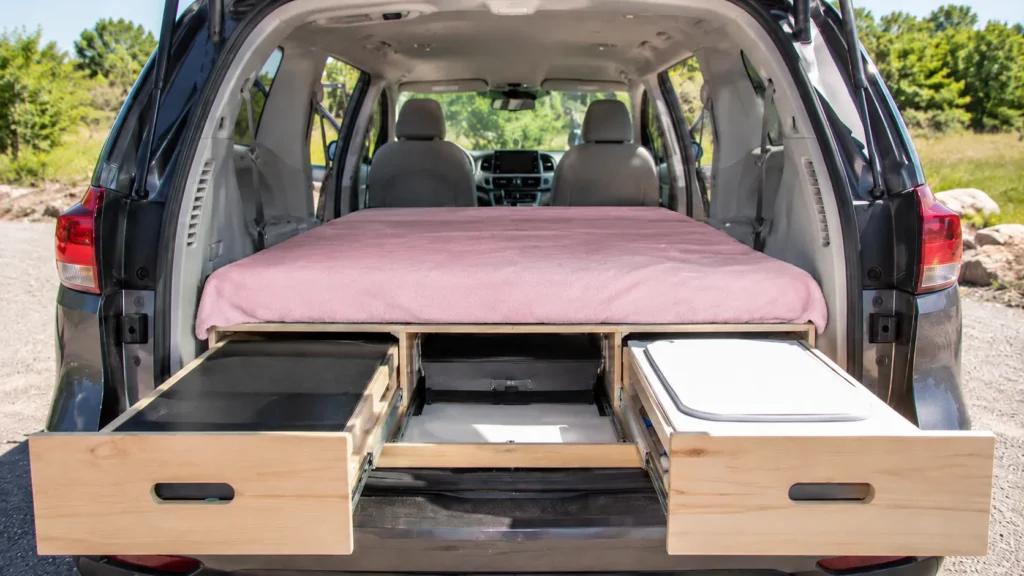
A car camping setup can go cute or chaotic very quickly. The difference usually comes down to zones, not fancy gear. I’ve found that the best setups make every item earn its spot. If something gets used once and blocks your pillow, it’s causing drama.
Start with the sleeping space because tired people lose patience fast. Your bed should stay clear, flat, and easy to reach. However, that doesn’t mean the whole car must look empty. It means the important stuff needs a home before sunset.
Here’s the funny part. Aesthetic setups often look effortless because someone did the boring thinking first. They decided where shoes go. One bin held kitchen items. Bedtime items stayed separate from cooking items. That’s not overthinking. That’s future-you protection.
I tend to notice that people focus on the view first. Yes, a lake outside the hatch looks dreamy. Still, nobody enjoys climbing over a cooler at 11:43 p.m. while whisper-yelling, “Where is my charger?” Beauty needs a backup plan.
A good car camping setup keeps your sleep area sacred. Use the front seats for items you won’t need overnight. Keep water, wipes, a flashlight, and layers close. Also, keep shoes contained, because dirty shoes spread nonsense everywhere.
One more thing matters here. Leave a tiny walkway, even if it’s just a clear path. Your sleepy brain will thank you later. Nobody makes wise choices while stepping over a cooler in socks after dark, especially half-awake and grumpy.
The reframe is simple. Your vehicle isn’t just transport. It becomes a tiny room with wheels and opinions. Once you treat it like a room, the whole setup gets easier.
Living In Your Car Without Making It Weird
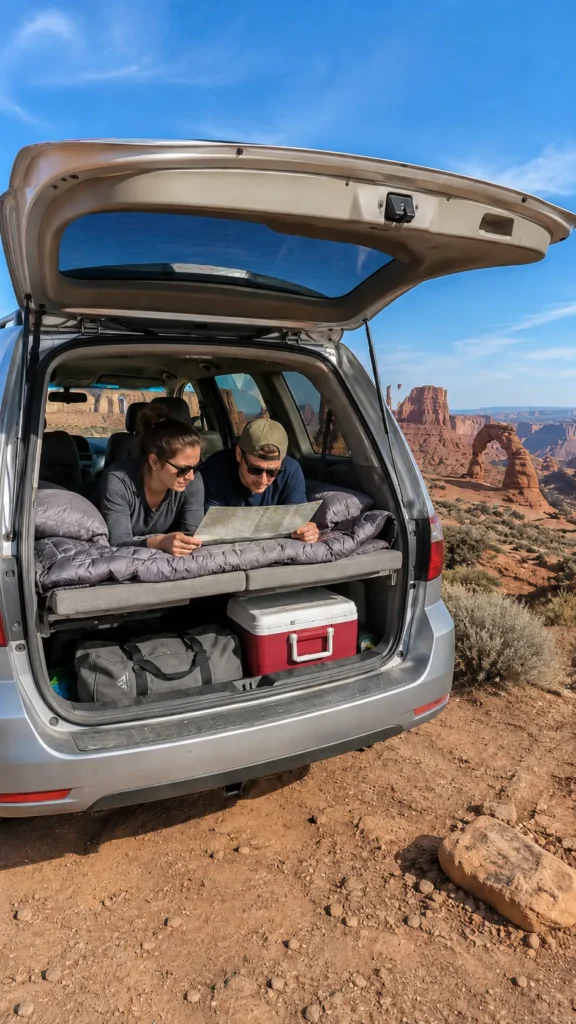
Living in your car can sound intense, even when it’s temporary or travel-based. I get why. The phrase carries a lot of weight. However, SUV living, road trips, and weekend camping life can be practical choices. They can also be peaceful when handled with care.
The trick is separating freedom from friction. Freedom says you can wake up near trees. Friction says you can’t find clean socks. One feels romantic. The other feels like a laundry basket with headlights.
Car camping works better when daily routines stay simple. You don’t need a tiny apartment on wheels. You need repeatable systems that keep you rested, clean, fed, and sane.
A few tiny comforts carry more weight than they should. These are the quiet helpers I’d keep close:
- A small toiletry pouch that never leaves one spot.
- A laundry bag that closes fully.
- A water jug with an easy pour spout.
- Slip-on shoes for quick bathroom trips.
- A window cover system that fits without daily wrestling.
- A trash bag that gets emptied every single morning.
That last one sounds dull. Yet it changes everything. Trash makes small spaces feel smaller, moodier, and weirdly louder.
I’ve found that privacy also decides the vibe. Good window covers help your brain settle down. Meanwhile, cracked windows and bug screens help the air stay less cave-like. Nobody wants a cozy setup that turns into a steamed-up mystery box.
Here’s the softer truth. Living in your car doesn’t need to mean roughing it. Sometimes it means choosing less space so you can have more movement. That trade can feel surprisingly good.
Also, normal routines still count. Brush your teeth, change clothes, and reset the front seat. Tiny routines tell your brain, “We’re safe, not stranded.” That matters more than another gadget.
Small Car Camping Can Still Feel Cute
Small car camping gets dismissed too quickly. People see a compact car and assume the dream has left the parking lot. I disagree, politely but firmly. A smaller vehicle can still work when the setup respects its limits.
The biggest mistake is trying to copy a huge SUV layout. That’s where everything gets silly. A small car needs a different rhythm. Less bulky gear. More soft storage. Fewer “just in case” items. Basically, less circus, more cozy nest.
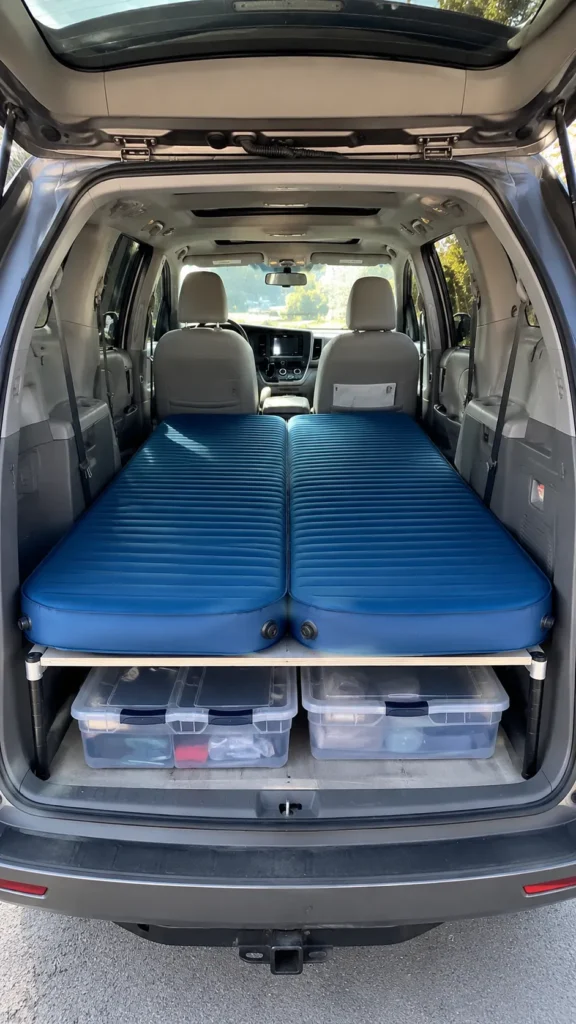
I’ve found that soft bags usually beat hard bins in tiny spaces. They squish, slide, and tuck into odd corners. However, one firm bin can help anchor the kitchen gear. Too many bins turn the backseat into a plastic obstacle course.
A sleeping platform may help, but it isn’t always necessary. Some people fold seats down and use a thick mattress pad. Others remove headrests or build a flat base. The goal isn’t perfection. The goal is sleeping without waking up shaped like a question mark.
Small car camping also benefits from visual calm. Pick two or three main colors for blankets, bins, and pouches. That sounds extra, I know. Still, fewer colors make a cramped space feel less scrambled.
The car camping aesthetic isn’t only about pretty photos. It also helps your brain read the space faster. When everything has a look and location, you spend less time digging.
Here’s the surprise. A small car can force better choices. You bring what matters, skip the bulky nonsense, and learn what comfort really needs. That’s not a downgrade. That’s editing with seat belts.
Plus, smaller spaces warm up fast and cool down slowly. So, airflow and shade matter. Park smart, crack windows safely, and keep layers close. Comfort starts before the blanket even comes out.
Car Camping Gear Worth The Trunk Space
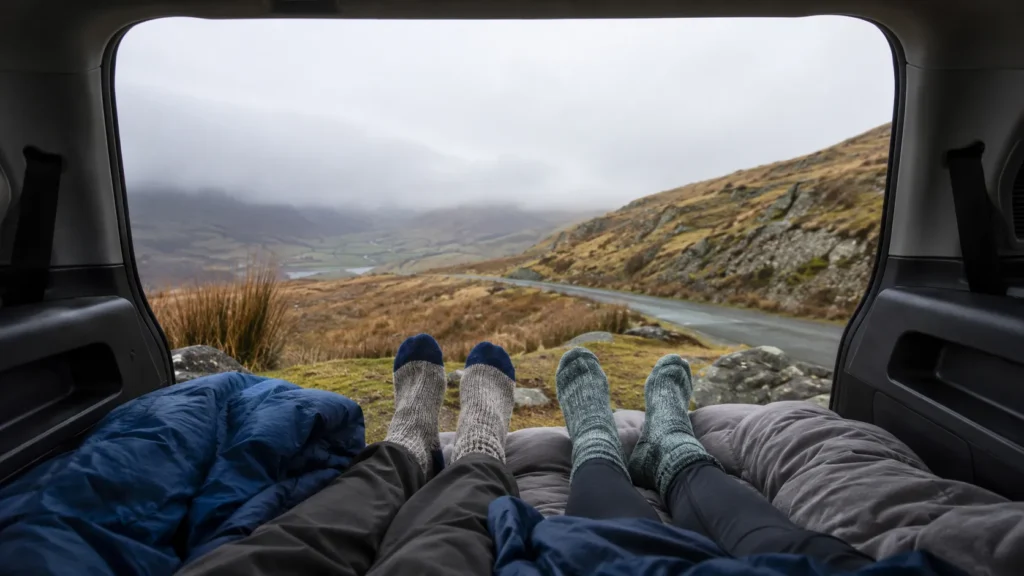
Car camping gear can become a slippery little shopping rabbit hole. One minute you need a mattress. Next, you’re comparing collapsible sinks like you’re building a boutique hotel. I understand the temptation. Gear promises control, and control sounds delicious before a trip.
Still, not every item deserves precious trunk space. The best gear solves repeated problems. It doesn’t create new ones with straps, instructions, and mystery parts.
I’d focus on comfort, safety, and simple cleanup first. Cute extras can come later. Or never. Some extras look amazing online, then sit unused beside the granola bars.
Worthwhile basics usually earn their spot fast. I’d start with these:
- Comfortable sleep pad or car mattress.
- Fitted window covers for privacy and temperature help.
- Battery bank or portable power station.
- Headlamp or small lantern.
- Easy-pour water jug and refillable bottle.
- Wipes, hand sanitizer, and quick-dry towels.
- Compact cooler or food bag.
- Basic first aid kit.
- Small broom or handheld vacuum.
- Bug screens or mesh for cracked windows.
Notice what’s missing. I’m not starting with twinkle lights, matching mugs, or a tiny rug. Those can be adorable. However, they won’t help much if your back hurts by midnight.
That said, I’m not anti-cute. I’m pro-order. Add one cozy blanket, a little lantern, or a pretty pouch after the basics. Then the aesthetic supports the setup instead of bossing it around.
Car camping gets easier when gear has a job. If an item can’t explain itself, it may need to stay home. I’m looking at you, oversized camp chair with main-character energy.
Also, buy for your real weather. Hot nights need airflow and shade. Cold nights need layers and insulation. Weather doesn’t care if your storage cubes match.
Car Tent Camping, SUV Living, And The Space Game
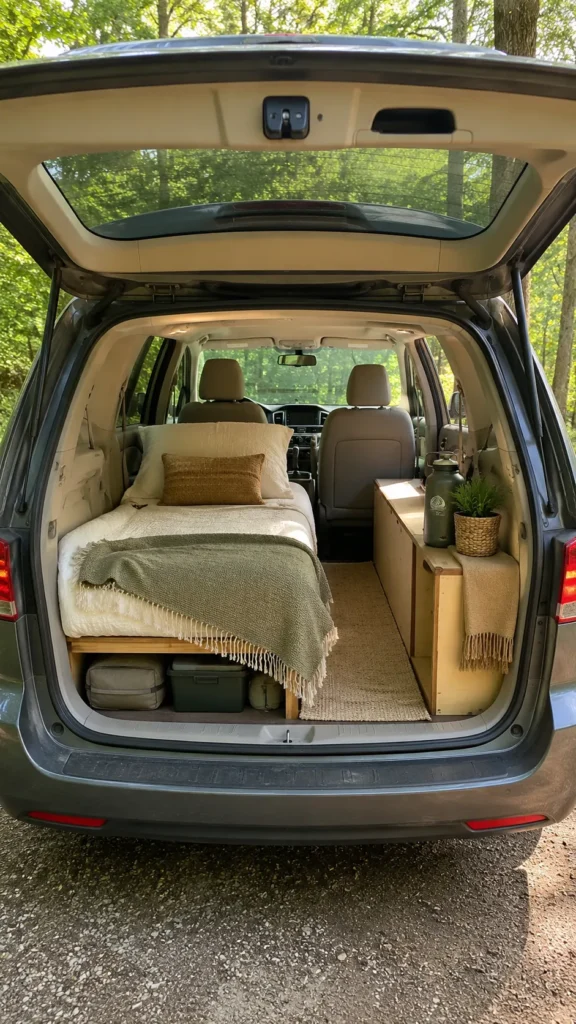
Car tent camping sits between regular camping and full vehicle sleeping. It gives you more room without fully leaving the car comfort zone. That can work beautifully, especially when you want storage, airflow, or a place to stand.
Still, a car tent isn’t always needed. I know. Controversial little thought. Some trips need fast setup more than extra square footage. If you arrive late or move often, a simple sleep-in-car layout may win.
SUV living usually gives more options. You can fold seats, add a platform, or store gear underneath. However, more space can tempt you to pack more stuff. Then your roomy SUV becomes a rolling attic with cupholders.
Overland camping has a rugged look that people love. I get it. The gear looks serious, organized, and ready for adventure. Yet most casual campers don’t need a full overland build. You can borrow the smart parts without buying the whole personality.
Use the overland camping mindset for strong storage, durable items, and safety planning. Skip the giant setup if you’re camping near state parks, beaches, or easy roads. There’s no medal for overpacking.
The space game comes down to access. What do you need while driving? What do you need at bedtime? Which items can stay buried until morning? Those questions save more space than another fancy organizer.
Car camping works best when your layout matches your trip style. One-night beach stop? Keep it simple. Three nights with cooking? Build better zones. Long road trip? Make comfort the boss.
That’s the real win. Match the setup to the life you’ll live there, not the photo you saved. Your trip gets the final practical vote.
Car Camping Ideas That Make Nights Smoother
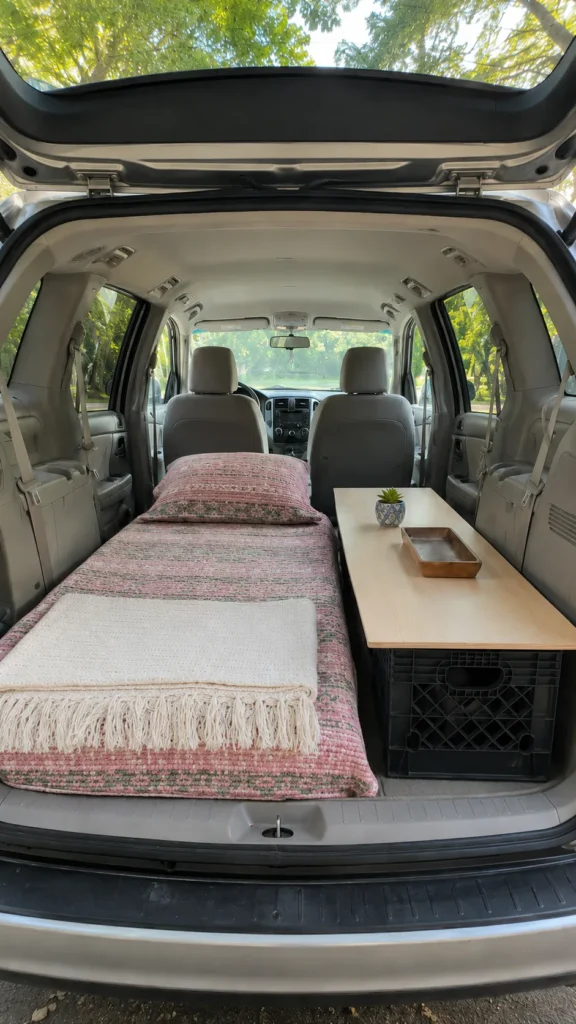
Car camping ideas get much better when you picture the night, not just the arrival. Arrival-you has energy. Night-you wants easy answers. Morning-you wants coffee, clean clothes, and zero surprise spills.
I’ve found that the smallest habits matter most after dark. You need less digging, fewer decisions, and more “where I left it” moments. Otherwise, the car starts feeling like a junk drawer with windows.
Try thinking through your night in tiny scenes. Where will your phone charge? Where will your glasses go? What happens if it rains? How fast can you reach shoes? This sounds picky until it saves your mood.
A few ideas make the whole setup smoother. I’d keep these close:
- Pack a bedtime pouch with toothbrush, lip balm, meds, and a hair tie.
- Keep tomorrow’s outfit in one soft bag.
- Store wet wipes near the door, not under everything.
- Use a small tray or pouch for keys and glasses.
- Keep one light within arm’s reach.
- Put shoes in a bin, bag, or floor mat zone.
- Crack windows with bug screens for airflow.
- Keep snacks sealed, because crumbs are tiny betrayal.
That last one is personal to every car, I swear. Crumbs find seams, corners, and places nobody can explain.
Car camping also gets easier when you create a reset ritual. Before bed, clear the sleep area, toss trash, and move cooking items forward. It takes minutes. However, it gives the whole night a calmer start.
Another sneaky win is a morning bag. Put deodorant, clean clothes, sunscreen, and a brush together. Then waking up feels less like a scavenger hunt.
The cute setup gets attention. The bedtime system earns loyalty fast.
The Camping Life Looks Better When It’s Less Perfect
Camping life looks dreamy online because photos skip the awkward parts. They don’t show the lost sock, the uneven parking spot, or the cooler lid drama. That’s fine. Photos can inspire. However, real trips deserve breathing room. They just shouldn’t bully your real trip.
I tend to notice people chase a perfect car camping aesthetic too early. They buy matching bins before deciding how they’ll sleep. They plan coffee photos before checking bathroom distance. Respectfully, priorities have entered the chat.
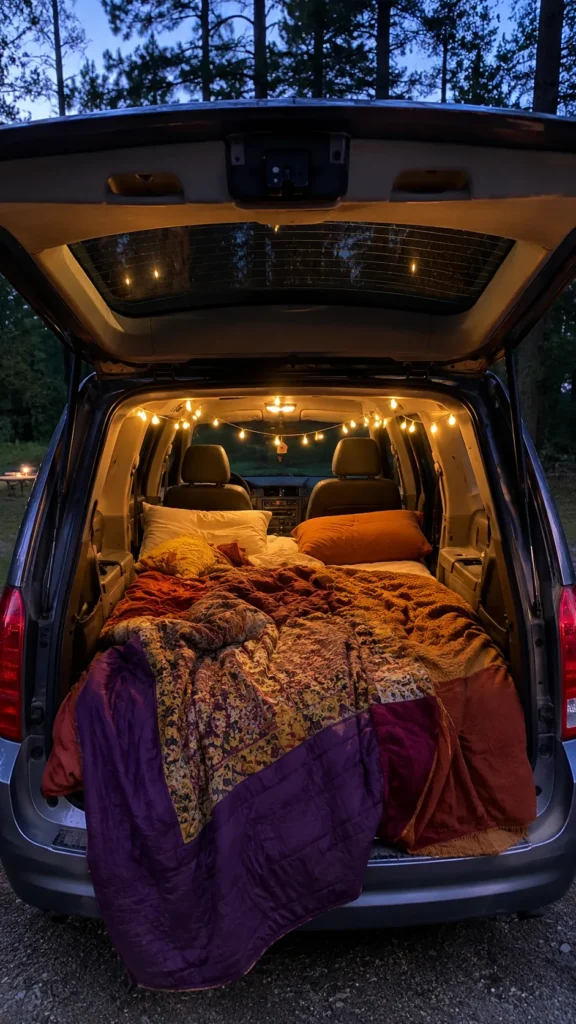
A pretty setup can add joy. I love a soft blanket, warm light, and a view that makes ordinary mornings look expensive. However, beauty needs comfort underneath. Otherwise, it becomes set dressing for a stiff neck.
This is where the assumption flips. Aesthetic doesn’t mean extra. It can mean calm, edited, and easy to use. A clean water station looks good because it works. A tidy sleep area photographs well because it’s restful.
So, yes, make it cute. Choose colors you like. Add a patterned blanket. Hang a small light. Keep your favorite sweatshirt nearby. Yet don’t let the vibe outrank function.
The camping life should support your real body, real mood, and real bladder. That last detail matters after 10 p.m. Glamour has limits, my friends.
Car camping becomes more fun when you allow it to be real. A little dirt may happen. Weather may act rude. Your first layout may need changes.
That doesn’t mean the trip failed. It means the setup is talking back. Listen, adjust, and keep the good parts. The best version usually arrives after one imperfect night, when the fantasy meets real knees. Real comfort wins there, every single time.
FAQs About Sleeping, Gear, And Setup
The questions around car camping usually sound simple, but the answers depend on real life. Vehicle size, weather, safety, and comfort all matter. Still, a few answers help clear the fog before you start packing the entire garage.
I’ve found that FAQs work best when they skip the camping ego. Nobody needs to prove they’re rugged. You need a setup that helps you sleep, move, and enjoy the trip.
- Can I sleep in a small car? Yes, but measure first. Fold the seats, test your sleeping angle, and check hip room. A thick pad helps more than optimism.
- What gear should I buy first? Start with sleep, privacy, water, light, and airflow. Those basics matter before cute decor.
- Is car tent camping better than sleeping inside? Sometimes, yes. A tent adds space, but it also adds setup time. Choose based on weather, privacy, and energy.
- How do I keep the setup cute? Limit colors, hide clutter, and use soft storage. A calm look comes from fewer visible items.
- What about SUV living for longer trips? Build zones for sleep, food, clothes, and cleanup. Longer trips need stronger systems, not just more gear.
- Do I need overland camping equipment? Not always. Borrow the practical ideas, like durable storage and safety planning. Skip the heavy gear unless your route needs it.
Here’s the big answer hiding behind all the little ones. Car camping is easier when you test your setup before the trip. Spend one night in the driveway or nearby. That tiny trial can save your whole weekend.
Also, check rules before sleeping anywhere. Some lots, parks, and neighborhoods don’t allow overnight parking. Safety and permission are boring words until they protect your trip.
The Tiny Road Trip Life That Somehow Makes Sense
I like the idea of car camping because it makes travel feel closer. Not perfect. Not fancy. Just closer. It removes some barriers that can make a simple getaway seem too expensive.
As a mom in Orlando, I understand the pull between wanting adventure and needing things to work. Heat, schedules, snacks, and real life all travel with you. So, I appreciate setups that stay flexible without becoming rolling junk closets.
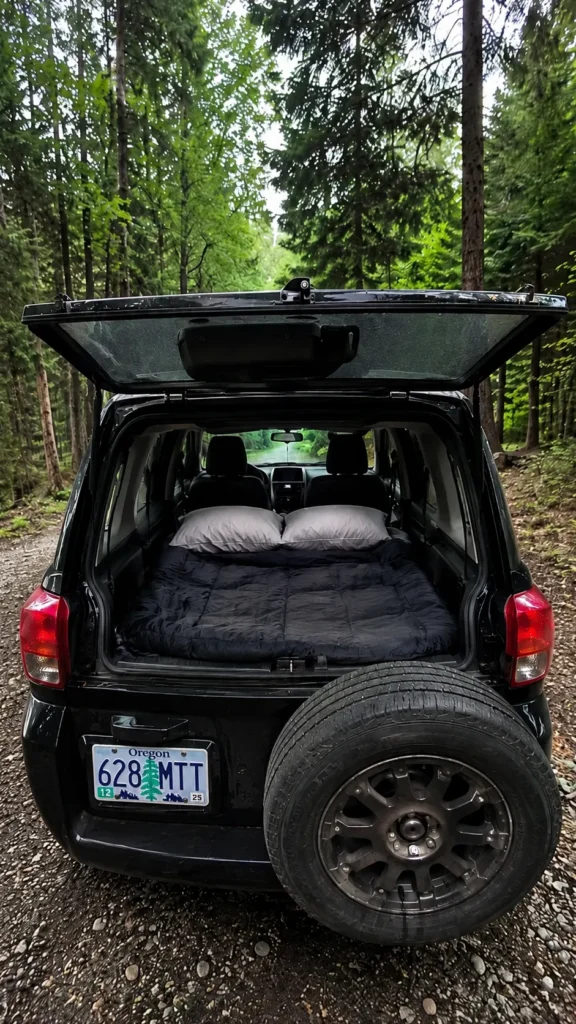
There’s something satisfying about a small space that does its job well. A blanket goes here. Shoes stay there. Water stays easy to reach. Suddenly, a vehicle feels less like a machine and more like a tiny base camp.
Pinterest will always show the prettiest version. I’m not mad about it. I love a dreamy photo as much as the next cozy-blanket enthusiast. However, the best setups have more than good lighting. They have clear zones, smart gear, and a little mercy for real life.
Car camping doesn’t need to prove anything. It can be cute, practical, cheap-ish, flexible, and slightly ridiculous in the best way. That mix is the charm, especially when life already asks everyone to be so complicated.
I’ve found that the sweet spot lives between prepared and overpacked. Bring what helps. Skip what clutters. Test the setup. Then let the road do what roads do best.
Sometimes the smallest room gives you the biggest “why didn’t I try this sooner?” energy. And yes, that little nod counts as a travel win.