There’s a moment at every kid’s birthday party where you look at the folding table and just… know. You know the pizza’s getting cold, the juice boxes are multiplying like rabbits, and somehow there’s already a grape stuck to the ceiling fan. I’ve found that the second I switched to a kids charcuterie board, that chaos calmed down in a way I genuinely didn’t expect. Not gonna lie, I was skeptical at first — charcuterie sounds fancy, and fancy usually means “breakable” when you’re dealing with a room full of six-year-olds on a sugar mission.
But here’s the thing nobody tells you: this isn’t about being fancy at all. It’s about being smart. Kids like to graze, they like choices, and they absolutely love picking things up with their hands like tiny, chaotic little raccoons. A board plays right into that instinct instead of fighting it.
Living in Orlando means I’ve been to more theme-park-adjacent birthday parties than I can count, and the food table always tells you everything about how the day’s going to go. Some are a mess by hour one. Others just… work. Turns out the difference usually comes down to one big platter instead of six sad snack bowls.
So stick with me here, because I’m about to walk you through exactly how I’d build one of these boards from scratch — and there’s a trick with the arranging that changes everything. You’ll want that part.
Some of the links on this page are affiliate links. That means if you click and make a purchase, I may earn a small commission at no extra cost to you. If you’re curious about the fine print, you can check out my full disclosure.
Easy Charcuterie Board Ideas For Little Hands
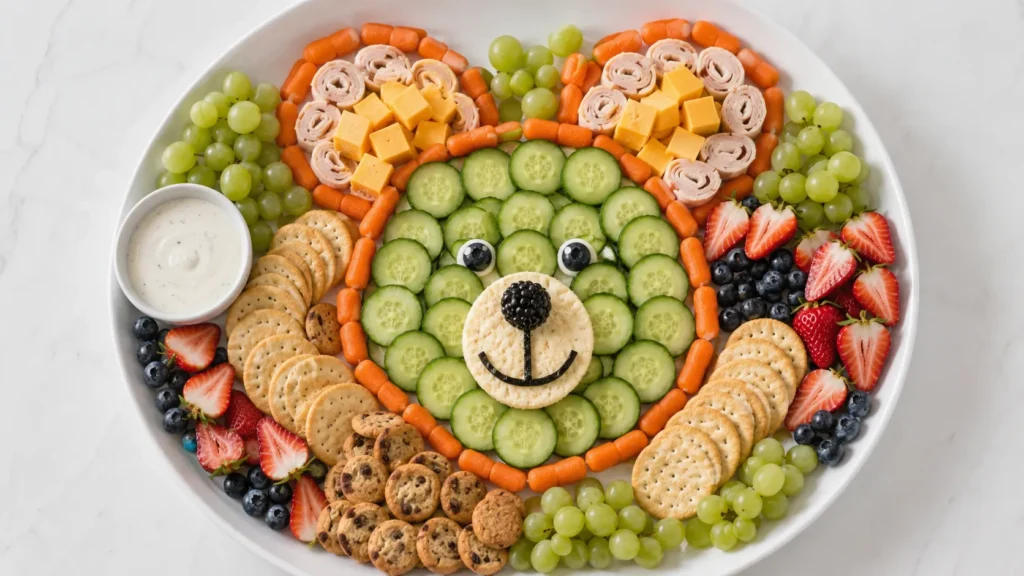
Let’s start simple, because that’s honestly the whole point. Easy charcuterie board ideas for kids aren’t about impressing anyone — they’re about survival, snacks, and not spending four hours prepping food that gets ignored in favor of the cake. I tend to notice that the boards people rave about later are never the complicated ones. They’re the ones with familiar stuff, arranged in a way that feels like a treasure hunt.
Texture and color do most of the heavy lifting here. You want crunchy next to soft, bright next to pale, salty next to sweet. Kids eat with their eyes first, weirdly enough — even the picky ones will grab something just because it’s a fun shape or a bright color they haven’t tried yet.
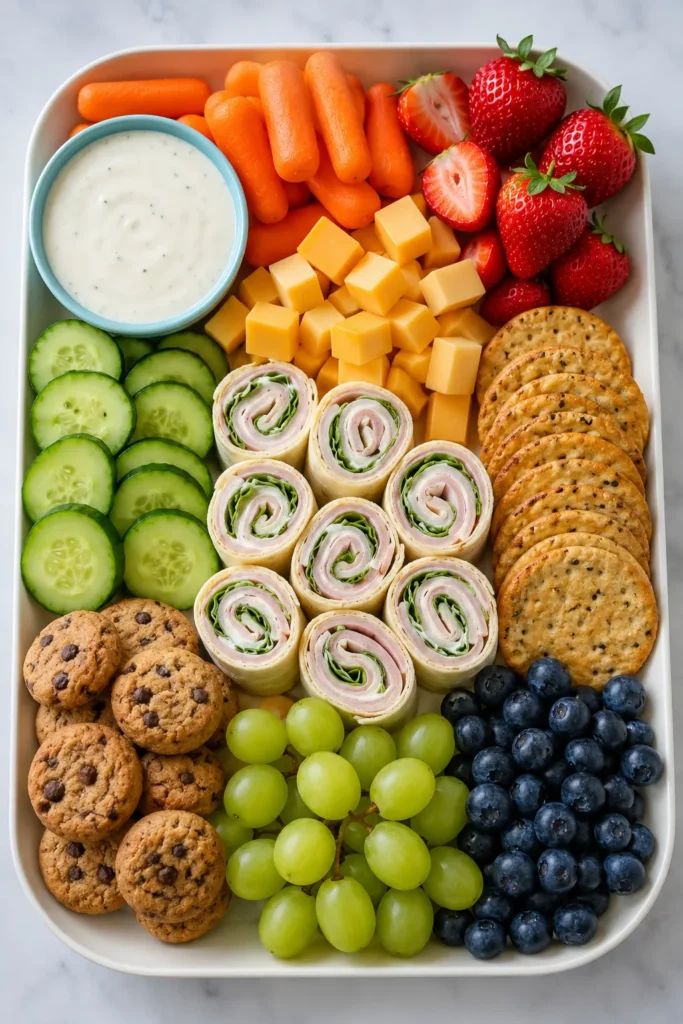
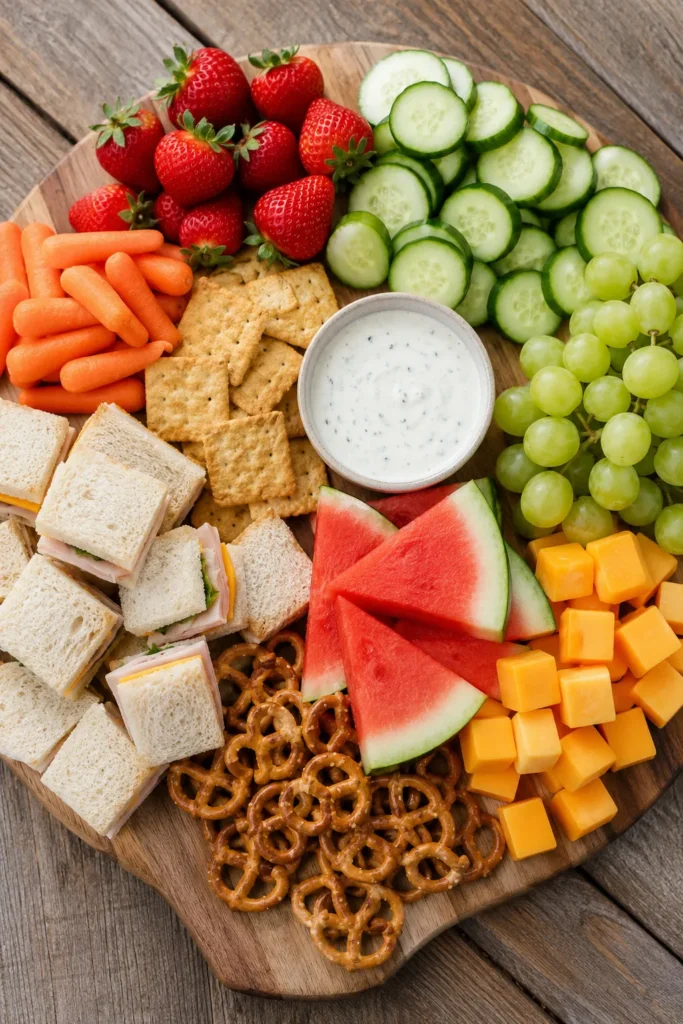
Here’s a starter lineup that almost never fails:
- Mini pretzels and goldfish crackers for crunch
- Sliced strawberries, grapes, and orange segments for color
- Cubed cheese (mild cheddar or mozzarella pearls) kids can grab easily
- Turkey or ham roll-ups, sliced into bite-sized pieces
- A small bowl of ranch or honey mustard for dipping
- Animal crackers or teddy grahams tucked into any gaps
Notice there’s no fancy cured meat, no stinky cheese, nothing that requires a grown-up palate. That’s intentional. This is a kids charcuterie board, not a wine-pairing situation, and treating it that way from the start saves you a lot of wasted food.
One tip that changed my whole approach: build outward from the dip bowl first. Everything else fills in around it, almost like the bowl is your anchor point for the whole design. It sounds small, but it makes the whole board come together faster than you’d think.
Toddler Birthday Party Food That Actually Gets Eaten
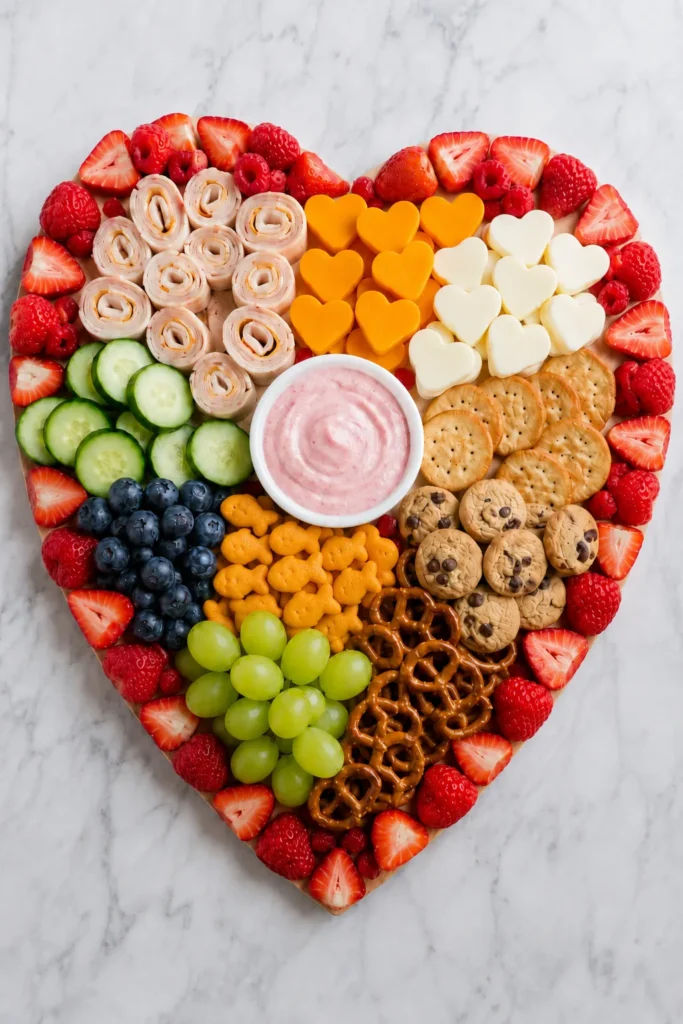
Toddlers are a completely different animal than school-age kids, and honestly, planning food for them requires a whole separate mindset. They’re not loyal to anything. One week they love bananas, the next week bananas are apparently offensive. So toddler birthday party food needs built-in flexibility, or you’re setting yourself up for a rough afternoon.
Soft textures matter more here than with older kids. Choking hazards are a real concern with anything under three, so skip the whole grapes and go for halves, quartered at minimum. Cheese should be soft or shredded rather than cubed into hard little bricks. And crackers need to be the kind that dissolve fast, not the ones that turn into paste and get stuck everywhere.
I’ve found that toddlers respond really well to smaller portions spread across more variety, rather than big piles of just one or two things. Their attention span for food is short, so novelty keeps them circling back to the board instead of wandering off after one bite.
A few toddler-safe swaps worth knowing:
- Swap whole grapes for quartered grapes or soft berries
- Use string cheese cut into coins instead of cubed cheese
- Choose puffs or soft crackers over anything hard and crunchy
- Offer diced soft fruit like mango, banana, or ripe peach
- Skip nuts entirely, even in small pieces
Here’s something that surprised me the first time I tried it: toddlers actually love a “boring” board more than a colorful one, as long as it’s familiar. They’re not chasing excitement the way older kids are. They just want food they recognize, arranged somewhere they can reach it themselves. That independence is honestly the whole appeal for them.
Keep the board low, keep portions tiny, and expect a decent amount of food to end up on the floor. That part’s non-negotiable no matter how well you plan it.

The Kids Snack Board That Saves Every Playdate
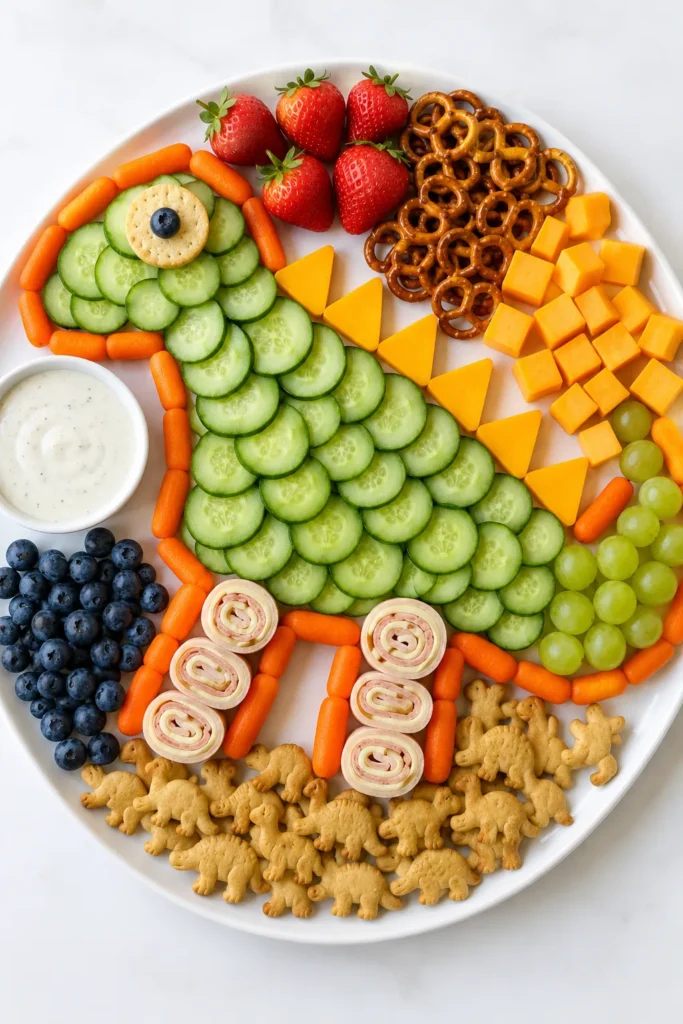
Playdates are their own special chaos, and I say that with love. You’ve got kids from different families, different diets, different snack preferences, and somehow you’re supposed to feed all of them without anyone melting down. A kids snack board is basically your secret weapon here, and I don’t think enough parents talk about it.
What makes a snack board different from a party board is scale. You’re not feeding twenty kids — you’re feeding three or four, usually for an hour or two, not a full party stretch. That means you can get a little more playful with the ingredients without worrying about massive waste.
I like building playdate boards around a loose theme, honestly just to keep myself organized more than anything. A “rainbow board” with color-coded fruit sections. A “dip station” board where everything gets paired with something to dunk it in. A “build-your-own” board with tortillas, fillings, and toppings kids can assemble themselves.
That last one deserves its own mention, because kids genuinely love assembling their own food. Something about having control over the final product makes them way more likely to actually eat it, rather than just picking around the plate. It’s a small trick, but it works almost every single time.
Quick tip for busy moms: prep the board ingredients the night before and store them in separate containers. Assembly the next day takes ten minutes, tops. That’s the difference between a stressed-out morning and a calm one, and after enough playdates, you start protecting that calm pretty fiercely.

Kids Birthday Party Food Beyond The Board
Let’s be real for a second: even the best kids charcuterie board can’t carry an entire party by itself. It’s a fantastic anchor, but kids birthday party food usually needs at least one hot element and one sweet element to round things out properly. That’s just how party math works.
Pizza rolls, mini corn dogs, or a simple sheet pan quesadilla cut into triangles all pair beautifully with a grazing board setup. They cover the “warm, filling” gap that a cold board can’t fill on its own. I tend to put these on a separate tray entirely, just so the board itself stays neat and doesn’t get greasy fingerprints all over the fruit section.
Drinks matter more than people give them credit for, too. Juice boxes are classic for a reason — no spills, no sharing germs, easy cleanup. A simple lemonade station with a few fun garnishes (frozen berries as ice cubes, for instance) elevates things without adding real effort.
And then there’s cake, obviously, which doesn’t need my help. But I will say this: serving cake right after a grazing board means kids are already a little full, which oddly enough leads to less frantic sugar-fueled chaos. Not zero chaos. Just less.
The board handles the grazing hours. The hot food handles the hunger. The cake handles the moment everyone’s actually there for. Each piece does its job, and none of them have to do all the work alone. That balance is honestly the whole secret to a party that doesn’t feel exhausting by the end.

Building A Toddler Charcuterie Board Without The Stress
I want to slow down here for a second, because a toddler charcuterie board gets talked about like it’s basically the same thing as a regular kids’ board, just smaller. It’s not. The safety considerations alone make it its own category, and skipping that step is where things go sideways fast.
Start with texture testing, if you’re not already familiar with what your specific toddler handles well. Some toddlers are fine with slightly firmer foods by eighteen months. Others need everything soft well past age two. There’s no universal rule here, so trust what you already know about your own kid over anything a blog tells you (yes, even this one).
Portion size matters just as much as food choice. Toddlers don’t need a giant mound of anything — they need small, spaced-out piles they can grab one at a time. Overloading the board actually seems to overwhelm them a little, like too many choices freezes the whole decision-making process.
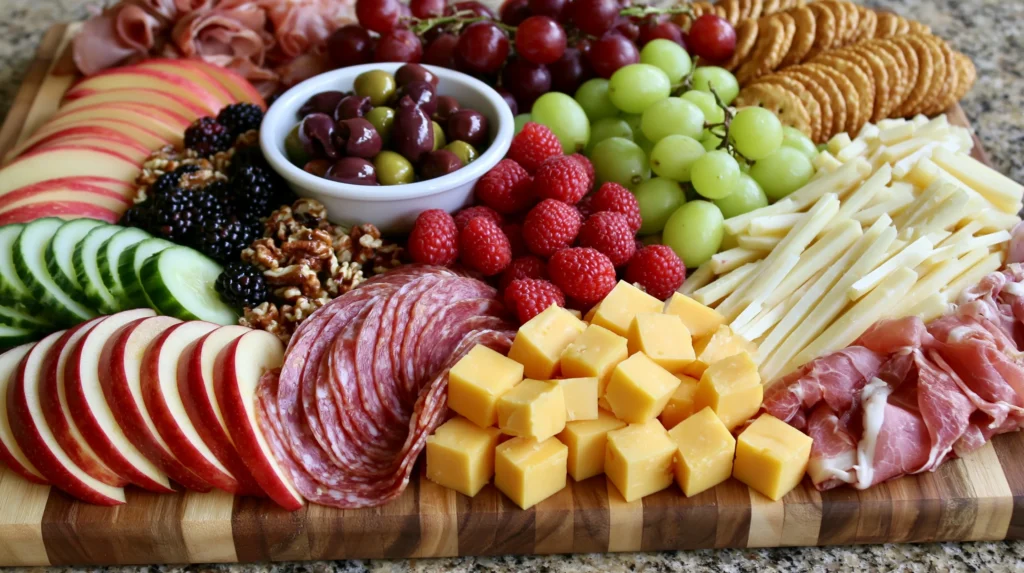
Here’s what I’d put on a toddler-specific board, no substitutions:
- Soft cheese cubes or shredded cheese piles
- Quartered berries or diced soft fruit
- Small pieces of soft-cooked veggies, like steamed carrot coins
- Mini muffin bites or soft crackers
- Yogurt melts or puffs for texture variety
Notice this list skips anything remotely chewy or sticky. That’s on purpose. Toddlers explore food with their whole mouths sometimes, not just chewing, and sticky textures can genuinely be dangerous in a way crunchy ones usually aren’t.
One more thing worth saying: don’t expect a toddler to “graze” the way older kids do. They’ll often fixate on one item and ignore the rest entirely. That’s completely normal, so don’t take it personally when the fruit gets ignored in favor of crackers for the third party in a row.
Fun Charcuterie Board Ideas That Don’t Feel Like Work
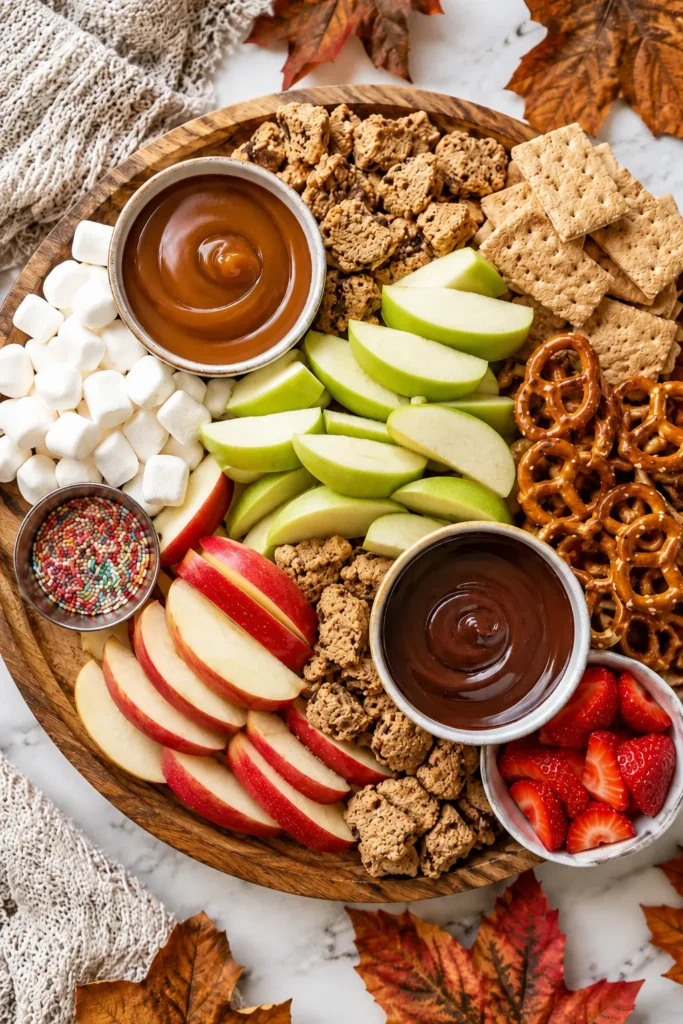
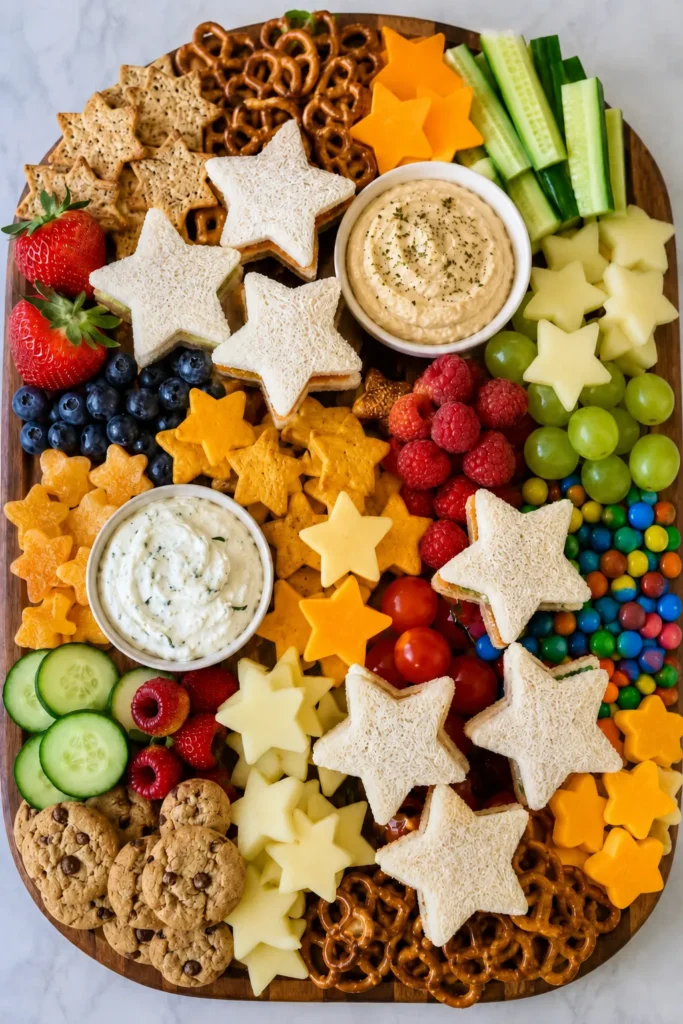
Here’s where I get to have a little fun, because fun charcuterie board ideas are basically an excuse to be creative without needing any actual cooking skills. Shapes make a huge difference for kids. A cookie cutter turns a boring cheese slice into a star, and suddenly that cheese is the most requested item on the whole table.
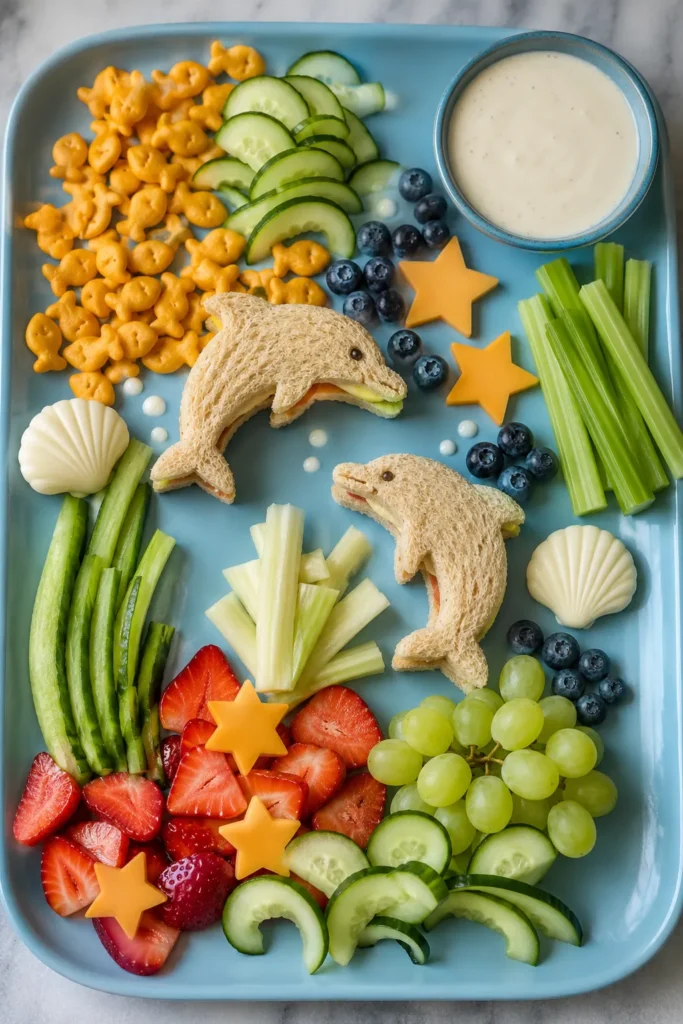
Themed boards work incredibly well for birthday parties with a specific vibe. A dinosaur party gets green grapes as “dino eggs” and pretzel sticks as “bones.” A princess party gets pink-tinted yogurt dip and heart-shaped melon. A superhero party gets bold primary colors grouped into bold, punchy sections. None of this requires special skills — it just requires a little intention with how things get grouped.
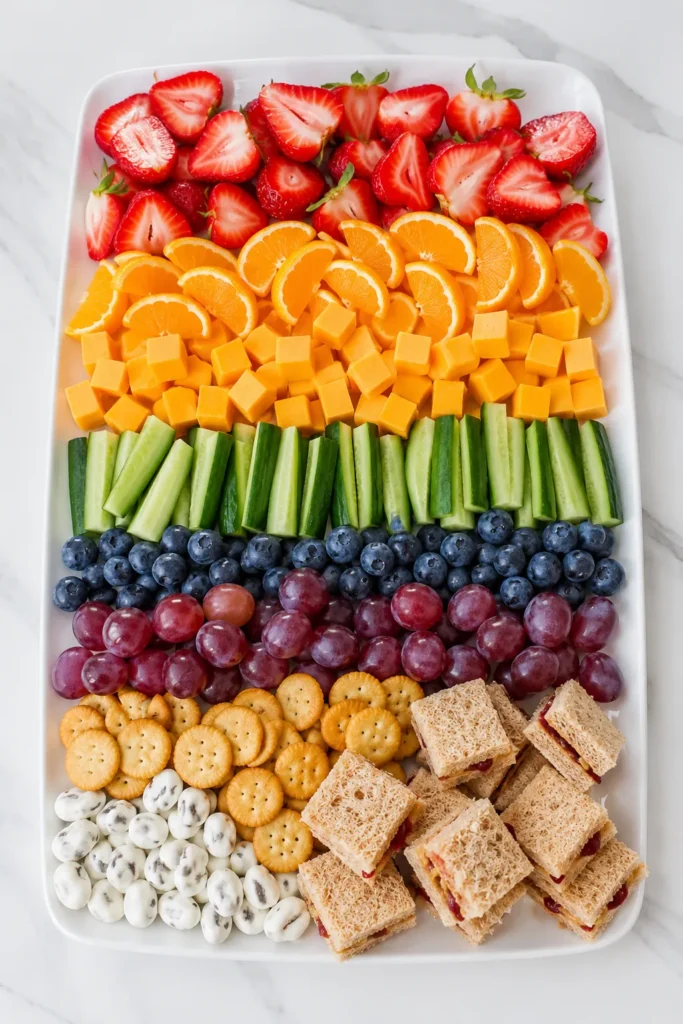
Shape and color placement genuinely change how kids interact with a board, which sounds almost too simple to be true, but I’ve seen it happen over and over. Group by color in rainbow order and kids will “collect” their way across the board like it’s a little game.
A few fun kids’ charcuterie board elements worth trying:
- Fruit skewers arranged like little flags around the board’s edge
- A small chocolate or yogurt “dip pool” in the center
- Cheese cut into stars, hearts, or dinosaurs with cookie cutters
- Pretzel rods standing upright in a small cup for height variation
- Edible “flowers” made from thin cucumber ribbons and cherry tomato centers
That height variation trick deserves a callout. Boards that are completely flat look fine, sure, but boards with a little height — a standing cup of pretzels, a small bowl propped up — read as way more exciting to kids. It’s a tiny styling trick that makes a big visual difference, and it costs you nothing extra.
Party Charcuterie Board Ideas For Bigger Crowds
Scaling up changes the whole game, and party charcuterie board ideas for a bigger crowd need a different structural approach than a small family gathering does. You’re not just adding more food — you’re rethinking layout entirely, because one board can only handle so many little hands reaching in at once before it gets picked apart unevenly.
For groups over fifteen kids, I’d genuinely recommend two smaller boards over one giant one. It sounds counterintuitive, since one big board seems more impressive, but two boards mean less crowding, less waiting, and way less chance of one kid accidentally clearing out the whole cheese section in ninety seconds flat.
Placement matters here too. Put the boards at opposite ends of the food table, or even in separate zones of the party space entirely. This naturally splits the crowd without you having to manage traffic flow yourself, which — trust me — is one less thing you want to be doing mid-party.
A quick kids charcuterie board planning guide by headcount:
- Under 10 kids: one medium board, refreshed once during the party
- 10–20 kids: two boards, placed apart from each other
- 20+ kids: two to three boards plus a backup tray of pre-portioned snack cups
Backup snack cups deserve a mention on their own. For bigger parties, I like having a stash of small cups pre-filled with grapes, crackers, and cheese, ready to refill the board fast without stopping to chop anything mid-party. It’s basically insurance against the fifteen-minute stretch where three kids descend on the fruit section at once.
Bigger crowds also mean more dietary needs to juggle. I’d set aside one small section — clearly separated — for allergy-friendly options, so kids with restrictions don’t have to hunt across the whole spread just to find something safe to eat.
Kids Grazing Board Styling Tips That Actually Matter
Let’s talk styling for a second, because a kids grazing board lives or dies by how it’s arranged, not just what’s on it. I used to just dump everything on in whatever order I grabbed it, and honestly, the boards looked fine but never great. Small changes made a bigger difference than I expected.
Group similar items together instead of scattering them randomly. Clusters read as more intentional, and weirdly enough, kids seem to graze more evenly across a board that’s organized into little sections rather than one chaotic mix. It’s almost like the grouping gives their eyes a place to land first.
Leave small gaps between sections rather than packing everything edge to edge. Those gaps aren’t wasted space — they’re what makes each section pop instead of blurring into the next thing beside it. A board that’s too full actually reads as messier, not more generous.
Color balance across the whole board matters more than color variety within one section. Spread your reds, greens, and yellows out evenly instead of clumping all the bright stuff in one corner. That way, no matter where a kid’s standing, something colorful catches their eye.
A few final styling notes worth remembering:
- Use small bowls or ramekins to contain dips and sauces neatly
- Fill empty gaps with crackers or pretzels rather than leaving bare board
- Save the tallest items for the center to create visual height
- Refresh wilted fruit or dried-out cheese halfway through longer parties
That last point gets skipped constantly, and it shouldn’t. A board sitting out for three hours starts looking sad by hour two, and a quick five-minute refresh makes it look brand new again. Nobody notices the effort, but everyone notices the result.
FAQs
How far in advance can I prep a kids charcuterie board? Most components hold up fine when prepped the night before, as long as they’re stored separately in airtight containers. I’d wait to assemble the actual board until the morning of, since cut fruit and cheese lose their appeal fast once combined.
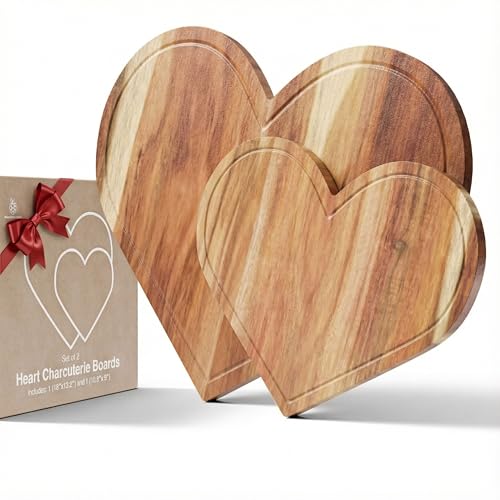
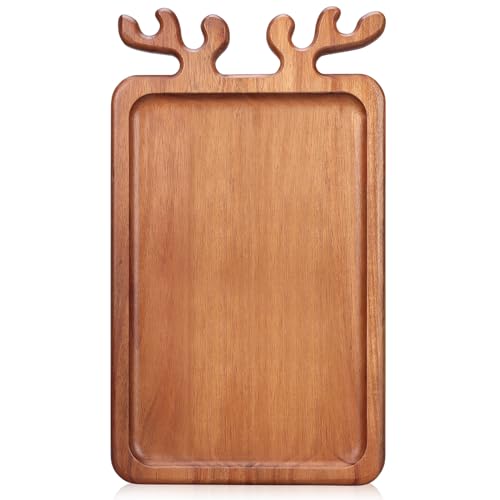
What size board works best for a birthday party? For most home parties, an 18-to-20-inch board or a large rectangular tray gives enough surface area for good variety without overwhelming a small table. Bigger parties do better with two medium boards instead of one oversized one.
Is a charcuterie board actually cheaper than other party food? In my experience, yes, especially compared to catering or ordering trays from a store. Buying fruit, cheese, and crackers in bulk usually costs less per serving than pre-made party platters.
What should I avoid putting on a toddler charcuterie board? Skip whole grapes, nuts, popcorn, hard candy, and anything sticky like marshmallows. These are common choking hazards for kids under three, so it’s worth double-checking every item against that list.
Can I make a kids charcuterie board work for a mixed-age party? Absolutely, and I’d actually recommend it. Build the base with toddler-safe ingredients, then add a small separate section with slightly more grown-up items for older kids and adults to grab from.
Serving Suggestions
A kids charcuterie board pairs perfectly with simple sides that don’t compete for attention. A light fruit punch or homemade lemonade rounds things out without adding extra prep work. For parties running longer than two hours, serve the board in two waves — a smaller version early on, then a fuller refresh once more guests arrive. Pair it with a hot main like mini sliders or a sheet pan of chicken tenders, and you’ve got a full spread that barely required real cooking.
The Real Secret Behind Every Great Party Table
Here’s what I’ve landed on after enough birthday parties, playdates, and last-minute gatherings to lose count of: food doesn’t need to be complicated to feel special. A kids charcuterie board proves that every single time, because it turns basic ingredients into something that looks like way more effort than it actually took.
Living in Orlando, I’ve seen party trends come and go faster than the weather changes here, which is saying something. But grazing boards have stuck around for a reason. They’re flexible, they’re forgiving, and they somehow make both toddlers and picky ten-year-olds happy at the same table, which is honestly a small miracle on its own.
I’d encourage you to treat your first board as practice, not perfection. Mine definitely weren’t magazine-worthy the first few times, and that never mattered to a single kid at the party. They just wanted grapes shaped like flowers and something to dip their pretzels in.
If you’re the type who screenshots ideas or saves them for later, this is exactly the kind of post that’s built for Pinterest — pin it now, and you’ll have a ready-made plan the next time a party sneaks up on you. Because it always does, doesn’t it?
At the end of the day, the board isn’t really about the food at all. It’s about giving kids something fun to gather around, and giving yourself one less thing to stress over while they do it.