Camping games sound simple until everyone stands around the picnic table like confused raccoons. Suddenly, the chairs are out, the snacks are open, and nobody knows what to do next. I’ve found that a few easy games can save the whole vibe before boredom starts acting dramatic.
The funny thing is, camping already gives you half the fun. You have sticks, flashlights, shadows, rocks, blankets, and people who forgot bug spray. That’s basically a party kit with mosquitoes. As a mom, I tend to notice that outdoor plans work best when they stay flexible and low-fuss.
However, the best games don’t need perfect supplies or a clipboard personality. They need clear rules, quick starts, and enough silliness to make people relax. Some games work for kids with wild energy. Others work for adults who claim they “don’t play games” but somehow get competitive.
Also, camping has a way of making simple things weirdly entertaining. One bucket becomes a target. Even a flashlight becomes theater. Meanwhile, a pinecone becomes evidence that Aunt Linda has suspicious aim. I do not make the rules of the woods.
So, this is not about packing a trunk full of stuff. Instead, it’s about knowing which games work by firelight, darkness, or rude rain. And yes, there’s a sneaky little formula here that makes almost any camp game better.
Some of the links on this page are affiliate links. That means if you click and make a purchase, I may earn a small commission at no extra cost to you. If you’re curious about the fine print, you can check out my full disclosure.
Camping Games That Break The Ice Before The Fire Starts
The first hour at camp has a weird little personality. Everyone wants fun, but nobody wants to announce fun too loudly. That’s why I like camping games that start fast and don’t require a grand ceremony. Keep them easy, slightly silly, and short enough to end before people wander toward chips.
A good icebreaker game should not embarrass quiet people. Big difference. Some folks want to laugh, not perform Shakespeare beside a cooler. So, these games give everyone something to do without making anyone the unpaid camp entertainer.
The best part comes from the tiny setup. You can explain each game while people stand there holding drinks. No one needs to sit through rules that sound like tax forms. Start small, then let the group loosen up naturally.
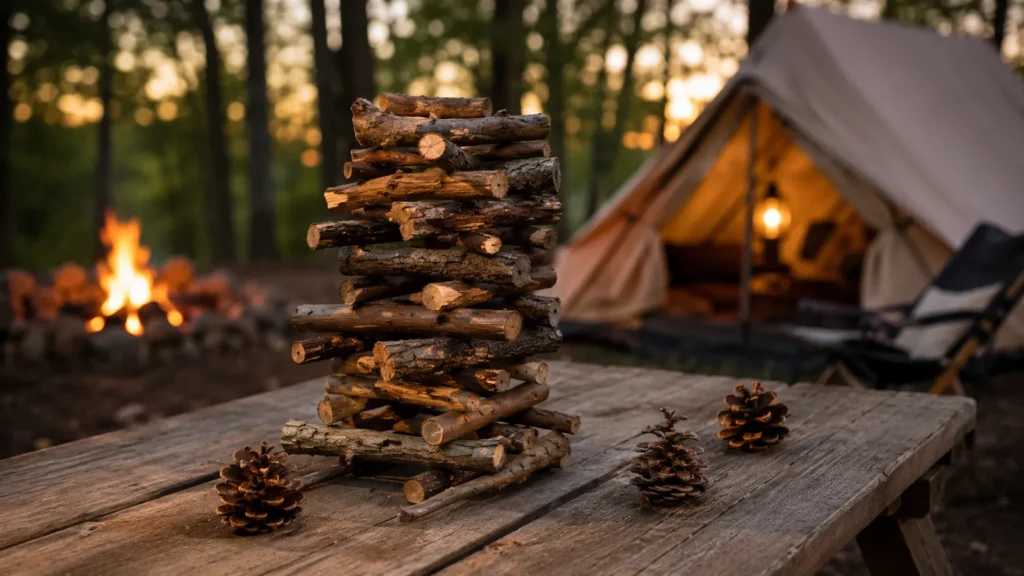
- Pinecone Pitch needs six pinecones, one bucket, and a start line. Players take turns tossing pinecones into the bucket. Give one point per toss, then move back each round. Keep feet behind the line, because tiny cheaters exist.
- Campsite Bingo needs paper, pencils, and a simple grid. Fill squares with things like lantern, squirrel, red chair, and marshmallow bag. Players mark items as they spot them. The first full row wins, but no moving objects to cheat.
- Name That Nature Sound needs no supplies, which seems delightfully suspicious. One player makes a camp sound, like wind, owl, zipper, or crackling fire. Everyone guesses the sound. Players must use only their voices, not props.
However, here’s the part people miss. Winning should not matter much. The real win comes from getting everyone loosened up. After that, the group usually starts making its own fun. That is when camping gets good.
Low-Key Campfire Fun For People Who Hate Forced Fun
Some people love a loud game. Other people would rather fold themselves into a camp chair forever. I respect both groups deeply. Still, a quiet campfire game can pull everyone in without becoming a corporate retreat with marshmallows.
Would You Rather Campfire Edition works because it needs nothing but questions. The materials are simple: people, chairs, and mild nosiness. To play, one person asks a choice. Try “wet socks or raccoons all night?” Everyone answers and explains briefly. The only rule is simple. Keep the choices funny, clean enough for the group, and not mean.
Story Spark is another good one. You need one small object, like a pinecone or flashlight. The first player starts a story with one sentence while holding the object. Then they pass it along, and each person adds one sentence. The rule is that nobody can undo the last person’s idea. That keeps the story moving instead of turning bossy.
Memory Trail works nicely when people want cozy, not chaotic. You need ten camp items on a table. Use a spoon, sock, leaf, cup, key, and whatever else survives the trip. Let players study everything for thirty seconds. Then cover the items, remove one, and let everyone guess what changed.
The common assumption says campfire games must be loud. Nope. Sometimes the best ones stay quiet enough for crickets. They let conversation sneak in through the side door, which is much better than forcing it. Plus, nobody has to “perform” fun. They can just join the rhythm when they are ready.
That matters because low-key games protect the mood. They invite people in softly, which works better than bossing them.
Easy Camping Games With Almost No Supplies
I love a game that does not make me pack a craft store. Camping already comes with enough gear, and somebody always forgets something vital. Usually it’s batteries, matches, or emotional patience. So, low-supply camping games deserve their own little crown.
The secret is using what the campsite already gives you. That means sticks, rocks, leaves, cups, socks, and flashlights. Not glamorous. Very useful. Also, nobody has to dig through six bags while muttering under their breath.
Try these when you want fast fun without a supply hunt:
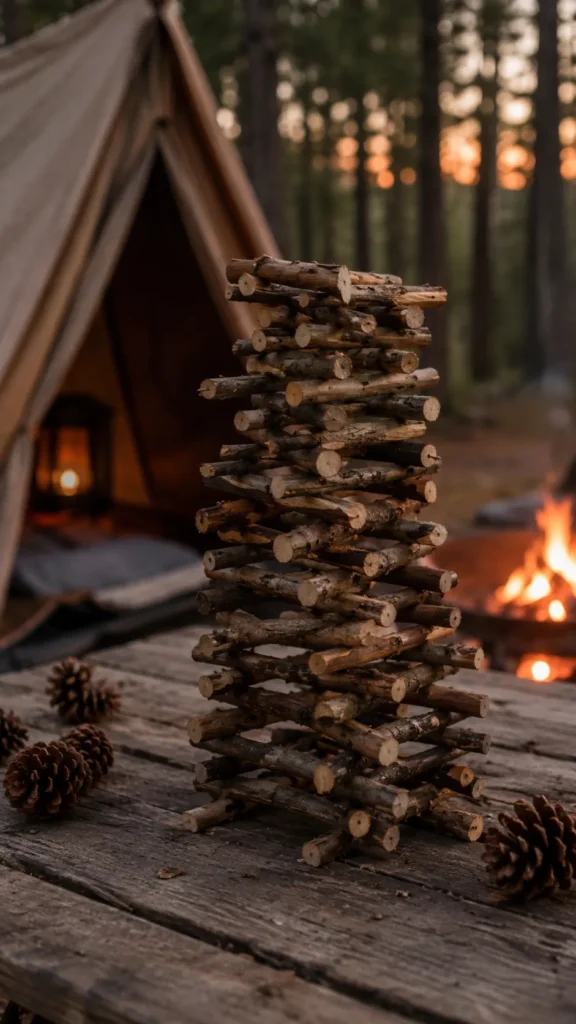
- Stick Stack is like a campfire version of Jenga, but with sticks instead of blocks. Players take turns adding one stick to the pile without knocking it over. The sticks don’t stack neatly, which is part of the fun. The person who makes the pile collapse loses that round.
- Rock Relay needs two spoons, ten small rocks, and two bowls. Players carry rocks on spoons from one bowl to another. If a rock drops, the player returns to the start. No hands can steady the rock during the walk.
- Five-Item Hunt needs paper bags or empty cups. Call out five items, like smooth rock, tiny leaf, curved stick, dry grass, and acorn. Players race to collect them. Set boundaries first, because nobody needs a dramatic forest disappearance.
- Sock Toss needs rolled socks and a backpack. Players toss socks into the open backpack from a set line. Each round moves the line farther away. Toss underhand only, unless the group enjoys chaos.
These games prove something important. More stuff does not mean more fun. Sometimes fewer materials make everyone more creative. Plus, simple rules keep the energy up, which matters more than any fancy game box. That also saves packing space, and I love that little victory.
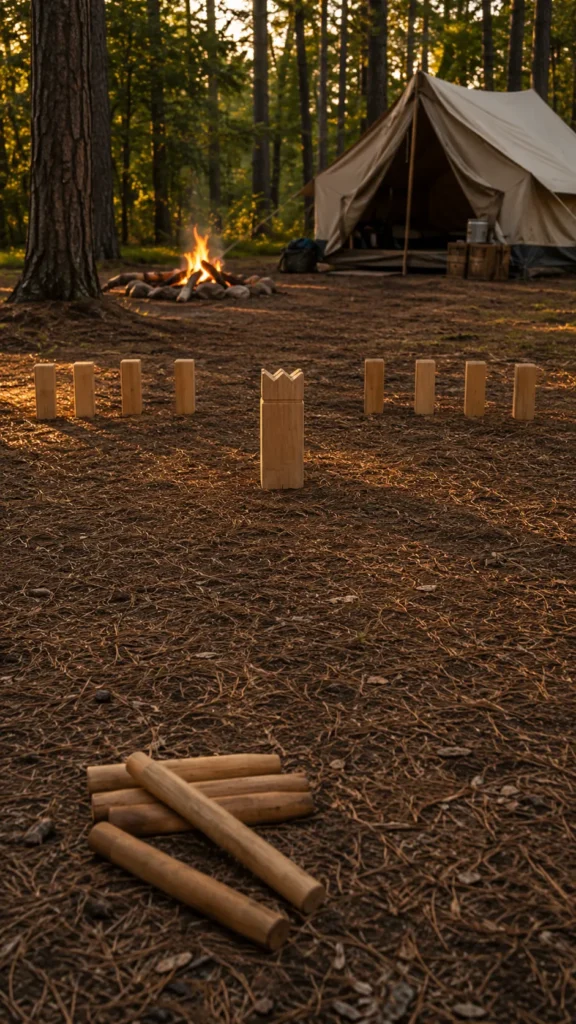
After-Dark Games That Make The Whole Campsite Better
Once the sun drops, the campsite changes. Suddenly, every shadow has opinions. Every twig snap sounds suspicious. That is perfect for camping games that use darkness without sending anyone into a tent.
Shadow Charades needs one flashlight and a flat surface, like a tent wall or sheet. One player makes a shadow shape with hands or body movement. Everyone else guesses the animal, object, or action. The rule is simple. No talking during the acting turn. Also, keep the flashlight pointed safely, because eyes are not targets.
Glow Ring Toss works when you bring glow bracelets or rings. You also need a stick, water bottle, or lantern base. Push the target into the ground or place it on a table. Players toss glow rings from a marked line. Each ring around the target earns one point. Move the line back after every round.
Night Signal is quieter and oddly satisfying. Materials include two flashlights and a list of easy signals. One player flashes a pattern, like long-short-long. The other team copies it. Add points for correct patterns. The rule is that players must aim lights at the ground or trees, not people.
One extra rule helps after dark. Pair younger kids with older players, even for simple games. Buddy play keeps everyone safer and makes the game smoother. It also prevents the classic “Where did he go?” moment. Adults can enforce that rule.
The common idea says darkness limits the fun. I think darkness gives camp games better drama. Still, keep safety boring and firm. Set boundaries, name a home base, and keep younger kids near adults. Fun should seem thrilling, not like a low-budget survival show.
Camping Games For Kids Who Need To Move
Kids at camp often come with squirrel energy. I say that with affection and deep respect. They need games that let them move, laugh, and burn off the extra wiggles. However, the rules must be clear enough that nobody argues for twenty minutes.
These camping games work best before bedtime, not after everyone climbs into sleeping bags. I’ve found that movement games help kids settle later, especially when the grown-ups keep things simple. Fancy rules collapse fast outdoors. Clear wins.
The sneaky reframe is this. Movement games do not need to be wild. They need clear space, quick turns, and rules kids can remember while moving. That combination saves everyone’s sanity.
- Animal Dash needs open space and one caller. The caller names an animal, like bear, frog, crab, or deer. Kids move like that animal to the finish line. Players must stay in lanes or spread out safely.
- Trail Marker Race needs colored clothespins, ribbons, or sticky notes. Hide them in a safe area before play starts. Kids collect one color each. The first player to find all their markers wins.
- Sleeping Bag Shuffle needs two sleeping bags or blankets. Players sit on top and scoot toward a finish line. No standing allowed. Use flat ground only, because downhill scooting invites poor choices.
- Camp Statue needs music or a clapping rhythm. Kids dance, hop, or march until the sound stops. Then everyone freezes. Anyone moving becomes a judge for the next round.
A lot of adults think kid games need prizes. I disagree. Prizes can make simple fun weirdly intense. Instead, let winners pick the next animal, sound, or silly rule. That gives them status without turning camp into a toy economy.
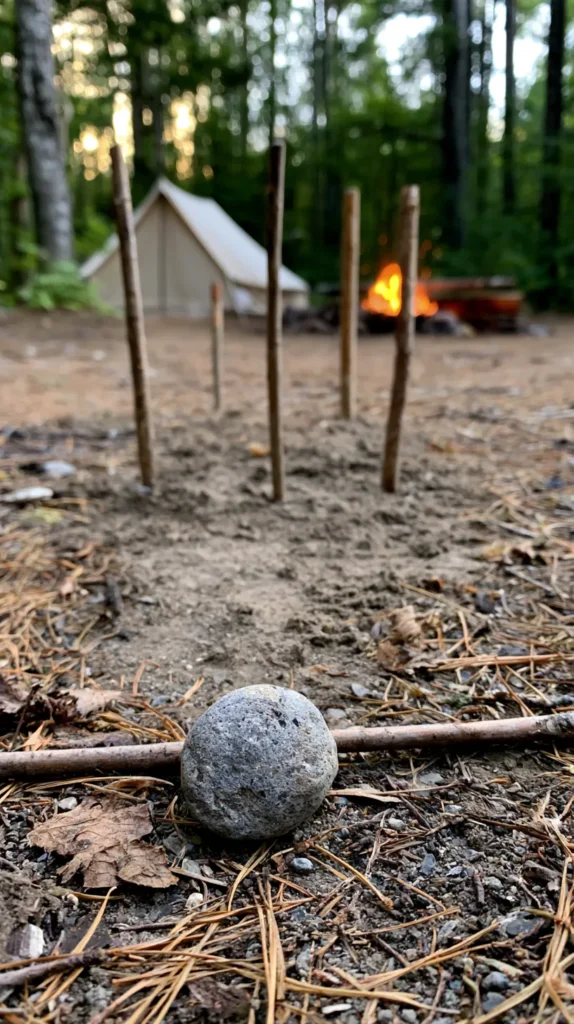
Stick Rock Is Basically Caveman Bowling
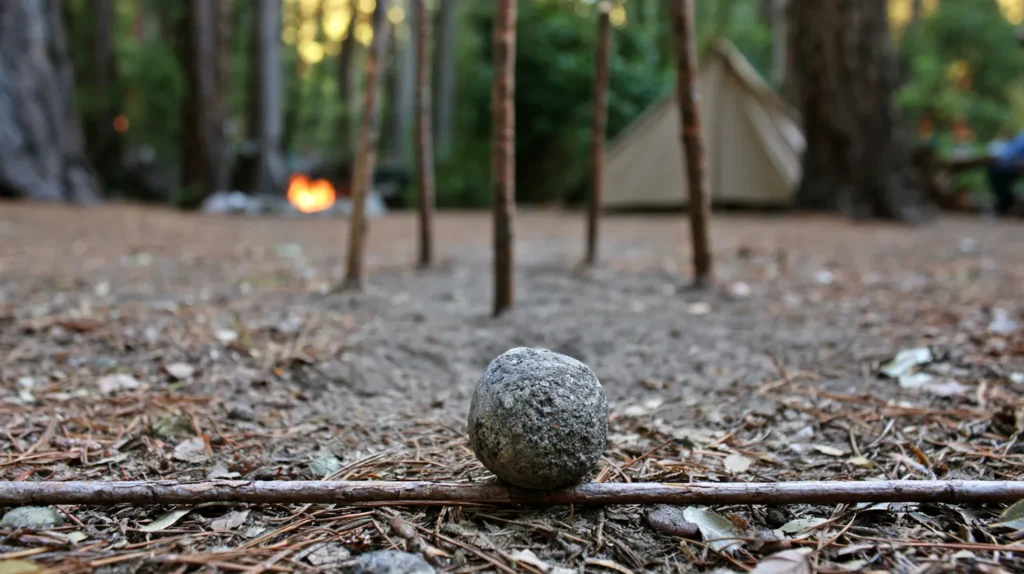
Stick Rock is one of those camping games that sounds almost too simple, which is usually the first sign it will work. The idea is to poke several sticks upright into soft soil, then toss a small rock from a marked line and see how many sticks you can knock over. It’s like caveman bowling, but with more dirt and fewer rental shoes. Charming, really.
For materials, you only need 6–10 sturdy sticks, one small smooth rock, soft soil or sand, and something to mark the throwing line. A rope, extra stick, shoe, or water bottle can work for the line. Fancy equipment is not invited.
To play, set the sticks several inches apart in the soil, like little bowling pins. Then each player takes one turn tossing the rock toward the sticks. Count one point for every stick knocked down. After each turn, reset the sticks and let the next player go. The player with the most points after three rounds wins.
The rules need to stay clear, because rocks do not deserve creative freedom. Everyone must stand behind the thrower, and only one person throws at a time. Use a lightweight rock, not a landscaping boulder with ambition. Also, set up the game away from tents, cars, pets, coolers, and ankles. Especially ankles.
I like this game because it uses real campsite stuff without getting complicated. It has just enough aim, luck, and drama to make people care. Plus, “caveman bowling” is a phrase that deserves its moment.

Packable Camping Games For Cornhole People
Some camping games are perfect when you want something with a little more structure than tossing pinecones into a bucket. I love the simple camp-made games too, obviously. But sometimes you want a real outdoor game you can throw in the car and set up near the campsite without needing a full backyard Olympics situation.
Mölkky, Kubb, Kan Jam, and Bottle Bash all fit that sweet spot. They take up about the same general kind of open space as cornhole, depending on how much room you have. So, if your campsite has a flat patch of grass, dirt, sand, or open group area, you’re already halfway there.
These are the camping games I’d bring when older kids, teens, or adults want something that keeps going longer. They’re easy enough to learn, but not so basic that everyone loses interest after one round. That matters. A game needs a tiny bit of drama, or everyone ends up wandering off toward the snack bag.
Also, these games feel like “real games” without getting fussy. You can play them in sneakers, flip-flops, or that one pair of camp shoes nobody should photograph. They’re relaxed, portable, and just competitive enough to make quiet people suddenly very invested.
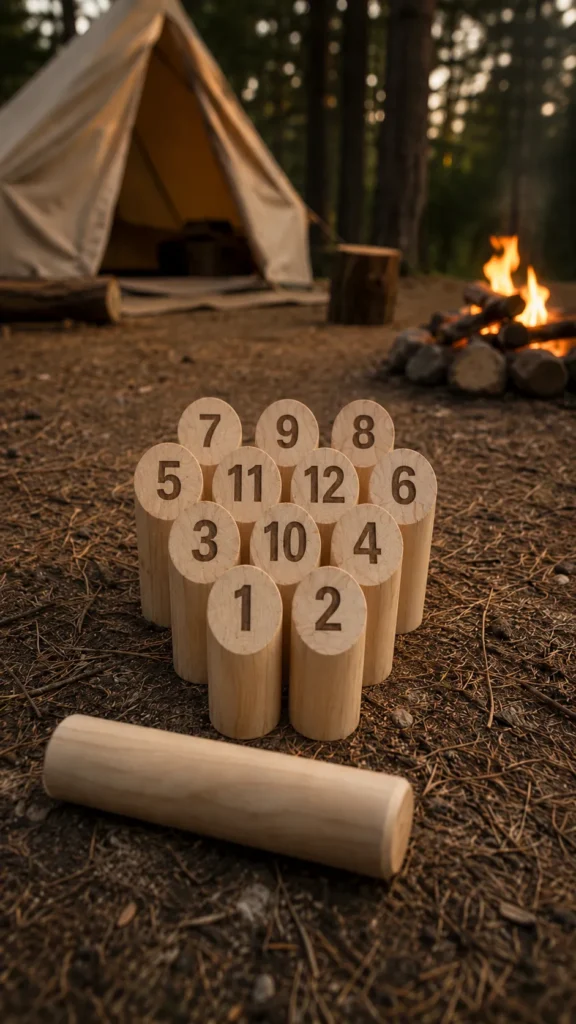
Mölkky
Mölkky is a Finnish throwing game that uses numbered wooden pins and one wooden throwing stick. It looks simple at first, which is how it gets you. You set the pins close together, then players take turns tossing the throwing stick to knock them down. The goal is to score exactly 50 points, which sounds easy until your score gets awkward.
The materials are usually 12 numbered wooden pins and one wooden throwing piece. You’ll also need a flat playing space and a safe throwing line. Dirt, grass, or packed sand can work, as long as the pins stand up well.
The scoring is the fun part. If you knock down one pin, you score the number printed on that pin. So, if you knock down the 12 pin by itself, you get 12 points. However, if you knock down several pins, you score the number of pins knocked over instead. Knock down four pins, and you get four points.
That little scoring twist makes the game more strategic than it looks. Suddenly, people start aiming for one specific pin like they’re in a tiny wooden championship. If a player goes over 50, you can drop their score back down to 25. That keeps the ending spicy, which camping games absolutely need.
Kubb
Kubb is a Swedish lawn game often called Viking chess, which sounds wildly serious for a game involving wooden blocks. But I get it. There is strategy. There is aim. There is one very important king piece sitting in the middle, looking dramatic without even trying.
The materials include wooden kubb blocks, throwing batons, corner markers, and one larger king block. You set up a rectangle playing field with each team’s kubbs lined up on opposite baselines. The king goes in the center. Teams take turns tossing batons underhand to knock over the other team’s kubbs.
Here’s the main idea. Your team tries to knock down the other team’s baseline kubbs before going after the king. However, if you knock over the king too early, you lose. That one rule makes everyone suddenly careful, which is always funny outdoors. Nothing humbles a confident thrower faster than accidentally ending the game.
Kubb needs a little more room than some camp games, but it still fits well in an open campsite area. It works best on grass, packed dirt, or sand that isn’t too soft. Older kids, teens, and adults usually enjoy it most because the turns take a little patience.
I like Kubb because it feels relaxed but still has a plan. It’s not just throwing wood around. Although, yes, it is also throwing wood around.
Kan Jam
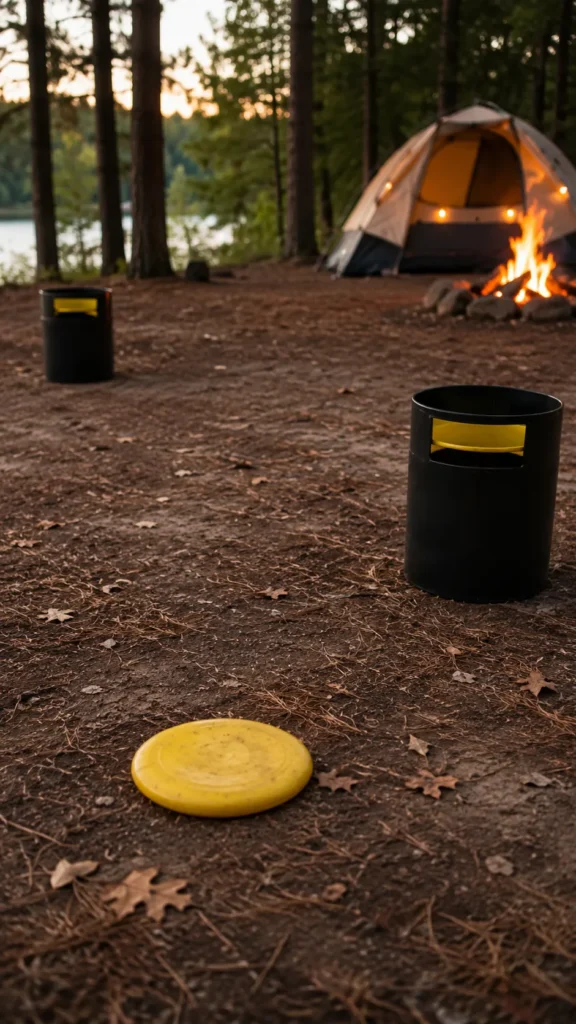
Kan Jam is a flying disc game with two plastic goals, usually called cans. It’s great when your group wants something more active than cornhole but not so active that anyone needs athletic confidence. That’s a very important middle lane, and I support it.
The materials are two Kan Jam goals and one flying disc. You set the goals across from each other, then play in teams of two. One player throws the disc toward the opposite goal, while their teammate stands near that goal and tries to help redirect the disc.
The scoring depends on what happens with the disc. If the disc hits the goal, you score. If your teammate deflects it into the goal, you score more. If the disc goes straight through the front slot without help, that can be an instant win, depending on the rules you use. Naturally, everyone will bring this up loudly when it happens.
Kan Jam works best in a flat open space, like grass, sand, or a wide dirt area. You’ll want enough room between the goals for real throws. However, you can shorten the distance for kids or casual players.
This game is especially good for camping because it keeps people moving. Nobody gets too comfortable in a chair for long. Plus, it brings just enough chaos to make the group laugh when someone’s “helpful deflection” sends the disc nowhere useful.
Bottle Bash
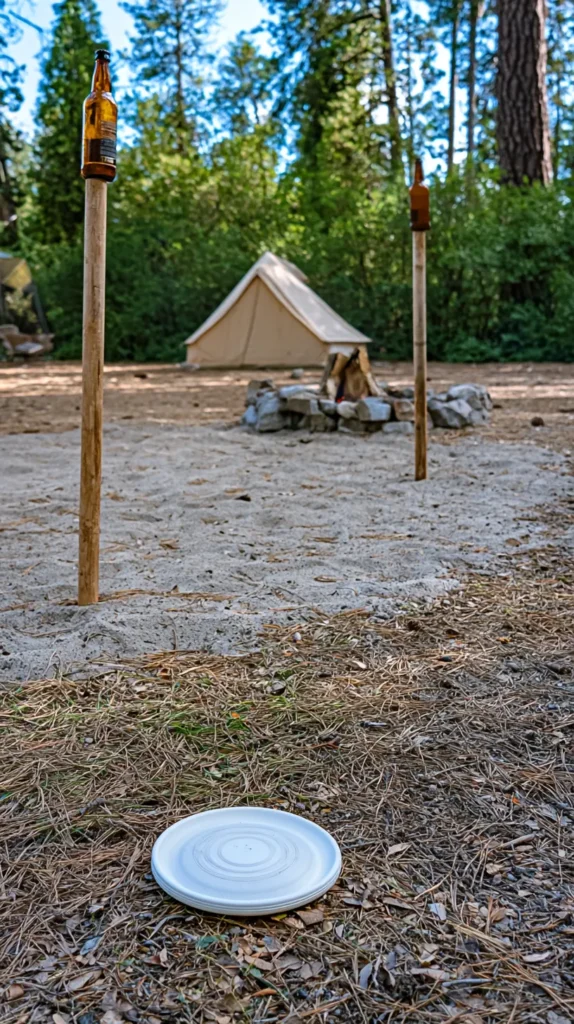
Bottle Bash is another flying disc game, but this one adds balance and catching into the mix. You set up two poles with bottles balanced on top. Then teams throw a disc at the other team’s pole or bottle while the defenders try to catch whatever falls.
The materials are two poles, two bottles, and one flying disc. Many sets come with everything included. You’ll need open space and ground firm enough to hold the poles steady. Grass, packed dirt, and sand can all work, but soft ground may need extra adjusting.
To play, teams stand near their own poles. One team throws the disc toward the other team’s bottle and pole. The defending team must try to catch the disc and the falling bottle. Points depend on whether the disc hits the pole, knocks down the bottle, or whether the defenders catch things in time.
This game has a little more movement than cornhole because both teams stay alert. Nobody can fully zone out, because a bottle may drop at any second. It’s also funny because people often forget they need to catch two things. The disc comes in, the bottle wobbles, and suddenly everyone’s hands become useless noodles.
Bottle Bash is best for teens and adults, or older kids with good awareness. Keep the play area clear, and use safe throwing rules. The game is simple, but flying discs and distracted campers are a bold combination.
Rainy Tent Games When The Weather Gets Rude
Rain at camp can make everyone dramatic. I get it. Wet shoes have a way of ruining optimism. Still, rain does not have to cancel the fun. It just moves the fun into smaller spaces and asks everyone to be less feral.
Tent Categories needs no supplies, which makes it perfect during a downpour. Pick a category, like breakfast foods, animals, movies, or things found at camp. Each player names one item in order. Nobody can repeat an answer. If someone gets stuck for ten seconds, they sit out until the next round.
Backpack Detective needs five to eight safe items from a bag. Place them in the middle where everyone can see. One player studies the items, then closes their eyes. Another player removes or moves one item. The first player guesses what changed. Materials stay basic: a backpack, camp items, and a tiny bit of patience.
Blanket Map is surprisingly good for younger kids. You need a blanket and small objects, like socks, cups, or toy cars. Players build a pretend campsite on the blanket. Then one person describes a route through it. Another player follows the route with a finger or small object.
Also, rainy games work best when rounds stay short. Damp moods do not need long commitments. Keep each round under five minutes, then switch games before people get restless. Variety beats perfection when everyone hears rain tapping overhead.
Here’s the reframe. Rainy games do not need to be consolation prizes. They can slow the group down in a good way. Suddenly, everyone talks more, notices more, and stops chasing the next big activity. Rain gets rude, but it can still be useful.

Camping Games For Teens And Adults Who Pretend They’re Chill
Teens and adults often claim they do not care about winning. Precious. Give them one decent challenge, and suddenly everyone has strategy. That is why camping games for older players should have just enough competition to wake people up.
The goal is not complicated rules. It is playful pressure. Nobody wants a thirty-minute explanation beside a cooler. Give the group a clean setup, a clear win, and room for mild drama.
Also, older players tend to enjoy games with choices. They like bluffing, bidding, guessing, and pretending they are above it all. Spoiler: they are not above it all. Not even a little.
- Campfire Hot Seat needs slips of paper and a cup. Each person writes funny, safe questions. One player draws a question and answers it. They may pass once per round. Questions must stay kind, because roasting is not a love language.
- Reverse Charades needs paper, pencils, and a timer. One player guesses while the team acts out the word together. No speaking, pointing at objects, or spelling words. The round ends after sixty seconds.
- Snack Auction needs wrapped snacks, paper money, and a mystery bag. Players get the same amount of fake money. Auction snacks one at a time, but keep some hidden until later. Highest bidder wins each snack.
- Two Truths And A Camp Lie needs no supplies. Each player shares two true statements and one false one. Everyone guesses the lie. Keep stories short, or the game becomes a podcast.
That tiny switch does more than people expect. The assumption says adults need “better” games than kids. Not really. Adults need permission to be ridiculous. Once that happens, the campsite gets louder in the best possible way.

Campfire FAQs For Game Night Sanity
What are the easiest camping games for mixed ages? I would start with Pinecone Pitch, Campsite Bingo, Shadow Charades, and Five-Item Hunt. Those games need simple materials, and the rules make sense fast. Younger kids can join, while adults still get to compete. However, keep teams mixed so older players can help younger ones.
What materials should I pack for camping games? Pack paper, pencils, glow bracelets, a small ball, clothespins, cups, and a flashlight. Add a timer if your phone battery behaves. Still, do not overpack. Many camping games use sticks, rocks, socks, and campsite items. That is the beauty of it. Your supply bag should help, not take over.
How do I keep camping games fair? Set the play area before the game starts. Then explain the win, the turn order, and the one rule people might bend. Most arguments come from fuzzy rules. So, say the obvious part out loud. Yes, even with adults. Maybe especially with adults.
What if some people do not want to play? Let them watch without making it awkward. A watcher can keep score, judge rounds, hold the flashlight, or ask questions. That gives them a role without forcing full participation. Fun gets weird fast when it starts seeming required.
Are prizes necessary for camp games? No, and I will stand by that tiny hill. Prizes can be fun, but they can also make people oddly intense. Let winners pick the next round instead. That keeps the mood light and saves your budget.
How many games should I plan for one camping night? Plan three, then expect to use two. That sounds lazy, but it is practical. Camping has built-in distractions, like smoke, snacks, stars, and people losing their cups.

One Last Thing Before Everyone Grabs A Flashlight
I tend to think camp fun works best when it stays a little imperfect. The ground is lumpy. Someone forgets a chair. A marshmallow probably hits dirt at some point. Yet, that is where the best energy lives, because nobody expects polished perfection outdoors.
Camping games give the group something to gather around before the night gets too quiet. They help kids move, adults loosen up, and quiet people join without getting shoved into the spotlight. As a mom, I like anything that keeps a group laughing without twelve supplies or laminated rules.
However, I also think the real charm comes from how simple it all is. One pinecone becomes a target. Then a flashlight turns into a stage light. Somehow, a sock becomes sporting equipment, which is both practical and mildly ridiculous. Pinterest may show the pretty version, but real camp fun usually looks more rumpled and better.
So, pack a few supplies, learn simple rules, and leave room for group tweaks. Often, someone suggests a new rule. That is when the game stops being planned and starts becoming yours.
Besides, camp memories rarely come from perfect plans. They come from someone laughing too loudly, missing the bucket, and demanding a rematch. I love that kind of low-stakes drama. That tiny bit of chaos is the good part. It keeps the whole night warm without making anyone work too hard.
A campfire, a few people, and one silly rule can carry the whole night.