I tend to think Arabic baby boy names have that rare mix of beauty and backbone. They can sound gentle, strong, old, fresh, poetic, and serious. That is not easy. Some names walk in wearing tiny loafers and carrying centuries of meaning.
Choosing a name can get weirdly emotional fast. One minute, you like a sound. Then you’re staring at meanings, spellings, family opinions, and preschool pronunciation drama. As a mom, I know names can start sweet, then become a full committee meeting.
However, Arabic names offer something many name lists skip. They carry story. Many connect to faith, family, language, character, poetry, and history. So, yes, they can look gorgeous on a birth announcement. Yet they also have roots deeper than a Pinterest trend wearing beige linen.
I’ve found that the best names do two things. First, they sound good when said out loud. Second, they still matter when the baby becomes a grown man with coffee, keys, and paperwork.
So, let’s talk about Arabic baby boy names without making it stiff. There are soft names, bold names, old names, bright names, and names with meanings that sneak up later. Some sound sleek at first, then surprise you with old roots. Others look traditional, then somehow feel fresh again.
A few names seem simple, then suddenly carry a whole family story. That is where this gets much more interesting.
Some of the links on this page are affiliate links. That means if you click and make a purchase, I may earn a small commission at no extra cost to you. If you’re curious about the fine print, you can check out my full disclosure.
Arabic Baby Boy Names With Soft, Strong Meaning
Some names sound calm, but they still carry weight. That balance matters because a baby name has to survive every stage. It should work for a newborn, a toddler, a teenager, and a grown man. No pressure, tiny hospital bracelet.
Arabic baby boy names often do this well because many meanings point to character. They are not just pretty sounds lined up in a row. Instead, they often speak to bravery, kindness, wisdom, light, leadership, or devotion. That is a lot for one little name, but I love the ambition.
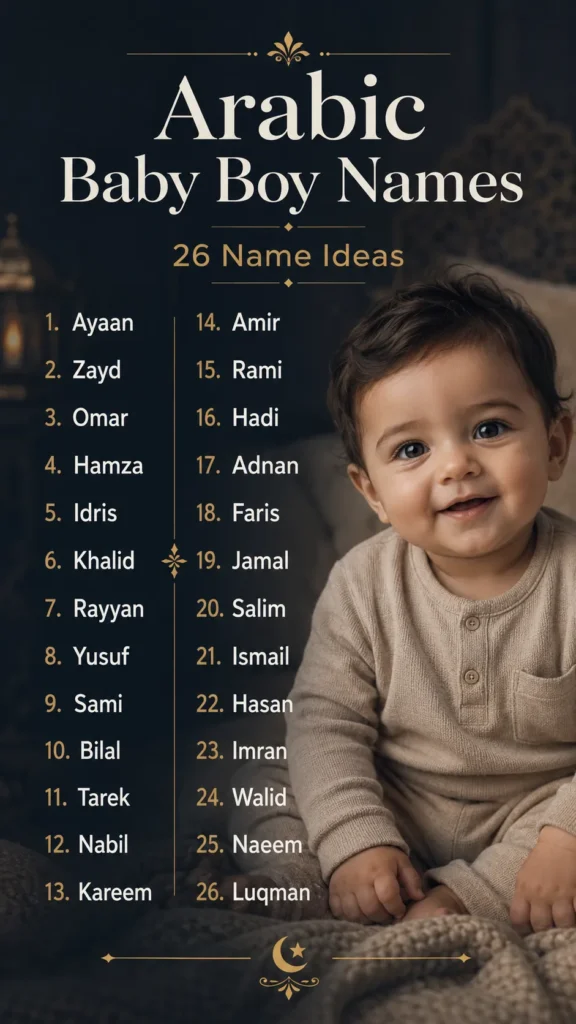
A few soft-but-strong options include:
- Amir means prince, leader, or commander.
- Sami means elevated, noble, or high-ranking.
- Zayd means growth, abundance, or increase.
- Kareem means generous or noble.
- Nabil means noble, honorable, or distinguished.
- Rami means archer, and it has a crisp sound.
- Malik means king or owner, depending on usage.
- Amin means trustworthy or faithful.
However, meaning should not bully the whole decision. A beautiful meaning helps, but the sound still matters. You will say this name when he is sleepy, muddy, delighted, dramatic, and maybe sticky. That name needs everyday legs.
Here is the sneaky part. Many Arabic baby boy names look short in English, yet they carry a full sentence of feeling. Zayd feels bright. Sami feels polished. Amin feels steady. Kareem sounds warm without trying too hard.
I tend to notice that names with simple spelling often age best. They feel easy to say, easy to love, and hard to overthink. That matters when everyone has an opinion and a cousin with a “better” idea. A calm name can be the quiet winner. That is a tiny naming miracle, and I will absolutely take it.
Why Meaning Matters More Than Trendiness
Trendy names can be fun, but they sometimes burn fast. A name can climb every baby chart, pop up everywhere, then suddenly sound tied to one decade. Cute? Sure. Risky? Also sure. Baby names can get a shelf life when everyone grabs the same one.
Arabic baby boy names often sidestep that problem because meaning gives them staying power. A name like Idris does not depend on a trend cycle. It has depth, rhythm, and a long history. Yusuf carries beauty, patience, and a beloved prophetic story. Hamza sounds bold, but it also has historic strength.
That does not mean every meaningful name feels heavy. Some names feel bright and easy. Rayyan is often linked with lushness, freshness, or a gate of Paradise in Islamic tradition. Zayn means beauty or grace, and yes, it sounds stylish without begging for applause.
Still, I would never pick only from a meaning chart. That can make the process way too serious. Suddenly every name must hold destiny, wisdom, emotional growth, and a future scholarship application. Nobody needs that kind of pressure before nap schedules exist.
Instead, I’d look for these pieces together:
- A meaning you respect
- A sound you enjoy saying
- A spelling that feels usable
- A name that works beyond babyhood
That last one matters more than people admit. The sweetest baby name should also fit a man at forty. Tiny cheeks are temporary. Paperwork is forever, which is rude but true.
So, yes, chase beautiful meaning. However, say the name across the kitchen. Whisper it. Call it from another room. Names change when they leave the list, and that part tells you plenty. The best ones keep their charm after the first crush.
How Arabic Baby Boy Names Carry History
Names do not float around without roots. They come from language, faith, family lines, poems, leaders, and daily life. That is why Arabic baby boy names can feel so layered. They often bring history without sounding dusty, which is a neat little trick.
Arabic naming traditions stretch across many regions and centuries. Some names come from the Qur’an and prophetic history. Others come from companions, scholars, poets, rulers, and older tribal traditions. Because Arabic spread through many cultures, names also traveled. You may see Arabic names across the Middle East, North Africa, South Asia, Europe, and beyond.
Yusuf, Musa, Nuh, Ibrahim, Ismail, Adam, Yahya, and Isa are well-known prophetic names. Their English forms may look familiar as Joseph, Moses, Noah, Abraham, Ishmael, Adam, John, and Jesus. Yet the Arabic forms have their own sound, spelling patterns, and cultural weight. Same roots, different music.
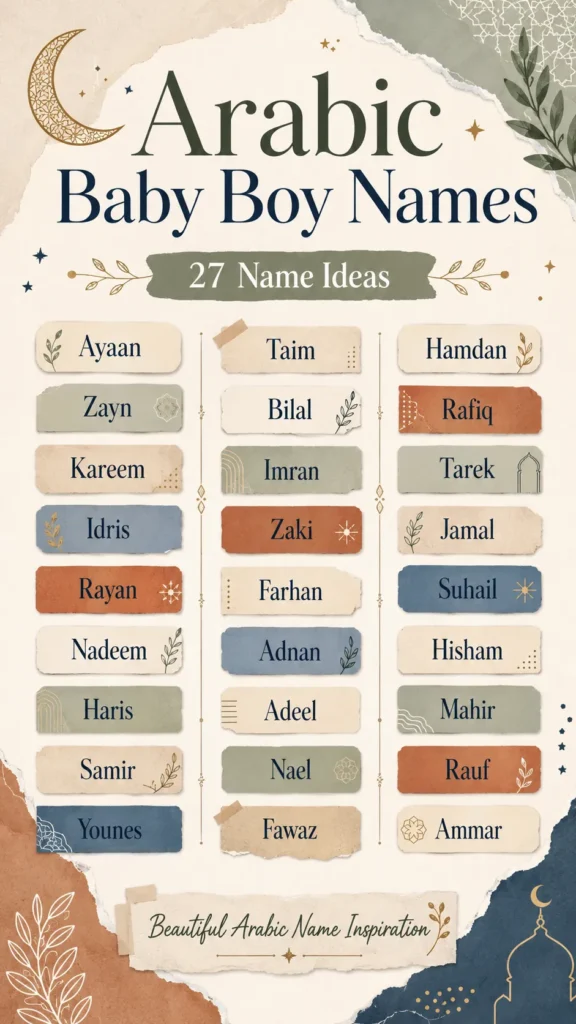
Then there are names tied to early Islamic history. Ali means lofty or exalted. Umar is often linked with flourishing or long life. Uthman is a historic name with deep roots. Bilal is loved by many because of Bilal ibn Rabah, an early companion known for faith and courage.
However, history does not mean a name must feel formal. Hamza sounds lively. Tariq feels sharp and memorable. Faris has an adventurous edge because it means knight or horseman. Adnan sounds grounded and classic. These names prove old does not have to mean stiff. A name can feel ancient and current in one breath.
The best part? A historic name can still feel personal. You are not choosing a museum label. You are choosing a name that can hold old meaning and new memories at once. That is the sweet spot.
Names That Sound Beautiful In Everyday Life
A name can have a gorgeous meaning and still feel awkward if daily use gets clunky. That is the part people sometimes skip. Real life is not a name dictionary. Real life is pediatric forms, birthday cakes, text messages, sports rosters, and playground yelling.
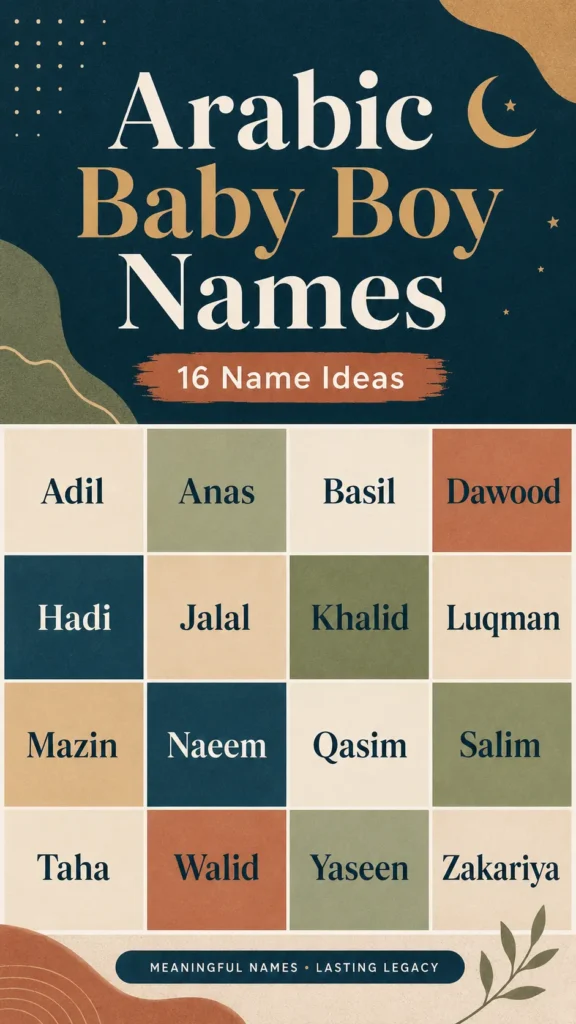
Arabic baby boy names can be wonderfully usable when the rhythm feels natural. Two-syllable names often work well because they are easy to say. They also fit with many last names. Names like Zayd, Sami, Rami, Amir, Idris, and Malik stay clear without losing style.
Longer names can also sound beautiful, especially when they have a steady flow. Ibrahim feels warm and classic. Ismail has a graceful sound. Sulaiman feels grand, but still approachable. Abdullah means servant of God, and it carries deep faith-based meaning for many families.
I tend to love names that do not need a whole speech every time. That does not mean avoiding culture. Please no. It means choosing a spelling you can explain with confidence. A name can be meaningful and still practical. Both can sit at the same table.
Some everyday-friendly options include:
- Zayd for a short, bright sound
- Amir for a strong, familiar rhythm
- Sami for a gentle, polished style
- Idris for something historic and cool
- Rami for a simple name with movement
- Malik for bold meaning with easy spelling
- Yusuf for tradition with warmth
- Hamza for strength without fuss
Here is a small naming truth. The name you enjoy saying repeatedly matters. You will say it in sweet moments and messy ones. So the sound deserves a vote. Maybe two votes, because you will say it a lot. Daily life is where the name proves itself.
Arabic Baby Boy Names With Faith And Family Roots
For many families, names are not just cute labels. They connect generations, prayers, values, and belonging. Arabic baby boy names often sit right in that space. They can honor faith while still feeling tender and personal.
Names from Islamic tradition are especially meaningful for many parents. Muhammad means praised, and it remains deeply loved worldwide. Ahmad shares a related meaning, often understood as highly praised. Mustafa means chosen, and it has a graceful, dignified sound. Ibrahim, Ismail, Musa, Yusuf, and Yahya also carry deep prophetic ties.
However, not every Arabic name has to be religious. Some names connect more to virtues, nature, skill, or social qualities. Hakim means wise. Latif means kind, gentle, or subtle. Jamil means beautiful. Saif means sword, which sounds dramatic in the best baby-name way. I mean, tiny socks plus a warrior name? Delightful contrast.
Family roots can matter just as much. A name may honor a grandfather, a beloved uncle, a family homeland, or a naming pattern. Sometimes that emotional thread outweighs trend charts by a mile.
A few names with strong roots include:
- Ali means lofty or exalted.
- Hasan means handsome or good.
- Husayn means little handsome one or good one.
- Khalil means friend or close companion.
- Jamal means beauty.
- Salim means safe, sound, or whole.
- Omar or Umar has historic depth and broad use.
- Faisal means judge, decisive, or one who separates truth.
Still, the family conversation can get spicy. People have opinions. Very many opinions. Yet the right name usually feels steady after the noise fades. That calm matters more than the loudest suggestion. Quiet certainty is underrated in baby naming. Sometimes the old family favorite becomes the freshest choice in the room.

Spelling Choices That Deserve A Second Look
Spelling can make Arabic names feel simple or confusing in English. Arabic sounds do not always match English letters neatly. So, yes, one name may have more than one accepted spelling. This is not chaos. It is transliteration doing its little linguistic gymnastics routine.
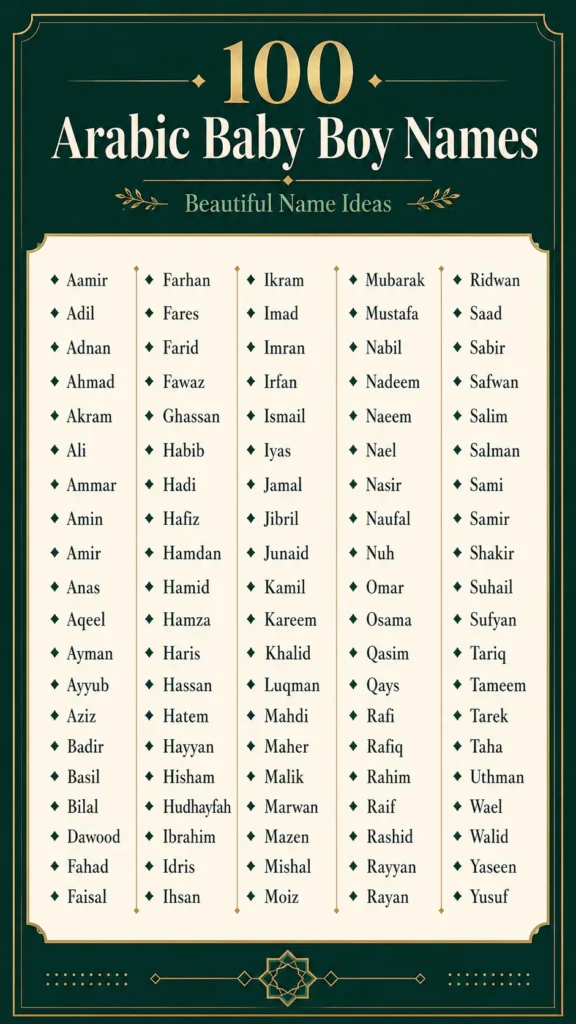
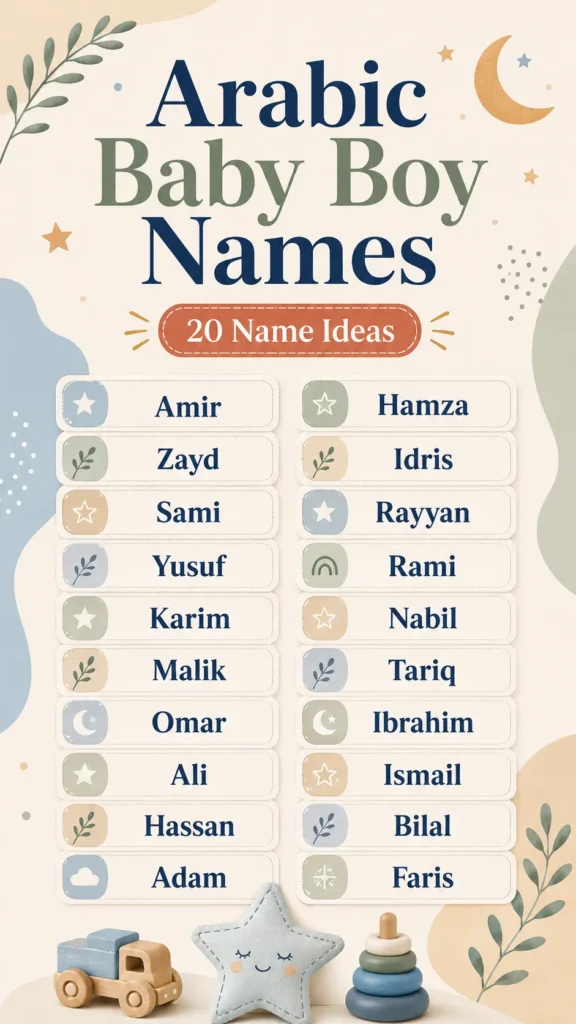
Arabic baby boy names may change slightly when written in English. Yusuf can also appear as Yousef or Youssef. Umar may appear as Omar. Hasan may appear as Hassan. Zayn may appear as Zain. Kareem may appear as Karim. Tariq may appear as Tarek or Tareq.
None of those choices automatically makes the name wrong. Instead, the best spelling depends on family preference, regional use, pronunciation, and daily practicality. Some spellings may help people pronounce the name more closely. Others may match a family tradition better. That is why “correct” often means correct for your family.
I’d think about spelling with two goals in mind. First, does it respect the name? Second, can you live with the daily version? Those questions sound simple, but they cut through a lot of noise.
Yusuf feels close to a common Arabic transliteration. Yousef may help English readers say the first vowel. Zayn looks sleek and modern. Zain feels simple and familiar. Hasan is shorter and clean. Hassan may guide pronunciation for some readers. Umar reflects one common Arabic rendering. Omar is widely known in English-speaking places.
Here is the part people forget. A spelling becomes normal because your family uses it. Once people learn it, that version becomes the name. The birth certificate does not need to impress strangers at Target. Though, yes, fewer corrections can be a blessing. A lovely spelling should not create daily paperwork rage.

Arabic Baby Boy Names That Feel Modern
Modern does not always mean newly invented. Sometimes a name feels modern because it is short, clean, and easy to picture on anyone. That is where many Arabic baby boy names shine. They can be ancient and fresh at the same time. That is very efficient of them.
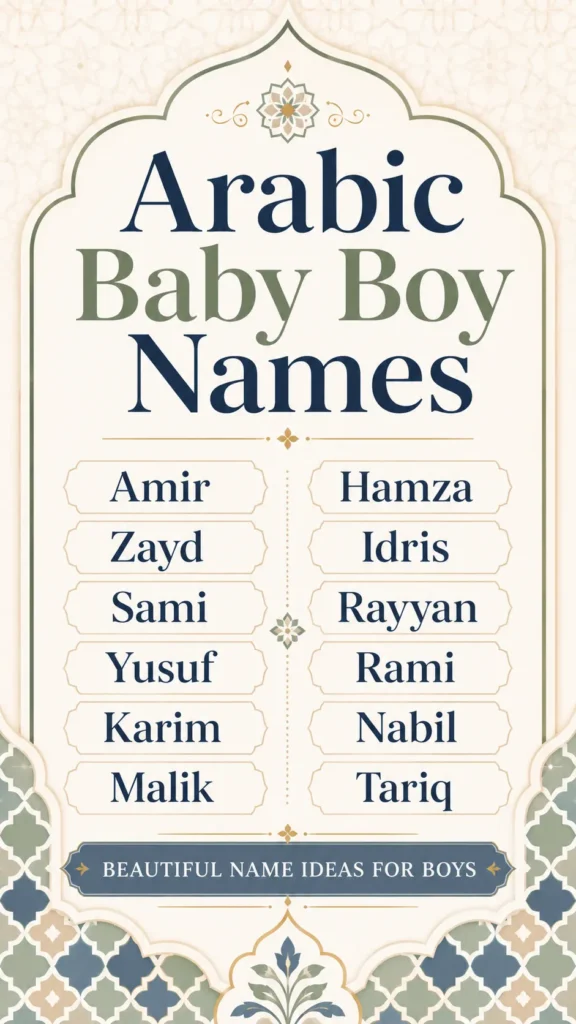
Names like Zayn, Rayyan, Sami, Rami, Idris, Amir, and Zayd feel current without sounding flimsy. They have style, but they are not all sparkle and no substance. There is meaning under the nice sound, which makes them more satisfying.
I also like names that pair well with many middle names. A short first name can handle a longer middle. A longer first name may look elegant with something simple. For example, Zayd Ibrahim has a different mood than Ibrahim Zayd. Both work, but they do not say the same thing.
Rayyan has a lush, fresh sound. Idris feels smart and quietly cool. Amir sounds polished without getting fussy. Sami feels gentle but not fragile. Faris has movement because it means knight or horseman. Tariq feels striking because it can mean morning star, night visitor, or one who knocks.
However, modern style should not erase meaning. A name can look cool on a nursery sign and still carry history. That is the sweet spot. It gives you the pretty font moment and the deeper story underneath.
One more thing. Avoid picking only what sounds viral right now. Viral fades. A name with roots keeps standing there, looking calm and unbothered. That kind of confidence ages better than any trend. It also photographs nicely on tiny nursery art, which never hurts. That contrast gives modern parents more room to play.

FAQs About Choosing An Arabic Name
Are Arabic baby boy names always Muslim names? No. Arabic is a language and cultural family, not only a religion. Many Arabic names are used by Muslims, Christians, and people from different backgrounds. However, some names have strong Islamic meaning, so context matters.
Do Arabic names have one correct English spelling? Not always. Arabic uses a different writing system, so English spellings depend on transliteration. That is why Yusuf, Yousef, and Youssef can point to the same name. Family tradition often decides the spelling.
Should I pick a name by meaning first? Meaning matters, but sound matters too. A name should be meaningful and usable. Otherwise, you may love the idea more than the daily name, and that gets awkward fast.
Can I use an Arabic name if I’m not Arab? It depends. Some names are widely used across cultures. However, respectful research matters, especially with names tied to faith or sacred history. Good intent still needs good context.
Which names sound easy in English? Amir, Sami, Rami, Zayn, Adam, Malik, and Idris often feel familiar. Still, pronunciation can vary by region. A simple spelling can help, but you still get to choose the name you love.
Are meanings always exact? Not perfectly. Meanings can shift by root, usage, and tradition. So, treat baby-name meanings as helpful guideposts, not courtroom evidence. That sentence sounds dramatic, but naming can get dramatic.
What if family members disagree? That is common. Listen politely, then remember who fills out the paperwork. A name can honor family without letting every cousin join the board of directors. Helpful input is lovely. A naming takeover is not. Names are generous like that.

The Name That Still Makes You Smile Later
I tend to think the best baby names get better after you sit with them. They do not need to shout. Instead, a favorite keeps returning with a little spark. It says, “Oh, there you are,” without making a scene. That quiet pull deserves attention.
Arabic baby boy names can do that beautifully because they offer more than style. They give you sound, meaning, culture, and story. Some feel gentle. Others feel bold. A few manage both, which feels slightly unfair to every other name list.
As a mom, I know naming can turn into a strange emotional weather system. One minute, you are calm. Then someone suggests a spelling, a nickname, or a family tradition, and suddenly the clouds gather. Still, the right name often brings everything back down.
Pinterest can make the search look soft and pretty, with perfect fonts and tiny blue blankets. Real naming has more texture. There are opinions, histories, pronunciations, and little gut checks you cannot quite explain.
However, that is what makes the process meaningful. You are not only choosing what sounds cute on a baby. You are choosing something he can carry into every room after that.
So say the names slowly. Let the meanings sit there. Notice which ones keep coming back. Some names get louder when the trendy noise fades. Maybe that is why I like names with roots. They give a child something sturdy before the world gets noisy. The name that lingers may already know its way home.