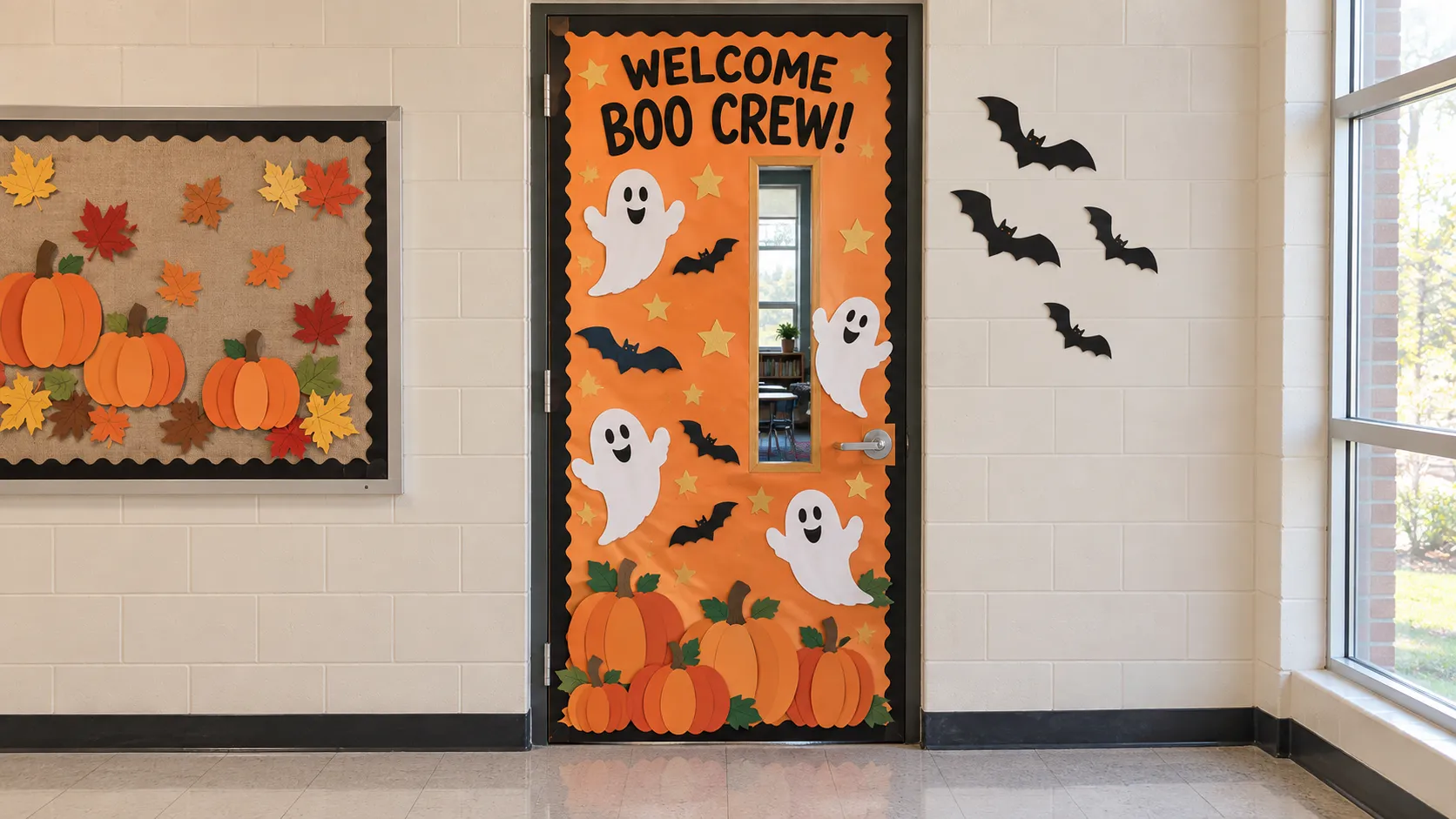
Fall sneaks up on preschoolers the same way glitter sneaks into carpet: quietly, then everywhere. One minute it’s ninety degrees outside. The next, your toddler wants a pumpkin and a tiny flannel shirt. That’s usually when fall preschool activities start trending on every screen you own.
They whisper that you should be gluing felt leaves onto everything. I get the appeal! Little hands love a good craft, and little brains genuinely light up when the seasons change. That’s true even in places where autumn barely bothers to show up.
I’m a mom, and by September, I’ve already saved way too many activity ideas online. Some days, the crafts work beautifully. Other days, a preschooler decides pumpkins are terrifying, and everything falls apart in minutes. Neither outcome means you’re doing this wrong.
What works well tends to surprise people, and that’s why I want to walk through it. Some of the cute ideas online turn into disasters at home. Meanwhile, some boring-looking ones become weirdly obsessive favorites. A few of them genuinely surprised me with how well they held attention.
Plenty of lists online recycle the same ten ideas without asking whether preschoolers even like them. This one doesn’t work that way, and a couple of these picks might surprise you completely. Stick around, because the list gets longer, weirder, and messier than expected.
Some of the links on this page are affiliate links. That means if you click and make a purchase, I may earn a small commission at no extra cost to you. If you’re curious about the fine print, you can check out my full disclosure.
Fall Preschool Activities Worth The Glitter Mess
Not every fall preschool activity deserves the hype it gets online. Some ideas look stunning in photos and fall apart the moment real toddlers touch them. I’ve found that the winners share one thing: they survive contact with small, sticky hands. That’s a lower bar than most blogs suggest, and it’s the only bar that really counts.
Season after season, these hold up without turning the kitchen table into a crime scene:
- Leaf rubbing with crayons, since it’s nearly impossible to mess up
- Pumpkin painting with sponges instead of brushes, which cuts down on tears
- Apple stamping using halved apples and washable paint
- Sorting acorns, leaves, and pinecones by size or color
- Building a fall sensory bin with dried corn and mini pumpkins
- Raking one small pile, just for the joy of jumping back in
Every one of these works with almost no setup. That matters more than people admit, since prep time is the real enemy of preschool crafting, not preschoolers. Give a three-year-old five minutes of unsupervised glue (a reckless move), and you’ll understand why simplicity wins.
Here’s the twist nobody mentions: fancier activities usually get abandoned faster. A detailed diorama sounds impressive on paper, but attention spans don’t reward your effort level. Simple, repeatable, slightly messy activities win almost every time. I’d rather spend five dollars on contact paper than buy one more kit destined for a closet shelf.
None of this means skipping creativity altogether, since preschoolers still need room to invent their own version. Hand over supplies, step back a little, and let them decide what a leaf pile becomes that day. Sometimes it’s a nest, sometimes it’s dinner for a stuffed animal, and both count as real play.
September Ideas For That Back-To-School Fog
September rarely resembles fall in most places, and preschoolers notice that mismatch fast. The air stays thick, the leaves stay green, yet screens already push flannel and spice everywhere. I tend to notice that September activities work best as a gentle transition, not summer’s forced ending.
Think weather charts, simple calendars, and short talks about days growing shorter. These ideas sound quiet next to glittery crafts, but preschoolers respond well to routine and predictability. A weekly weather chart, updated with stickers, holds attention longer than one flashy project ever manages.
Here’s an unpopular opinion: September might be the easiest month to get right, since expectations stay low. Nobody expects a full harvest festival before October even starts. That takes real pressure off busy mornings, which matters more on hectic weeks than people admit.
Books help enormously here too, and they cost nothing extra to include. Reading a simple fall story during snack time counts as a real activity. It doesn’t need glue, glitter, or cleanup afterward to matter. Preschoolers absorb seasonal words like “harvest” and “cool breeze” just by hearing them repeated.
You don’t need a picture-perfect setup for language to sink in slowly. By October, kids who started slow in September usually carry stronger seasonal vocabulary already. Small, low-effort moments add up quietly, and that’s worth remembering on the hardest mornings.
Plenty of parents skip September entirely and jump straight to pumpkins, and that’s a fair choice too. Still, I’d argue the slow build makes October seem less rushed once bigger projects show up. Easing in now saves energy for the busier weeks still waiting ahead.
Pumpkin Activities Preschool Kids Never Seem To Tire Of
Pumpkins get so much attention every fall, and preschoolers never seem to mind the repetition. Something about a pumpkin’s shape, weight, and mess-making potential keeps kids endlessly curious. I’ve noticed that pumpkin activities work well because they involve real sensory input, not pictures of pumpkins.
Scooping pumpkin guts remains, somehow, the most requested activity every single year. It’s slimy, strange, and slightly gross, which is exactly why preschoolers love it so much! Give them small cups and spoons, let them dig in, and forget about a clean kitchen.
One thing surprises new parents: outside painting often falls flat compared to touching the inside. Visual crafts look impressive to adults, but preschoolers crave texture over appearance almost every time. That single shift in thinking changes which activities are worth planning at all.
Weighing pumpkins side by side introduces early math concepts without anyone noticing they’re learning. Ask which pumpkin seems heavier, then check a scale together to confirm or challenge their guess. Guessing wrong, it turns out, is half the fun for a determined four-year-old, every time.
Counting pumpkin seeds, one by one, teaches patience along with numbers. It takes longer than adults expect, and that’s exactly the point of the exercise. Preschoolers build focus through repetitive, hands-on counting far better than through flashcards or worksheets. Even a simple seed count can turn into a fun family guessing game.
Pumpkins, it turns out, are less about the craft and more about the mess. That mess is where most of the real learning quietly happens.
Easy Fall Preschool Activities For Busy Weekday Mornings
Mornings before preschool rarely allow room for elaborate plans, and that’s fine. Quick fall preschool activities exist precisely for mornings when everyone’s running fifteen minutes behind. These ideas take five minutes or less, require almost no cleanup, and still carry real value.
Here’s a short list worth keeping taped inside a kitchen cabinet:
- Sorting paper “leaves” by color while waiting for breakfast
- Naming fall words that start with today’s letter of the day
- Tracing a hand to make a quick turkey or leaf shape
- Matching socks patterned like acorns, apples, or pumpkins
- Singing one short fall-themed song during the car ride
None of these require supplies you don’t already own. That’s the entire point, since most mornings don’t allow a supply run before 8 a.m. Preschoolers don’t need elaborate materials to stay engaged, despite what craft blogs imply.
One reframe surprises tired parents: mornings don’t need a theme to count as fall. A single fall word repeated in the car adds up over thirty school days. Preschoolers build vocabulary through repetition, not through one polished lesson delivered perfectly once. That truth alone should lower the pressure most parents put on weekday mornings.
What surprises busy parents most is how quickly these tiny activities become expected rituals. A thirty-second song in the car turns into a demanded tradition within about a week. Once that happens, mornings somehow run smoother, even without extra time added anywhere.
Consistency, not complexity, makes these mornings work. Small fall moments, repeated often enough, eventually turn into tradition without much real effort.
Pre-K Fall Crafts That Don’t End In Glue Everywhere
Glue is the true villain of preschool crafting, more than any pumpkin ever could be. Pre-k fall crafts get a bad reputation mostly from glue disasters, not the craft ideas themselves. I tend to notice that swapping glue for tape or stickers instantly improves everyone’s mood.
Consider these craft options that skip the glue bottle entirely:
- Leaf collages using clear contact paper instead of glue
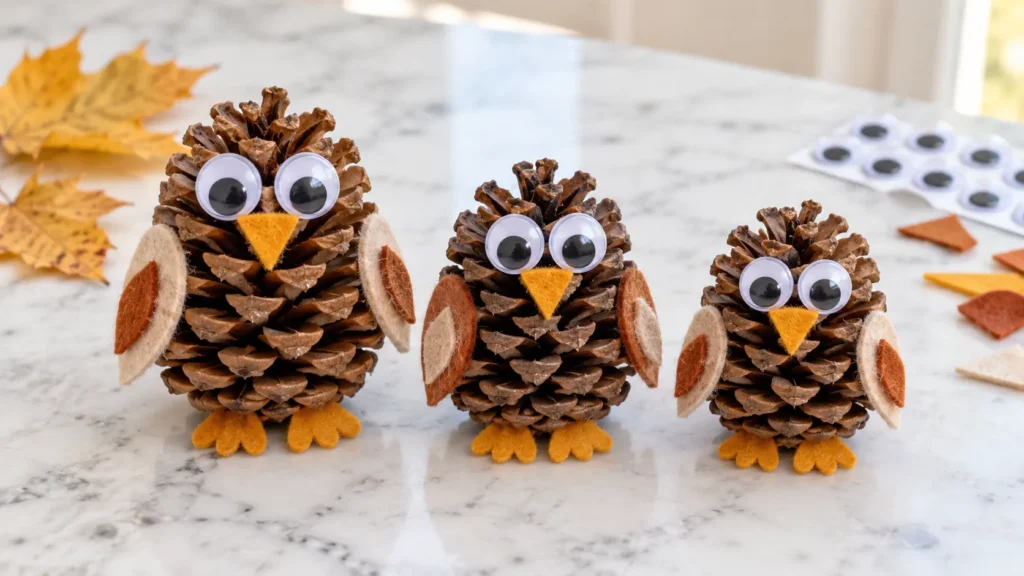
- Pinecone owls assembled with stick-on wiggle eyes
- Paper plate scarecrows using stapled fabric scraps
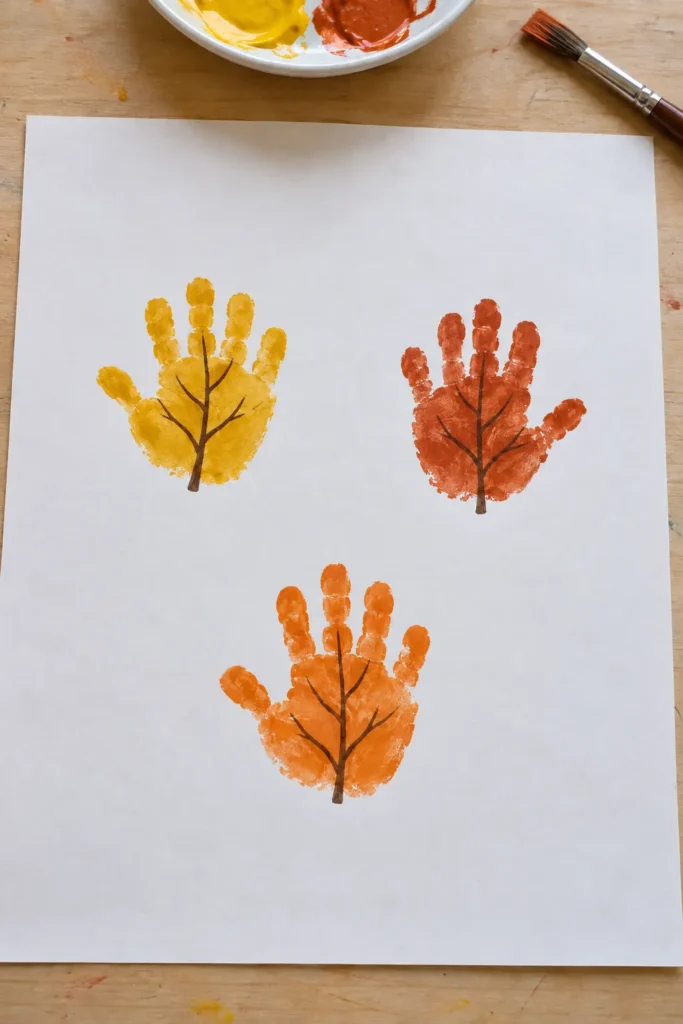
- Handprint trees made with a stamp pad instead of paint
- Fall garlands strung with a hole punch and yarn
Contact paper deserves way more credit than it currently gets in craft circles. Leaves stick to it instantly, kids can peel and place freely, and cleanup takes under a minute. That single swap alone eliminates most of the mess parents dread most. It also means fewer ruined shirts, which is a win nobody undervalues in September.
Worth reframing: crafts don’t need permanence to count as successful. A garland that falls apart by dinner still taught color sorting, patterning, and fine motor control. The value happened during the activity, not in whatever survives afterward on the wall.
Staple-based crafts also let preschoolers build early hand strength, which glue simply can’t teach. Squeezing a stapler repeatedly works small muscles in ways that matter more than adults usually realize. That’s a fine motor benefit hiding inside what looks like a simple paper craft.
Skip the glue this season, and see how much calmer craft time gets.
Fall Preschool Activities For Fine Motor Skills (Sneaky Learning!)
Fine motor skills sound boring compared to crafts, yet they matter more than most parents realize. Fall preschool activities happen to be perfect for sneaking fine motor practice into ordinary play. Preschoolers won’t notice they’re building hand strength while they’re busy having fun with leaves.
Tearing paper into small pieces, instead of cutting it with scissors, builds surprising hand control. That tearing motion works muscles kids will need later for writing and buttoning clothes. I’ve found that a pile of orange and red paper alone can occupy a preschooler for twenty minutes.
Threading dried leaves or paper shapes onto yarn strengthens the same pincer grip used for pencils. It’s slow, occasionally frustrating, and genuinely valuable in ways that flashier crafts rarely match. Give preschoolers a blunt plastic needle, and let them work through the frustration at their own pace.
Worth reconsidering: scissors practice matters more in fall than people assume, thanks to leaf shapes. Cutting zigzag leaf outlines teaches control that straight lines simply can’t replicate as well. Curved, uneven shapes force small hands to adjust constantly, which builds real coordination over time.
Squeezing a turkey baster to “suck up” pom-pom leaves sounds silly, but it works incredibly well! That single motion strengthens hand muscles used for holding pencils, buttoning coats, and opening lunch containers. Preschoolers treat it like a game, completely unaware they’re doing physical therapy in disguise.
Fine motor work doesn’t need a fancy name to matter. It just needs repetition, patience, and a decent pile of leaves.
November Activities For Preschool When Pumpkins Are Old News
By November, pumpkins have officially overstayed their welcome in most preschool classrooms. Everyone’s ready for something new, including the preschoolers who painted approximately four hundred pumpkins in October. November activities for preschool need a different angle entirely, and gratitude works surprisingly well here.
Try shifting focus toward these simple November ideas instead:
- Making a gratitude tree with leaf cutouts listing one thing per leaf
- Handprint turkeys, because some traditions deserve to stick around
- Sorting acorns and nuts by texture instead of color
- Baking simple cornbread together as a smell-based sensory activity
- Reading books about harvest time instead of Halloween
Gratitude, as a concept, sounds abstract for preschoolers, yet it works better than expected. Ask them to name one favorite person, food, or toy, then write it on a leaf. Within days, that gratitude tree becomes genuinely full, and kids start adding to it unprompted.
Here’s a reframe worth sitting with: November isn’t a lesser fall month, just a quieter one. Without pumpkin mania competing for attention, preschoolers focus more deeply on fewer, calmer activities. That shift in pace often produces better engagement than October’s louder, busier energy ever does.
Cornbread, specifically, works as an activity because preschoolers can help stir, pour, and smell as it bakes. That sensory experience teaches patience while something slowly transforms in the oven. No craft supplies required, just butter, cornmeal, and a little supervision nearby.
Gratitude trees also travel well past November, if a family wants to keep one going year-round. Swap leaves for stars in December, or hearts come February, and the format still works. One simple idea, reused often, usually beats a fresh idea used only once.
November deserves better credit than it usually gets in fall planning.
Fall Preschool Activities Even The Reluctant Toddler Will Love
Some toddlers refuse every craft on principle, and that’s a completely normal phase. Fall preschool activities don’t need enthusiastic buy-in to still count as successful learning moments. I’ve noticed that reluctant toddlers often engage more through movement than through sitting-still crafts.
Nature walks solve more resistance than almost any indoor activity ever could. Walking outside, collecting three leaves, and naming their colors counts as a full activity. Reluctant toddlers who hate glue rarely object to walking around outside and picking things up.
One reframe helps a lot of frazzled parents: participation doesn’t require excitement to be valuable. A toddler who quietly watches a sibling do a craft still absorbs vocabulary and concepts. Forcing participation usually backfires, while patient modeling tends to work eventually, sometimes weeks later.
Music offers another entry point for kids who reject crafts outright. Playing a simple fall song while dancing with scarves counts as sensory and physical activity. Reluctant toddlers who won’t touch paint will often move their whole body without hesitation.
Cooking together works surprisingly well too, since eating provides its own built-in motivation. Stirring pumpkin bread batter, even briefly, counts as a fine motor and sensory experience. Nobody needs to finish a craft perfectly for it to have mattered.
Reluctant toddlers eventually come around, usually on their own unpredictable schedule. Meanwhile, movement, music, and food quietly keep the season going without a single meltdown.
Pressure, more than the activity itself, usually causes the resistance in the first place. Drop the pressure, offer a choice instead of a demand, and watch what happens next. A reluctant toddler handed two simple options often picks one without any fuss at all.
Fall Preschool Activities: The Questions I Get Asked Most
What age group do fall preschool activities work best for? Most fall preschool activities suit ages two through five pretty comfortably. Younger toddlers need simpler, larger movements, while four- and five-year-olds handle more detailed crafts. Adjust supervision level based on age, not the activity itself.
How much time should I set aside for one activity? Fifteen to twenty minutes covers most preschool attention spans realistically. Some sensory activities, like pumpkin scooping, stretch longer once kids get absorbed. Others end in under five minutes, and that’s completely fine too.
Do I need expensive supplies for fall preschool activities? Not really, and I’d argue the opposite is usually true. Paper, tape, dried leaves, and pantry items cover most of what’s genuinely needed. Expensive kits often get used once before landing in a closet.
What if my preschooler refuses to participate? That happens constantly, and it doesn’t mean the activity failed. Offer a smaller version, step back, and try again a different day. Reluctance now often turns into enthusiasm later, once pressure disappears completely.
Can these activities work in a classroom, not just at home? Yes, most scale up easily for small groups or full preschool classrooms. Sensory bins and leaf sorting, especially, work well with multiple kids sharing materials. Just plan for more mess, and maybe more napkins than usual.

Fall Preschool Activities For Sensory Play And Counting
A few of these lean less into crafting and more into moving, sorting, and counting things with real hands. They still count as fall preschool activities, just a quieter version.
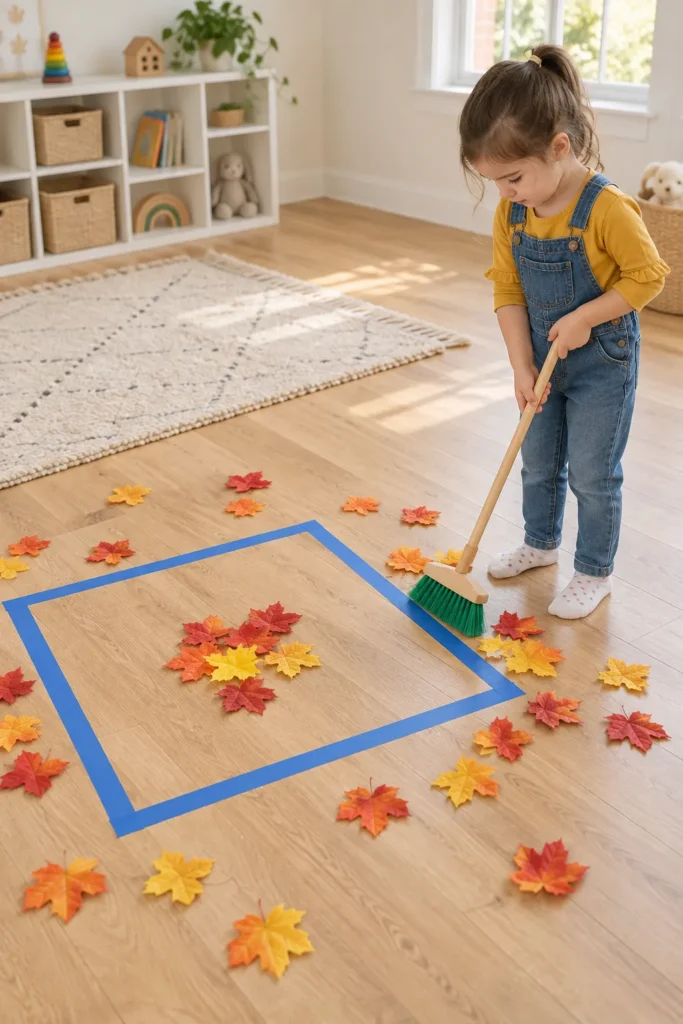
Leaf Sweep And Sort
Materials: faux or real leaves, painter’s tape, a small broom
- Tape a square outline directly onto the floor
- Scatter leaves around the room
- Hand over a small broom and let kids sweep every leaf into the square
- Sort leaves by color once they’re all inside
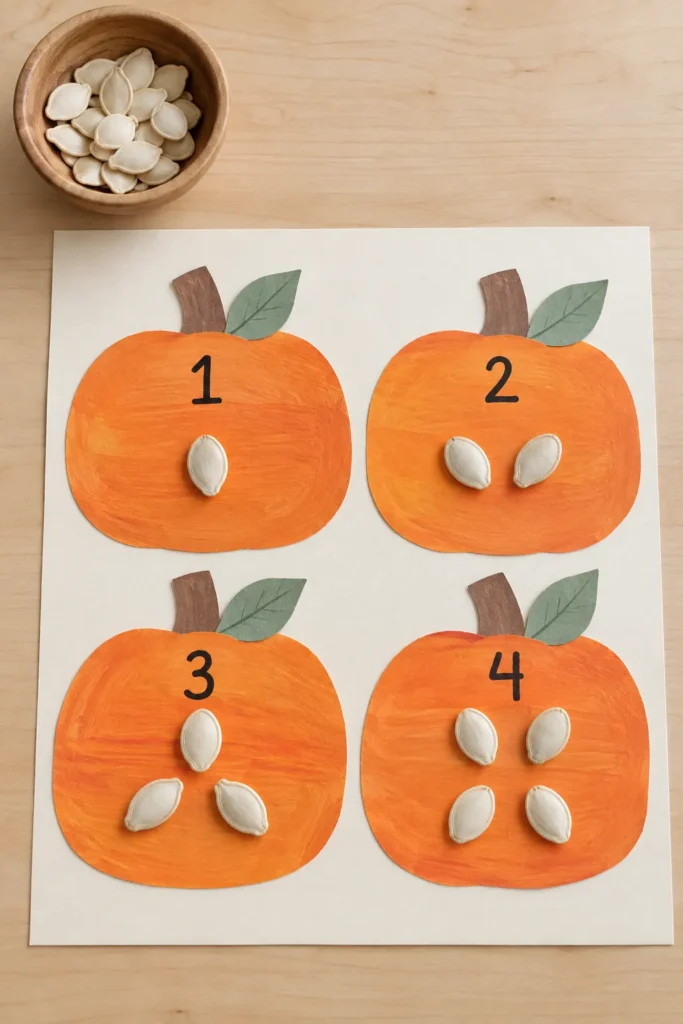
Pumpkin Seed Counting Cards
Materials: paper pumpkin cutouts numbered one and up, real or craft pumpkin seeds, glue
- Lay out the numbered pumpkin cards
- Hand over a small bowl of seeds
- Ask kids to count out the matching number for each card
- Glue seeds down once the count is correct
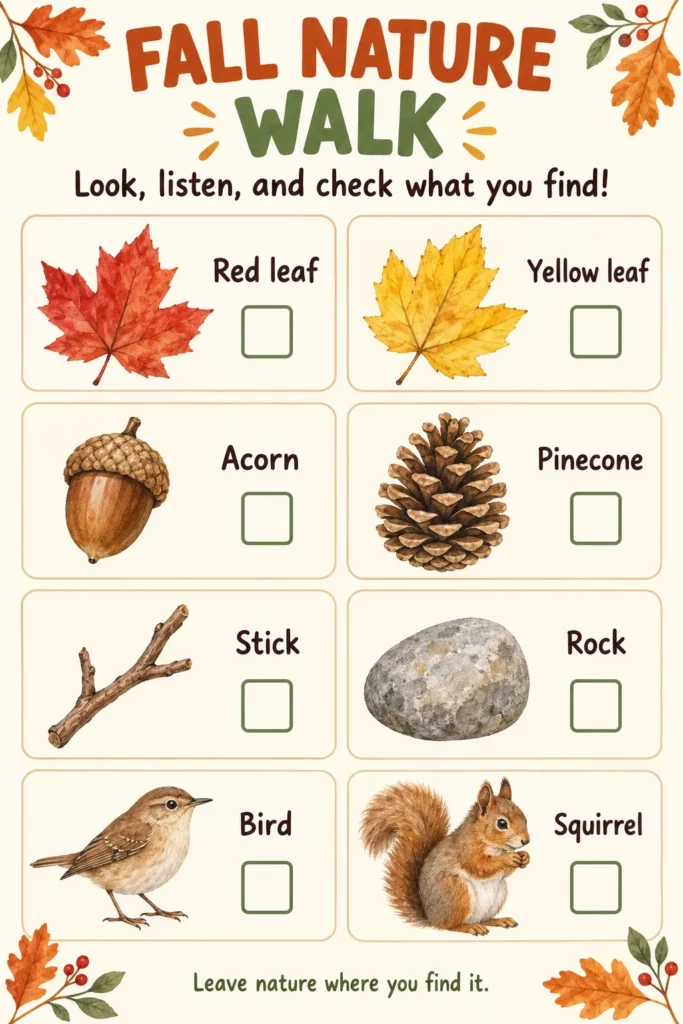
Fall Nature Walk Scavenger Hunt
Materials: a simple printable checklist, a pencil or crayon
- Print a checklist with common fall finds like leaves, acorns, and pinecones
- Head outside for a short walk
- Check off each item as it’s spotted
- Talk about colors and textures along the way

Fall Preschool Crafts With Paper And Glue
These three crafts use basic paper supplies and work well for small groups or one busy toddler at the kitchen table.
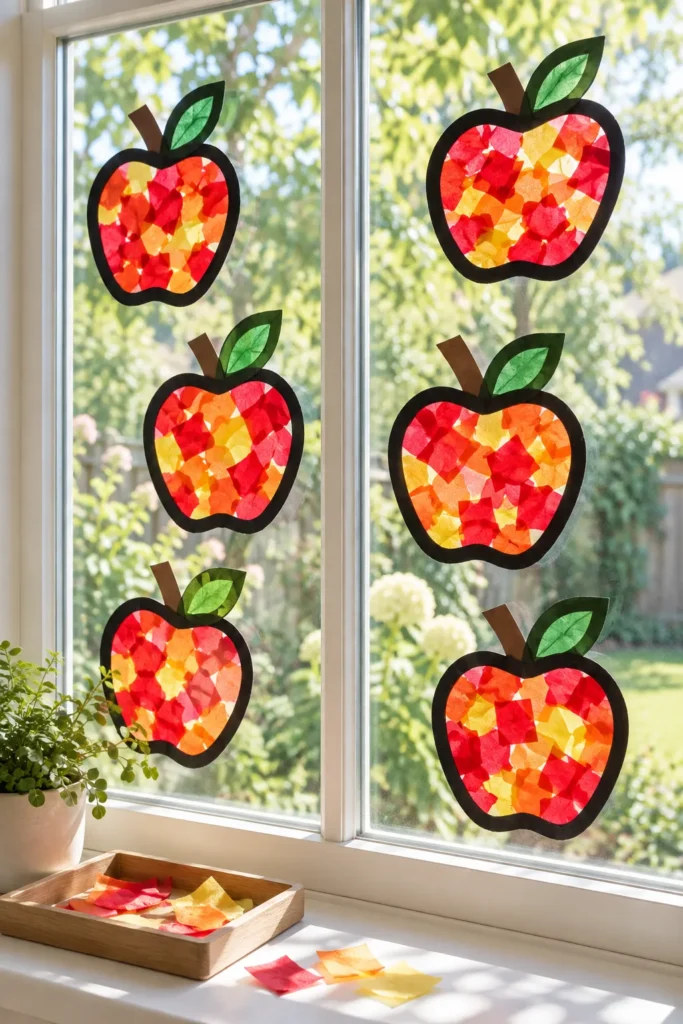
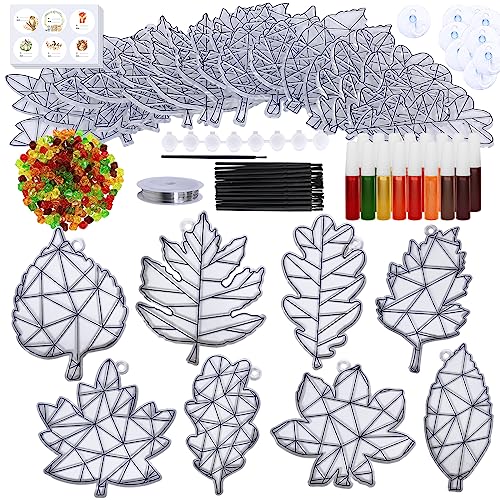
Tissue Paper Apple Suncatchers
Materials: apple outline cut from black paper, tissue paper squares in red, orange, and yellow, glue stick, contact paper
- Cut an apple shape from black paper, then cut out the center
- Stick contact paper behind the opening, sticky side facing out
- Press tissue paper squares onto the sticky area
- Trim the edges and hang it in a window
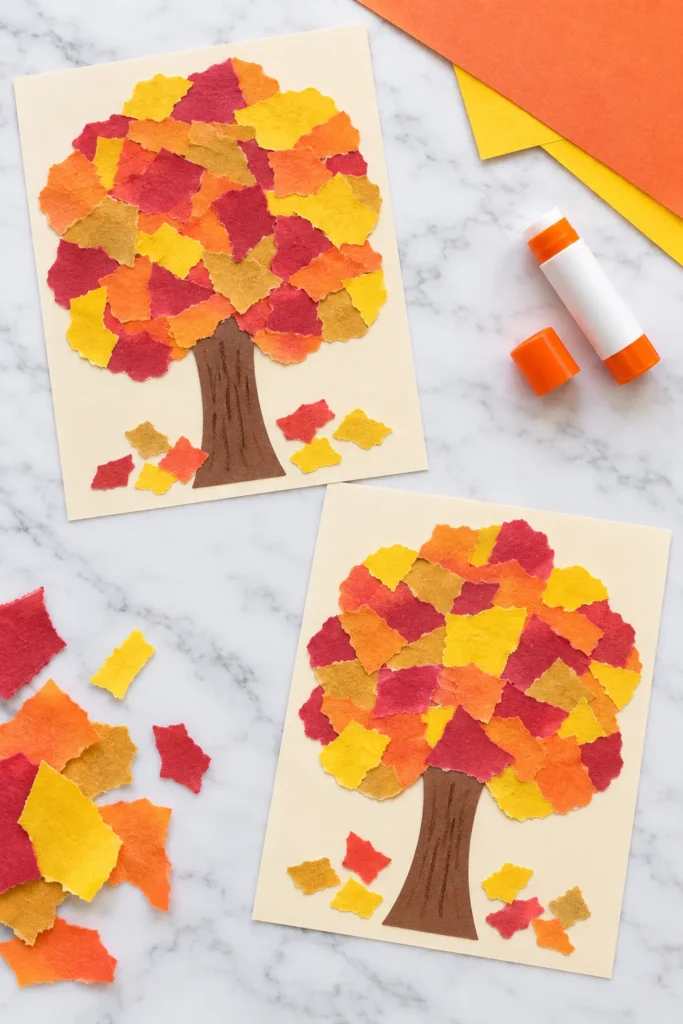
Torn Paper Fall Tree Collage
Materials: brown paper for the trunk, colored paper in red, orange, and yellow, glue stick, plain paper background
- Glue a simple trunk and branches onto the background
- Tear colored paper into small pieces
- Glue torn pieces above the branches to build the leaves
- Add a few loose pieces falling near the bottom
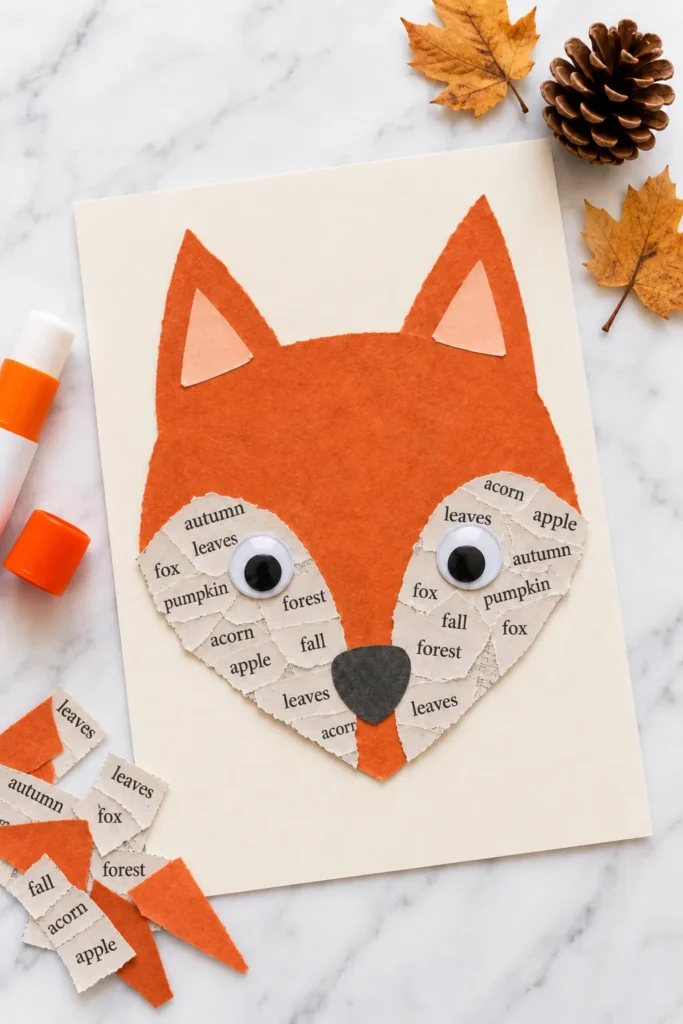
Fall Vocabulary Fox Craft
Materials: orange and white paper for the fox face, small printed or handwritten fall words, glue, googly eyes
- Cut a fox face shape, adding ears and a triangle nose
- Glue small word strips onto the cheeks like fur
- Add googly eyes above the nose
- Read the words together once it’s finished
Fall Preschool Crafts To Display Around The House
These three hold up well on a shelf or windowsill, which makes them worth the extra glue.
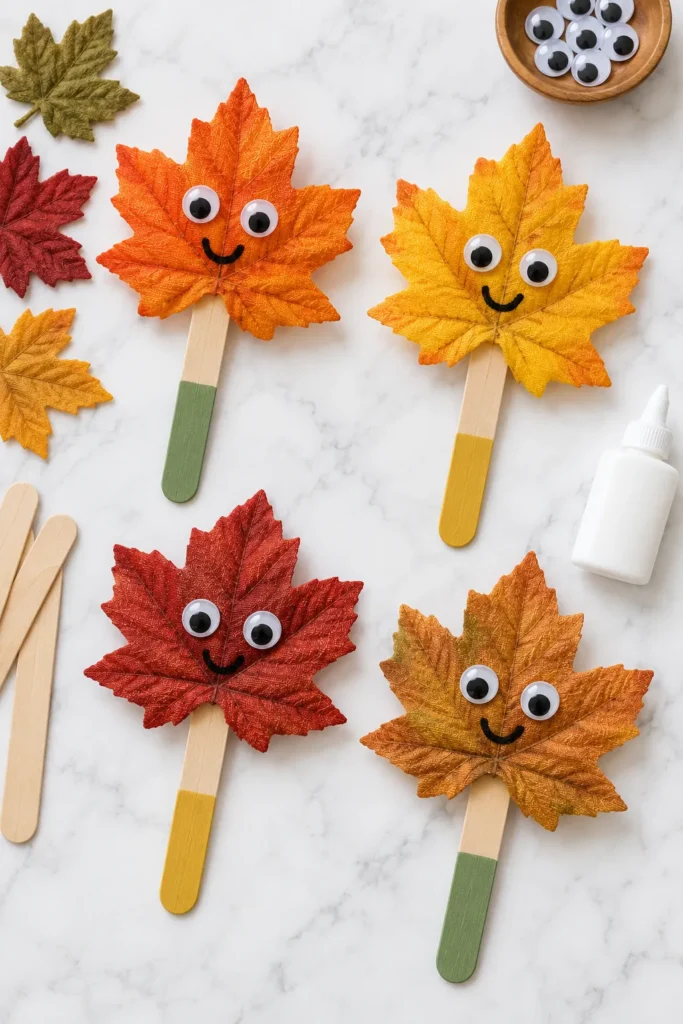
Leaf Puppet Friends
Materials: faux or pressed leaves, craft sticks, googly eyes, glue
- Glue a craft stick to the back of each leaf
- Add two googly eyes near the top
- Draw or glue on a small smile
- Let kids act out a short leaf puppet show
Pinecone Owls
Materials: pinecones, felt scraps, googly eyes, glue
- Cut small wing and foot shapes from felt
- Glue wings onto the sides of the pinecone
- Glue feet underneath so the owl can stand
- Add googly eyes and a small triangle beak
Handprint Fall Trees
Materials: washable paint in red, orange, and yellow, paper, a paintbrush
- Paint one hand and press it firmly onto paper
- Repeat with different colors for a layered look
- Once dry, add a trunk and branches with a marker
- Label and date it, since these disappear fast
A couple of these (pinecone owls, handprint trees) already get a passing mention elsewhere in the post — that’s fine to leave as is, since these new sections give them the real steps the earlier mention was missing.

My Verdict, Glitter And All
My honest take, after all this: keep it messy and low-pressure. Complicated Pinterest-perfect projects rarely match what preschoolers genuinely enjoy repeating week after week. Kids gravitate toward whatever lets them touch, dump, and repeat things without a script.
I’m a mom, and I’ve noticed simple ideas stick around longest in our house. A pile of leaves beats an elaborate diorama nearly every single time. Kids remember the texture of an activity, not how polished it looked in photos. That single truth changes how I plan for fall now.
That’s the whole philosophy behind everything I’ve shared here today. Try one activity first, see what sticks, and skip whatever creates unnecessary stress. As a mom, I’d rather repeat five simple activities than force one big production nobody enjoyed. Nobody remembers the pin-worthy version anyway, only the one that truly happened that day.
Give yourself permission to skip a trend if it doesn’t suit your week. Preschoolers don’t grade parents on originality, and they never will, thankfully. They grade on whether someone showed up, sat down, and paid attention for ten real minutes.
Fall preschool activities work best when nobody’s trying too hard, including the grown-ups planning them. Save your favorites now, because next September, you’ll be right back here searching again. Some things about parenting a preschooler, apparently, are simply seasonal, and I’ve made peace with that by now.