
Dandelion jelly sounds like the kind of thing a charming aunt would serve from a tiny pantry shelf. Yet here I am, fully interested in turning cheerful yard flowers into golden spreadable sunshine. I know. It sounds both adorable and mildly suspicious, which is exactly why it works.
I’ve found that the best kitchen projects have a little “wait, can we do that?” energy. This one has that in spades. The recipe uses petals, sugar, lemon juice, pectin, and water. Somehow, it becomes a sweet jelly that looks fancy without requiring fancy behavior. However, the prettiest part is the slow little reveal. The process looks ordinary, then suddenly it turns golden.
Living in Orlando, I don’t get the same storybook spring fields as cooler places. Still, I understand the appeal of grabbing a basket and finding clean blooms. Making something pretty from almost nothing has serious budget-friendly charm. That kind of kitchen drama deserves a tiny round of applause.
This isn’t one of those recipes that pretends to be complicated. However, a few small details matter more than expected. Green parts can turn bitter. Flower tea needs time. A proper boil helps the jelly set.
So yes, we’re making flower jelly, but we’re also doing something extra satisfying. That’s why dandelion jelly feels so sneaky-fun. It looks delicate, but the recipe depends on very practical little choices. Humble ingredients become a jar worth showing off. And the tiny petal trick? That’s where this whole recipe gets interesting.
Some of the links on this page are affiliate links. That means if you click and make a purchase, I may earn a small commission at no extra cost to you. If you’re curious about the fine print, you can check out my full disclosure.
Why Dandelion Jelly Feels So Old-Fashioned In The Best Way
Dandelion jelly has that sweet little pioneer-cottage energy that makes regular jam look overdressed. It’s humble, sunny, and a tiny bit theatrical. I tend to notice recipes like this stick in people’s minds because they sound unusual first.
However, the charm isn’t just the flower part. The real charm comes from using something common in a new way. Dandelions go from lawn nuisance to pantry treasure, which is quite the career change. I love a useful comeback story, even from a weed.
That contrast matters. One minute, people treat dandelions like tiny yellow troublemakers. Next, those same flowers become a delicate jelly with a soft honey-like taste. That shift makes the recipe more fun than another basic fruit spread.
Still, this is not a “throw flowers in a pot and hope” situation. The petals need to be separated from the green base. Otherwise, bitterness sneaks in like it paid rent. Nobody asked for that kind of kitchen plot twist.
The process starts with a strong dandelion tea. Then sugar, lemon juice, and pectin turn that tea into jelly. It’s simple, but not careless. That difference matters when a recipe has so few ingredients.
This jelly also works because it feels special without costing much. You’re not buying expensive berries or hunting down rare ingredients. Instead, you’re using clean, unsprayed flowers and pantry staples. That makes it practical, but still a little whimsical.
Even so, the recipe does need patience. The petals must steep long enough to give the jelly its color and flavor. Rushing that step gives you weaker tea and paler jelly. That’s the tiny secret hiding under all that cheerful yellow. Once you see it set in the jar, the whole thing makes ridiculous, delightful sense.

What Dandelion Jelly Tastes Like Before You Commit
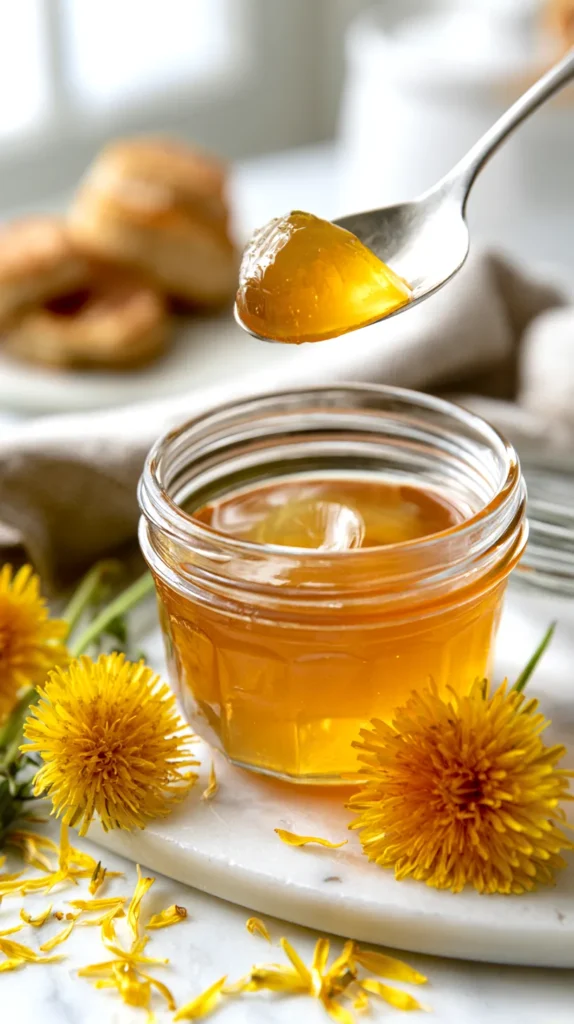
This jelly tastes softer than people expect. It doesn’t taste grassy when you make it right. Instead, it has a light floral flavor with a honey-like sweetness and a little lemon brightness. That makes it sweet, but not heavy.
Plus, that lemon matters, by the way. Without it, the jelly can taste flat. With it, the flavor gets cleaner, brighter, and more interesting. Tiny detail, big difference. This is where the recipe quietly earns its keep.
I’ve found that this recipe works best for people who like mild floral foods. Think chamomile tea, orange blossom honey, or a gentle floral syrup. It’s not perfume in a jar, thank goodness. Nobody wants toast that tastes like a candle aisle.
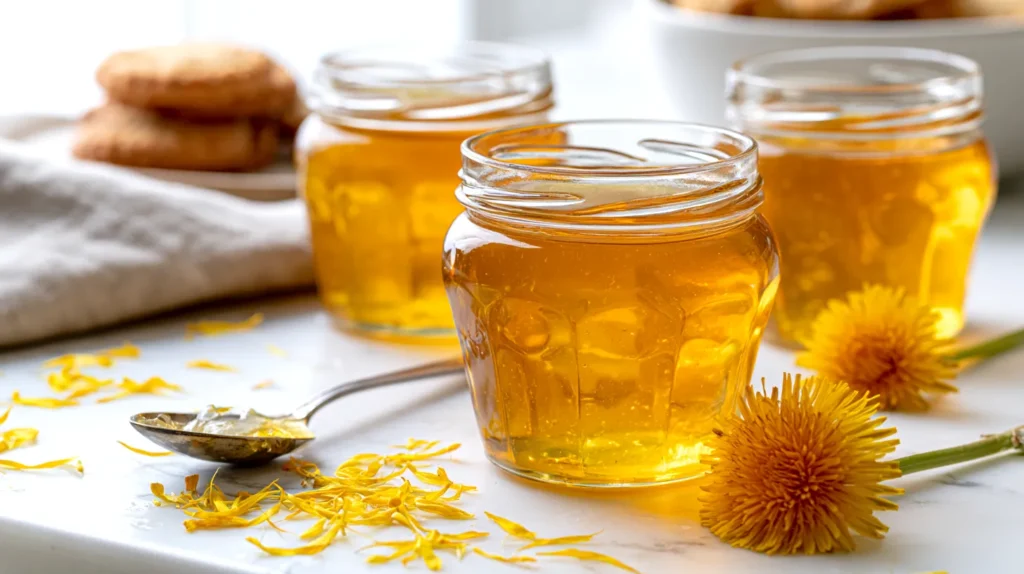
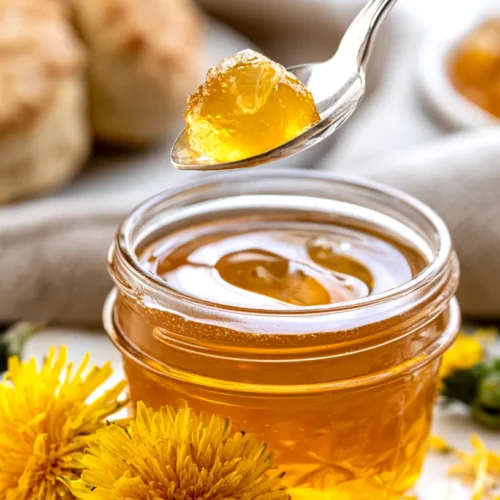
The color also adds to the whole experience. A good batch turns golden yellow, almost like bottled spring light. That sounds dramatic, but look at it in a jar and tell me I’m wrong. Pretty food does not need to be complicated.
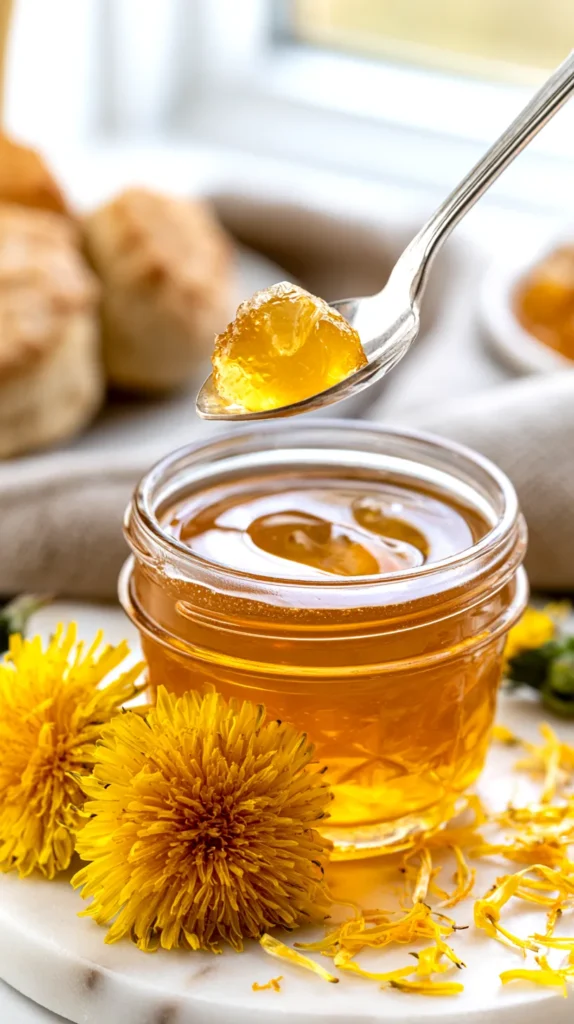
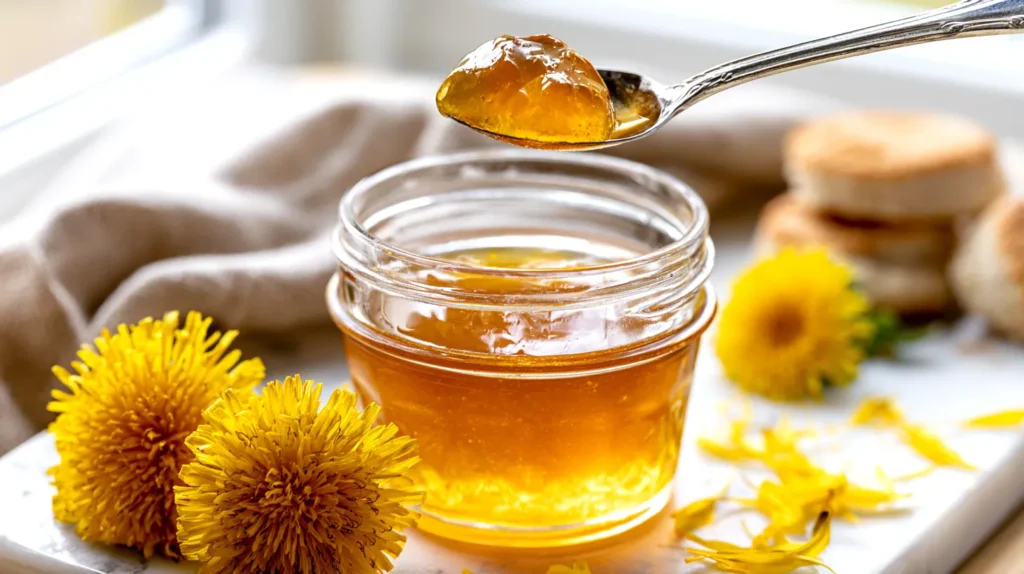
Texture should be smooth, spreadable, and softly set. It should hold on a spoon without turning into rubber. If the jelly sets too firmly, the boil may have gone too long. When it stays runny, it may need more time, better pectin timing, or a full rolling boil.
Here’s the little reframe: dandelion jelly isn’t trying to replace strawberry jam. It’s doing a completely different job. Instead, it adds a gentle, floral sweetness where regular jam would be too bold. That makes it better for buttery breads, plain cookies, and simple snacks.
Because of that, I like thinking of it as a “pretty finishing spread.” It belongs on biscuits, scones, toast, thumbprint cookies, and tiny tea sandwiches. Yes, I said tea sandwiches. We’re being fancy in the most low-budget way possible.

Picking Clean Flowers Without Ruining The Whole Thing
The biggest mistake starts before the pot ever touches the stove. You need clean, safe dandelions, not random roadside flowers living their worst exhaust-filled life. I know they look innocent, but location matters.
Pick flowers from areas you know have not been sprayed. Avoid lawns treated with weed killer, fertilizer, pesticides, or mystery yard potions. Also, skip flowers near busy roads, sidewalks, dog-heavy areas, or drainage ditches. Lovely? Not for jelly.
The best blooms look bright, open, and fresh. Morning works well after dew dries, because the flowers usually open wide. However, don’t pick wet flowers if you can avoid it. Extra moisture can make the petals clumpy and harder to prep.
For this recipe, you only need the yellow petals. The green base can make the finished jelly taste bitter. That part feels fussy, but it’s worth doing. Think of it as tiny kitchen editing.
Use this quick picking checklist:
- Choose bright yellow flowers from an unsprayed area.
- Skip any blooms with bugs, dirt, browning, or wilted petals.
- Gather about 4 packed cups of whole dandelion heads.
- Plan for 2 packed cups of yellow petals after trimming.
- Rinse gently only if needed, then dry very well.
- Use kitchen scissors to snip petals from the green base.
- Keep petals loose, not smashed into a damp pile.
Here’s the part people underestimate. Four cups of flower heads shrink into much less usable petal fluff. So, pick more than you think you need. Dandelion jelly rewards the slightly overprepared person, which feels unfair but true.
Also, prep the flowers the same day if possible. Fresh petals give better color and cleaner flavor. If life interrupts, chill the flower heads briefly in a bag. Just don’t forget them, because sad fridge flowers help nobody.
Simple Ingredients That Do The Heavy Lifting
This recipe uses regular powdered fruit pectin, not low-sugar pectin. That matters because the sugar ratio helps dandelion jelly set correctly. I know four cups sounds like a lot, but jelly chemistry has strong opinions. This is not the moment for casual swaps.
The dandelion tea gives color and floral flavor. Lemon juice adds brightness and acid. Sugar gives sweetness and structure. Pectin helps the mixture set into jelly instead of staying sweet flower tea forever. Cute, but not useful.
Use bottled lemon juice for steady acidity. Fresh lemon tastes lovely, but bottled lemon juice gives more consistent results. That is one place where “fresh is always best” can calm down a bit. Reliable acidity matters more than lemon romance here.
For about 5 half-pint jars, gather:
- 2 packed cups yellow dandelion petals, green parts removed
- 4 cups boiling water
- 4 cups granulated sugar
- 2 tablespoons bottled lemon juice
- 1 box regular powdered fruit pectin, about 1.75 ounces
- 1/2 teaspoon butter, optional, to reduce foam
- Clean half-pint jars with lids
You’ll also need a fine mesh sieve or cheesecloth. A large pot helps too, because jelly bubbles up fast. If you plan to store the jars at room temperature, use a proper boiling water canning method. Otherwise, keep the jars refrigerated and use them within a few weeks. Freezing also works if you leave headspace.
Here’s the tiny assumption flip. The flowers are not the hard part. Timing is the sneaky part. Once the pectin joins the pot, the recipe moves quickly. So, measure everything before the heat goes on.
Also, don’t double the batch. Jelly can get dramatic when scaled up. Make two separate batches instead, because nobody needs a pot of syrupy regret.

How To Make Dandelion Jelly Without Overthinking It
This recipe starts with tea, which makes the whole process seem calmer than it becomes. First, place the yellow petals in a heat-safe bowl or jar. Pour 4 cups boiling water over them, then stir gently. The petals should be covered, but not packed down.
Cover the bowl and steep the petals for at least 4 hours. For deeper color, steep overnight in the refrigerator. After steeping, strain the liquid through a fine mesh sieve or cheesecloth. Press gently, but don’t mash everything into a cloudy mess.
Now measure 3 1/2 cups of dandelion tea. If you’re short, add a little water. Extra tea can wait for another small batch, or you can discard it. Tiny heartbreak, I know.
Follow these steps:
- Pour 3 1/2 cups dandelion tea into a large pot.
- Stir in 2 tablespoons bottled lemon juice and 1 box powdered pectin.
- Add 1/2 teaspoon butter if using it for foam control.
- Bring the mixture to a full rolling boil over high heat.
- Stir constantly so the pectin dissolves evenly.
- Add 4 cups sugar all at once, then stir well.
- Return the mixture to a full rolling boil.
- Boil hard for 1 full minute while stirring constantly.
- Remove the pot from heat and skim foam if needed.
- Ladle hot jelly into clean jars, leaving 1/4 inch headspace.
- Wipe rims, add lids, and refrigerate or process for shelf storage.
The jelly may look loose at first. Don’t panic with a spoon in your hand. It can take 24 to 48 hours to finish setting. That waiting part is rude, but necessary.
Here’s the tiny reset: setting happens after the drama. The pot looks liquid, then the jars cool, then the texture changes. So, let the dandelion jelly rest before judging the whole performance.
Batch Tips That Save The Whole Jar
The best batch tips are not glamorous. They’re the small, bossy details that keep a batch from turning bitter, cloudy, or runny. I’ve found that jelly recipes punish casual measuring more than cookie recipes do. Cookies forgive. Jelly keeps receipts. Careful minutes save jars. With dandelion jelly, tiny details do the quiet heavy lifting.
First, remove as much green as possible. A few tiny green bits won’t destroy the recipe. However, a pile of green bases can add a bitter edge. The petals should look fluffy, yellow, and a little ridiculous.
Next, don’t squeeze the petals too hard after steeping. Gentle pressing helps remove flavor. Heavy squeezing can force cloudy plant bits into the tea. Cloudy jelly still tastes fine, but the clear golden look has its own little bragging rights.
The boil also matters. A full rolling boil keeps bubbling even while you stir. If the mixture stops bubbling when the spoon moves, it is not there yet. This is where patience beats panic. It also keeps the set more reliable.
Sugar timing is another sneaky piece. Add the sugar only after the pectin mixture reaches that first full boil. Then bring everything back to another hard boil for exactly one minute. Not thirty seconds. Definitely not three minutes because the laundry beeped.
If the jelly doesn’t set after two days, don’t toss it. Use it as syrup over pancakes, waffles, yogurt bowls, or ice cream. That’s not failure. Breakfast gets a plot twist with syrupy potential.
Also, label the jars with the date. This sounds painfully practical, but future you will appreciate it. Mystery jars are cute in movies, not refrigerators. A simple label turns pretty jelly into something you’ll use instead of admire forever.

Ways To Serve This Golden Little Jar
This is where the recipe gets extra fun, because this jelly is more flexible than it looks. At first glance, it seems like a toast-only situation. Cute, yes. Limited, no. The jar can do more than sit politely beside bread.
Spread it on warm biscuits, English muffins, or sourdough toast. The floral sweetness works beautifully with butter because the richness keeps everything grounded. Add a pinch of flaky salt on top, and suddenly breakfast has main-character manners. Small move, big payoff.
It also belongs on a snack board. Pair it with mild cheeses, crackers, berries, and toasted nuts. I tend to notice it works best with creamy, salty foods because the contrast wakes up the flavor. Sharp cheese can overpower it, so start gentle.
For brunch, spoon it over pancakes, waffles, or French toast. Use less than you would with maple syrup because it tastes sweeter when warmed. A little goes farther than expected, which is always good news for a tiny jar.
Now for the tea party situation, because obviously we’re going there. Spread a thin layer inside thumbprint cookies, linzer cookies, or tiny tart shells. It also works inside small tea sandwiches with cream cheese. Fancy? Yes. Fussy? Not really.
Here’s the reframe: this jelly isn’t just for spring. It can brighten fall biscuits, winter scones, and summer lemonade. Stir a spoonful into hot tea, iced tea, or sparkling water for a floral sweetener. A jar can travel through more seasons than expected.
Still, my favorite serving idea is the simplest one. Buttered toast, a light swipe of dandelion jelly, and one quiet kitchen moment. Then someone asks what’s in the jar, and the little reveal becomes half the fun.

Dandelion Jelly FAQs For The Curious Crowd
This recipe brings out questions because, fair enough, we are putting lawn flowers in jars. I respect the suspicion. However, most answers are simple once the petals, sugar, acid, and pectin make sense together. The trick is knowing which detail matters most.
Use these quick answers when the recipe starts feeling a tiny bit mysterious:
- Can I use the whole flower head? No, use only the yellow petals. The green parts can add bitterness and dull the flavor.
- Do I need to wash the flowers? Use clean flowers first. If needed, rinse gently and dry well before removing the petals.
- Can I use liquid pectin instead? I wouldn’t swap it here. Powdered and liquid pectin use different timing and amounts.
- Why didn’t my batch set? The mixture may not have reached a full rolling boil. Old pectin can also cause trouble.
- Can I reduce the sugar? Not with regular pectin. Use a tested low-sugar pectin recipe if you want less sugar.
- How long does it last? Refrigerated jars usually keep for a few weeks. Properly processed jars can last longer in cool storage.
- Can kids help make it? They can help pick safe flowers and pull petals. Adults should handle boiling jelly.
- What if it tastes bitter? Too much green likely slipped in. Next time, trim the yellow petals more closely.
- Can I freeze it? Yes, leave room at the top of freezer-safe jars. Thaw it in the refrigerator before using.
One more thing deserves space here. If you’re new to canning, keep the jars refrigerated unless you follow a tested water bath process. This jelly is too pretty for food safety guesswork. Pretty jars still need sensible storage, because charm does not cancel science.
Dandelion Jelly
Equipment
- Clean half-pint jars with lids
Ingredients
- 2 packed cups yellow dandelion petals green parts removed
- 4 cups boiling water
- 4 cups granulated sugar
- 2 tablespoons bottled lemon juice
- 1 box regular powdered fruit pectin about 1.75 ounces
- 1/2 teaspoon butter optional, to reduce foam
Instructions
- Place the yellow dandelion petals in a heat-safe bowl or jar.
- Pour 4 cups boiling water over the petals.
- Stir gently.
- Cover the bowl.
- Steep the petals for at least 4 hours.
- For deeper color, steep overnight in the refrigerator.
- Strain the liquid through a fine mesh sieve or cheesecloth.
- Press gently, but do not mash the petals.
- Measure 3 1/2 cups of dandelion tea.
- If you are short, add a little water.
- Pour 3 1/2 cups dandelion tea into a large pot.
- Stir in 2 tablespoons bottled lemon juice.
- Stir in 1 box powdered pectin.
- Add 1/2 teaspoon butter if using it for foam control.
- Bring the mixture to a full rolling boil over high heat.
- Stir constantly so the pectin dissolves evenly.
- Add 4 cups sugar all at once.
- Stir well.
- Return the mixture to a full rolling boil.
- Boil hard for 1 full minute while stirring constantly.
- Remove the pot from heat.
- Skim foam if needed.
- Ladle hot jelly into clean jars, leaving 1/4 inch headspace.
- Wipe the rims.
- Add the lids.
- Refrigerate the jars or process them for shelf storage.
A Little Jar With Big Cottage Energy
I love recipes that make everyday things look a bit more charming. This recipe does that without asking for expensive ingredients, special tools, or a personality transplant. It just asks for clean flowers, patience, and a little faith in yellow petals. That feels refreshingly low-drama for something this pretty. Living in Orlando has taught me to appreciate cheerful color year-round.
As a mom, I’m always drawn to ideas that turn small things into something memorable. Not every kitchen project needs to be huge to be worth doing. Sometimes the smallest jar gets the biggest reaction, especially when it starts with flowers. That part makes the whole recipe worth the petal trimming.
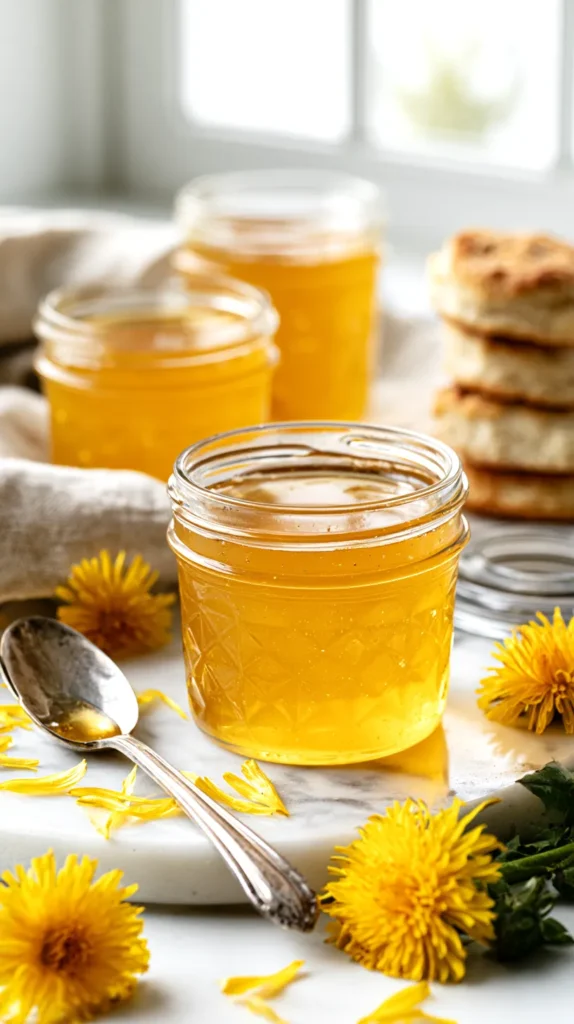
There’s also something very Pinterest about this recipe, in the best way. Golden jars, biscuits, tiny spoons, soft light, maybe one smug little label. It has all the makings of a save-worthy kitchen project without being fake fancy. I appreciate that kind of practical pretty.
Still, the real win is the surprise. People expect strawberry, grape, peach, or maybe blackberry. Then you set out this sunny little jar and say it came from dandelions. Suddenly, everyone leans closer, because curiosity beats plain toast every time.
I’ve found that those are the recipes people remember. Not because they’re complicated, but because they have a little story tucked inside. Dandelion jelly is sweet, practical, budget-friendly, and just odd enough to be wonderful. It makes a regular biscuit feel like it has somewhere important to be.
That’s the kind of jar that earns its spot in the fridge.