Beach camping sounds dreamy in theory. Salt air. Bare feet. A sunset that looks fake in the best way. Then reality strolls in with wild wind, clingy sand, a cooler that suddenly weighs a hundred pounds, and one very rude tide line.
I love the idea of sleeping near the ocean because it feels a little rebellious. A hotel says, here is your towel. Beach camping says, good luck with your zipper and that flapping rainfly, babe. It’s a different mood entirely, and that’s exactly why people get obsessed with it.
Still, I’ve found that this kind of trip gets romanticized hard. People picture sunrise coffee and seashells. They do not picture sand sneaking into their socks, their bedding, their snack bag, and somehow their soul. That part matters.
Living in Orlando, I’m close enough to the coast to know beach weather loves a dramatic twist. A calm forecast can turn bossy fast, and that’s before the wind starts throwing its little tantrum. So when I think about beach camping, I don’t picture perfection. I picture strategy with a prettier view.
That’s what makes this topic interesting, though. The best trips are not always the easiest ones. They’re the ones that make you laugh later, even when you were muttering under your breath earlier.
And here’s the sneaky part: the prettiest beach campground is not always the smartest choice. Some spots are dreamy for tents. Some are better for RVs. And some look peaceful until the rules, bugs, or driving conditions enter the chat. That difference changes everything.
So before anyone starts romanticizing an oceanfront campsite into a personality trait, let’s talk about what actually makes beach camping work.
Some of the links on this page are affiliate links. That means if you click and make a purchase, I may earn a small commission at no extra cost to you. If you’re curious about the fine print, you can check out my full disclosure.
Spots That Are Worth The Hype
Not all beach camping is created equal. Some places give you true ocean-near-you-all-night energy. Others give you a campground that technically counts, but the beach is more of a brisk commitment.
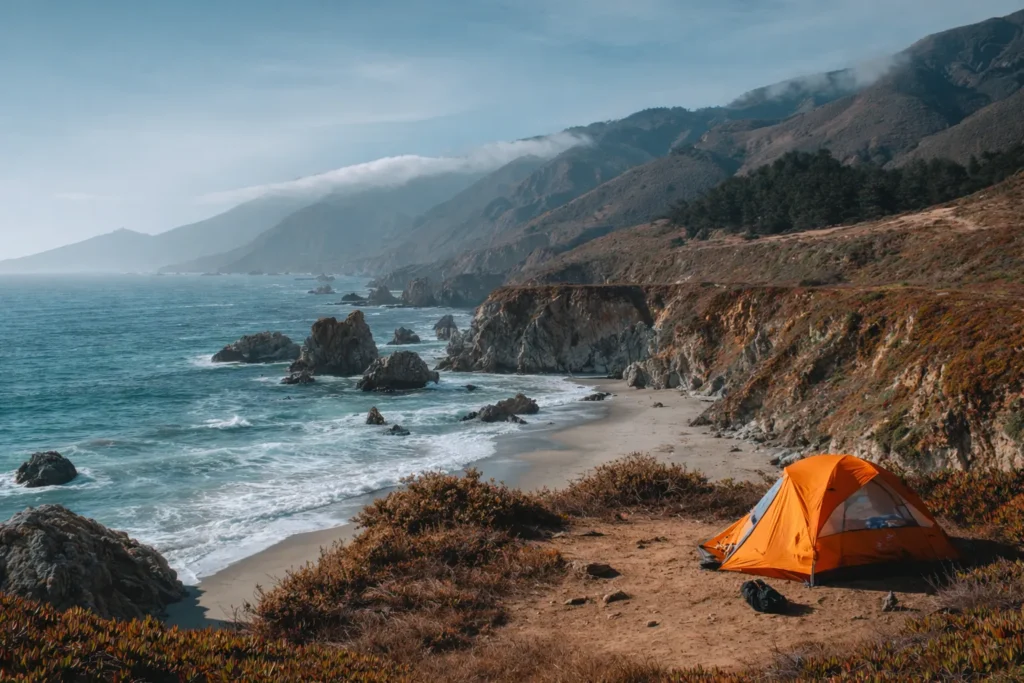
If I wanted the most direct version of the experience, I’d look first at Padre Island National Seashore in Texas. It allows first-come, first-served camping, and dispersed beach camping is part of the deal. North Beach and South Beach are the names people should know, and permits work differently depending on the area. Malaquite and Bird Island Basin use self-registration kiosks, while North Beach and South Beach do not require a camping permit, though entrance fees still apply.
Then there’s Assateague Island National Seashore, which has major wild-horse, windswept, cinematic energy. Reservations are strongly encouraged from mid-March through mid-November, which tells me one thing immediately: this place gets attention for a reason.
Cape Lookout in North Carolina is for people who want the beach to still feel gloriously untamed. Camping is allowed on most of the barrier islands, permits usually are not required, and vehicle plus tent camping is allowed on North and South Core Banks. That’s not campground cute. That’s proper wild-beach drama.
If I wanted easier access and fewer rough edges, I’d eye parks like Hunting Island in South Carolina or Anastasia State Park in Florida. Hunting Island has beach walkways and RV-friendly options. Anastasia has sites for tents and RVs with electricity, water, grills, and fire rings.
And Wright’s Beach in California? Tiny, beautiful, right beside the ocean, and a bit pickier. It has developed sites, no hookups, and trailer length limits. That one is less wing it and more plan like you mean it.
How I’d Choose A Beach Camping Location Without Regretting It
This is where people get tripped up. They choose with their eyes first. Pretty view, cute photos, dreamy dunes, done. Meanwhile, the wind is plotting, the reservation system is laughing, and the nearest bathroom may be having a rough season.
I tend to notice that the smartest beach camping pick depends on what kind of inconvenience you can live with. That matters more than people admit.
If I were narrowing it down, I’d think about these things first:
- Do I want true beachfront camping or just a short walk to the ocean?
- Am I bringing a tent, an RV, or both options?
- Do I want hookups, showers, and easier bathrooms?
- Can I handle first-come, first-served uncertainty?
- Am I okay with remote access, boat access, or driving on sand?
Here’s the twist: the most adventurous option is not always the most relaxing. Cape Lookout sounds amazing, and it is, but it’s also remote and supply-heavy. Hunting Island and Anastasia are less wild, yet much easier for women traveling with kids, friends, or anyone who enjoys a shower without making it a spiritual journey.
For RV travelers, Cape Hatteras deserves a look because its campgrounds have tent, trailer, and RV sites, and reservations are handled online. That’s useful when you want ocean access without turning your planning into interpretive dance.
On the other hand, if your dream is hearing the surf while sleeping almost right on top of it, Padre Island or Wright’s Beach may scratch that itch better. They just come with different levels of ruggedness and comfort.
Basically, I wouldn’t ask only, Is it pretty? I’d ask, What kind of hard am I signing up for?
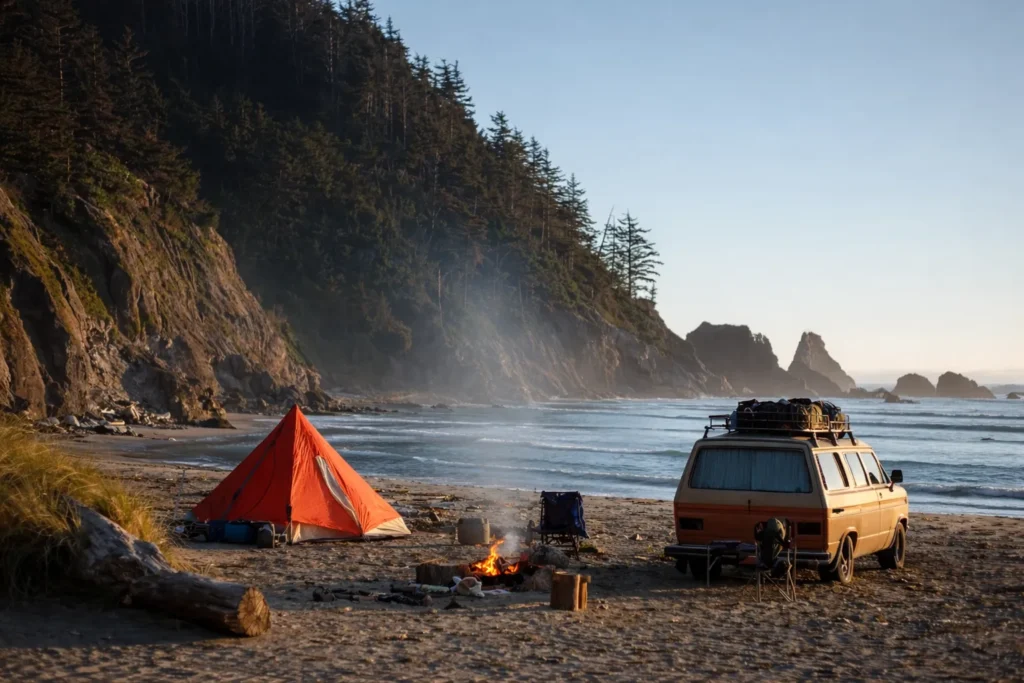
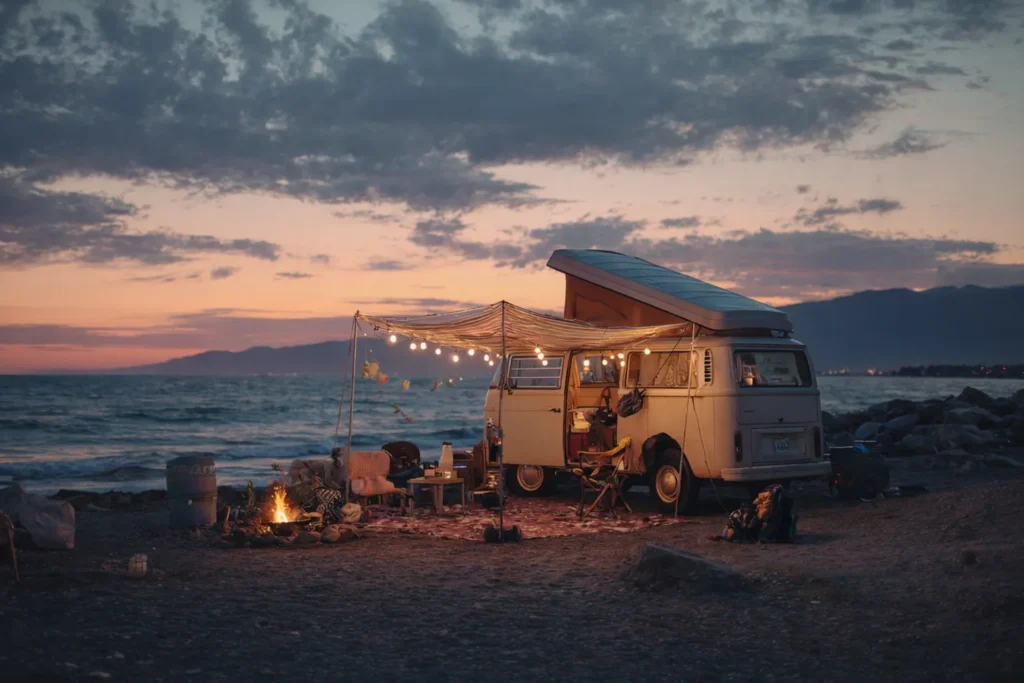
Beach Camping Gear That Earns Its Keep
This is not the moment for cute-but-useless gear. The beach has a way of exposing nonsense fast. A regular setup that works beautifully in a shady campground can look completely confused on open sand.
The biggest mistake? Packing like beach camping is just regular camping with a view. It is not. The sand changes your setup. The wind changes your setup. The sun absolutely changes your setup.
If I were building a solid packing list, these would be my non-negotiables:
- Sand stakes or heavy-duty anchors
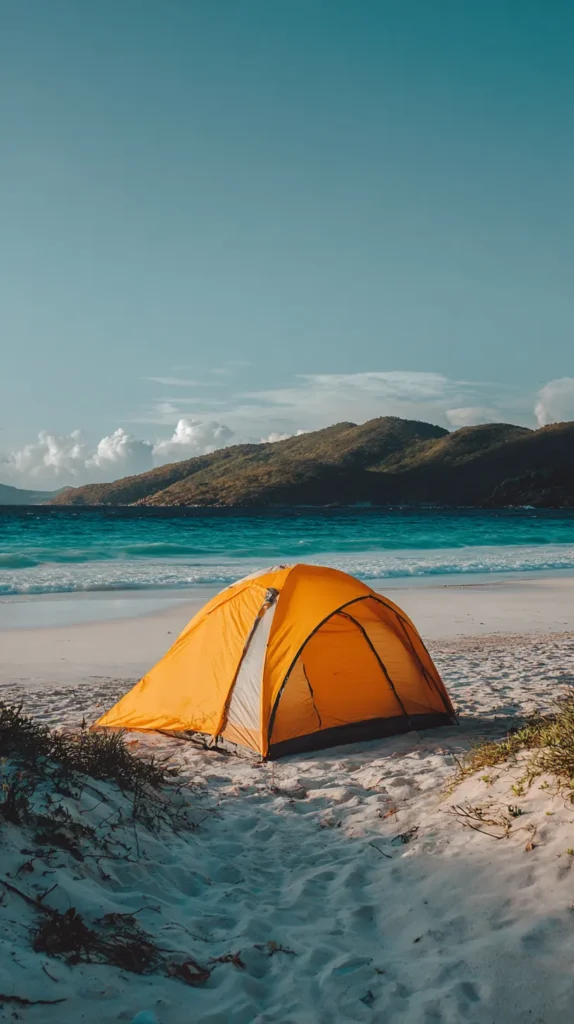
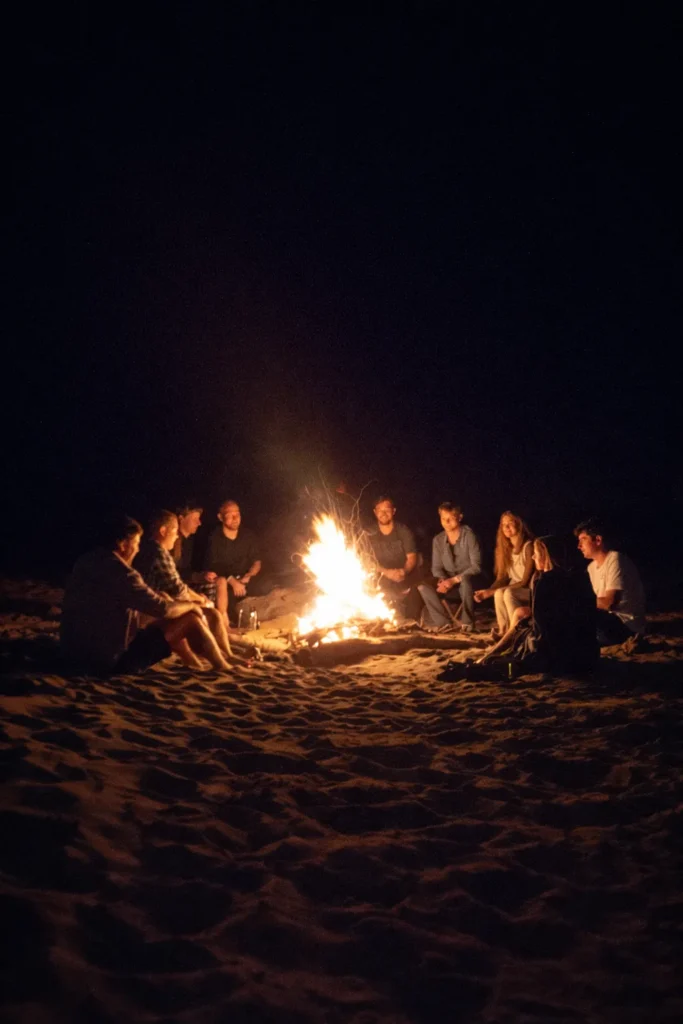
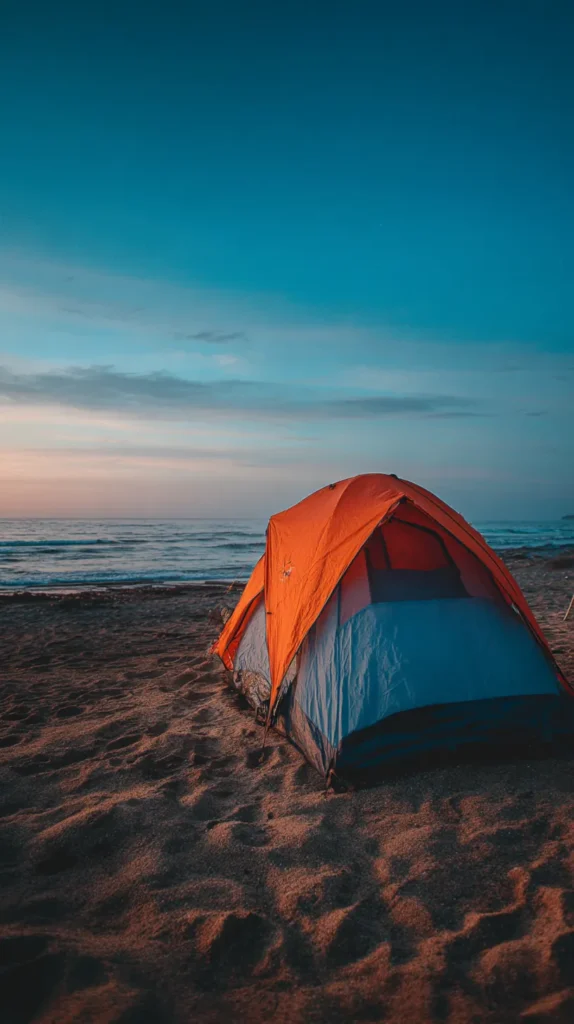
- A low-profile tent that handles wind well
- Extra guylines
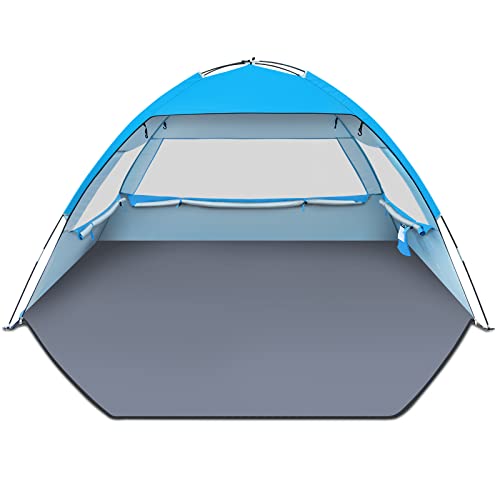
- Shade structure with real tie-downs
- Ground mat or outdoor rug
- Storage bins with lids
- Headlamps
- Battery fan
- Zip bags for electronics
- More water than seems polite
- A brush or small broom for sand control
- Dry bags for wet swimsuits and towels
Now for the slightly annoying truth: shade is not optional. People act like it’s a comfort item. At the beach, it’s survival with nicer branding.
I’ve also found that beach camping rewards boring gear. Not trendy gear. Not gear with twelve functions and a weird folding mechanism. I mean sturdy items that do not get dramatic in wind.
A raised expectation needs lowering too. Your campsite will not stay pristine. Sand will win. The goal is not perfection. The goal is keeping chaos from reaching your sleeping bag.
And one thing people forget? Bedding can turn damp near the ocean, even when the sky looks innocent. So extra blankets, moisture-resistant storage, and a solid sleeping pad matter more than the prettiest lantern ever will.
A glamorous cooler photo won’t save a bad tent stake. That’s the whole story right there.
Why Wind, Sand, And Tide Timing Run The Whole Show
Here’s the part nobody glamorous wants to admit. Beach camping is less about decorating your campsite and more about respecting what the shoreline is doing.
The ocean does not care about your layout.
Tide awareness matters because a spot that looks safe at check-in can become deeply annoying later. At some beaches, campfires and gear placement must stay within certain shoreline boundaries, which tells you immediately that water levels and placement are not casual details.
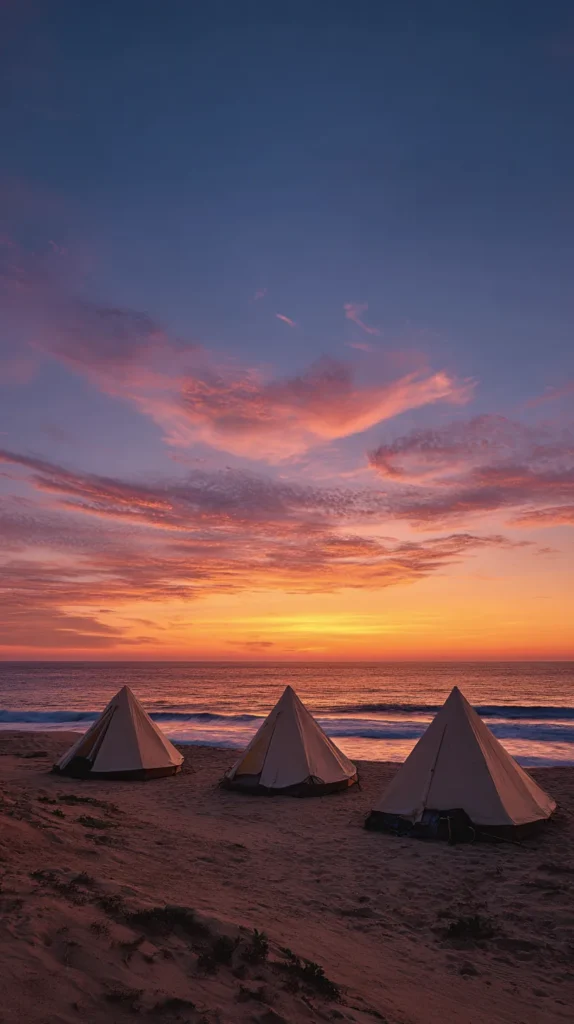
Wind is the second bossy character in this story. Open beach campsites rarely offer much shelter, so your setup should face that truth early. Lower tents usually behave better than tall, airy ones. Big floppy canopies look festive until they try to relocate.
And sand? Sand is not just messy. It affects your tent floor, your food prep, your shoes, your zipper life, and your patience. That’s why rugs, bins, and rinse water matter so much.
A simple rhythm helps:
- Check tides before arrival and again before bed
- Set camp above obvious wet lines and debris lines
- Point tent openings away from prevailing wind when possible
- Secure everything before leaving for a walk
- Never assume a calm afternoon predicts a calm night
People often assume rain is the main weather problem. I’d argue wind is the more irritating villain. Rain can be planned for. Wind turns snack time into a group project.
Once you accept that, beach camping gets easier. Not easier-easy. Easier-smart.
The Beach Camping Rules People Forget Until It’s Awkward
This is the section that saves people from a very specific kind of embarrassment. You know the one. You’ve hauled in all your gear, you’re feeling capable, and then a ranger or host politely explains that you are absolutely not allowed to do the thing you assumed was fine.
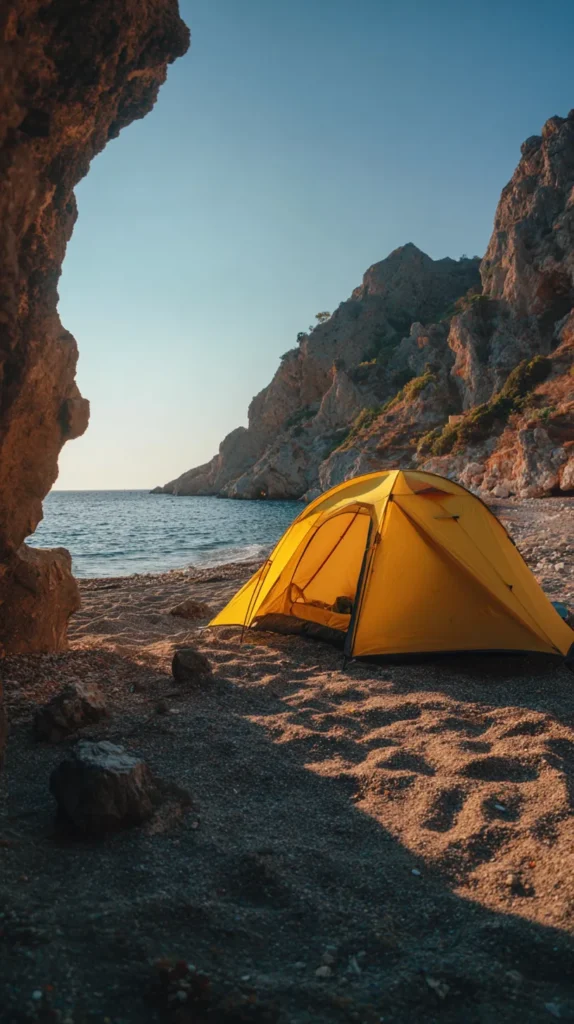
Beach camping rules vary wildly by park, which is why copy-and-paste advice gets people in trouble. One place allows beach fires in a specific zone. Another wants fires only in rings. Another says no beach fires at all. Same ocean vibes, completely different rules.
A few examples make that crystal clear:
- Some beaches allow bonfires only in designated areas and for smaller groups
- Many campgrounds allow fires only in fire rings or approved pits
- Some beaches ban fires entirely to protect wildlife or dunes
- Permit needs can change by camping zone, even inside the same park
That’s why I always think rules deserve more attention than the dreamy packing list. A cute lantern setup will not help if your site choice, fire setup, or vehicle access breaks park policy.
The less obvious rule? Reservations. Some spots are loose and are first-come, first-served. Others want serious planning, especially in busy months. Florida state parks and national seashores can book up quickly, so it’s smart to check the official park site before building your whole trip around one dreamy photo.
So yes, beach camping feels free-spirited. The paperwork sometimes disagrees.

Beach Camping With Kids, Friends, Or An RV Changes The Math
I think this part gets overlooked because everyone wants the same pretty fantasy. But beach camping with a solo tent setup is one thing. Beach camping with kids, a friend group, or a big RV is another creature entirely.
The dream shifts.
If I were going with kids, I’d lean toward easier parks first. Anastasia and Hunting Island both make more sense for that kind of trip because they offer structured campgrounds, nearby facilities, and a little more predictability. Anastasia has water and electricity at sites. Hunting Island has showers, beach walkways, and sites that can handle some RVs.
If I were going with an RV, I’d want answers to boring questions early:
- What is the max rig length?
- Are hookups available?
- Is there a dump station?
- Is beach driving involved?
- Do I need to reserve online only?
That last one matters more than it sounds. Some parks take reservations online, while others have size limits, no hookups, or tighter site layouts. One beach may work beautifully for a camper van, while another works better for a larger RV with hookups and easier maneuvering.
Now here’s the reframe. Closer to the water is not always better when you’re managing children, older relatives, or a lot of gear. Sometimes a short walk beats a setup that gets blasted all night.
Friends change the math too. Group energy sounds fun until one person hates sand, one person needs strong coffee, and one person thinks we’ll just wing dinner is a real sentence. At that point, a more developed campground suddenly looks very sexy.
So yes, the ocean view matters. But logistics decide whether everyone stays cheerful by day two.

The Best Beach Camping Moments Usually Happen Off Schedule
This is my favorite part because it’s also the least controllable part. You can plan the campground, the gear, the route, and the reservation. You cannot fully plan the moment that makes the trip stick in your head.
That’s the whole hook.
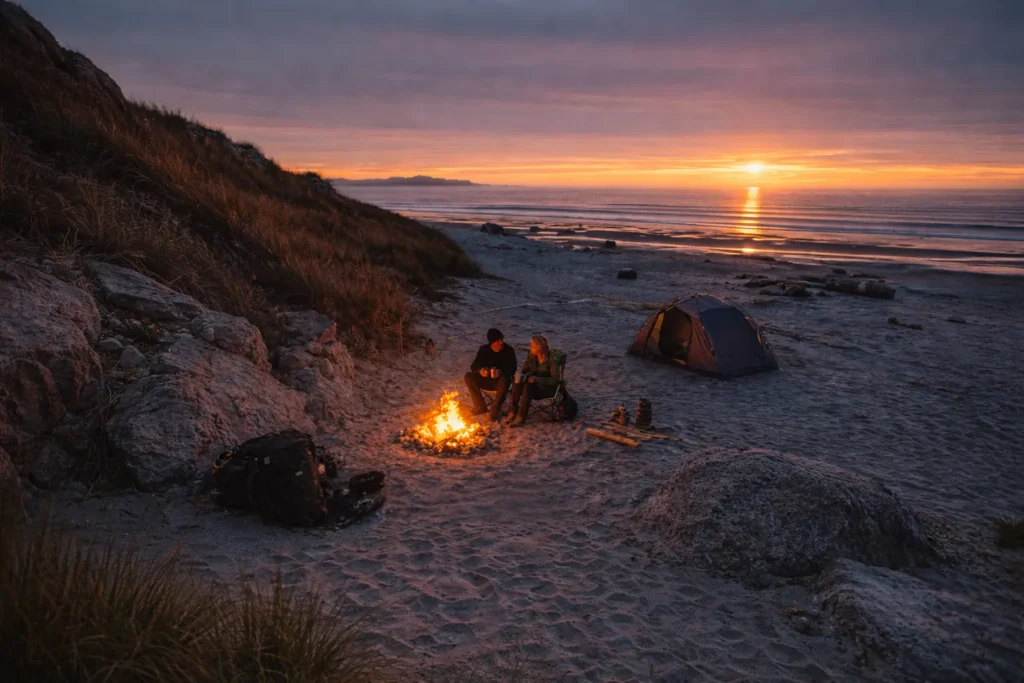
The best beach camping memories usually show up sideways. Maybe it’s the weirdly pink sunrise. Sometimes it’s the way the water sounds at 2 a.m. when everything else shuts up. Other times, it’s that strange, lovely quiet before anyone starts moving around.
Some of the most scenic spots have that undeveloped, windswept setting that makes those moments easier to find. Others have front-row sunset views that look almost theatrical. Then there are those long, open shorelines where the horizon feels almost rude in its size.
But I’ve found that the scenic part gets better when the setup part is handled. Romantic scenery lands harder when you are not fighting a collapsing canopy or searching for your phone charger in a bag full of tortilla chips.
That’s why I like giving best views a little side-eye. The real win is not just finding a gorgeous beach camping location. It’s finding one where the practical stuff is calm enough that you can actually enjoy it.
A few tiny choices help a lot:
- Face your seating toward sunrise or sunset, not your car
- Keep mornings simple
- Leave one evening open with no agenda
- Put the best blanket where you’ll actually sit
- Walk the beach before dark and notice your landmarks
People chase the postcard version. I get it. Still, the good part is often quieter than that. Less dramatic. More personal.
The ocean does not need help being impressive. You just need enough order around you to notice.
FAQs About Beach Camping
Can you really camp directly on the beach?
Sometimes, yes. Some national seashores allow dispersed beach camping in certain areas, while other parks keep campgrounds near the beach instead of directly on it. That difference matters, so always check the official park website before booking.
Are there RV-friendly beach camping spots?
Yes, but they vary a lot. Some campgrounds have hookups and larger sites, while others have trailer length limits and no hookups at all. That’s why RV travelers should always check site size, utilities, and reservation details before choosing a park.
Do I need a permit for beach camping?
Maybe. Some beach camping areas require permits or self-registration, while others only charge an entrance fee. Rules can change by park and even by camping zone, so official websites are your best friend here.
Are campfires allowed on the beach?
Not everywhere. Some parks allow fires only in rings or approved pits. Others allow beach bonfires only in certain areas, and some beaches ban fires entirely. It’s worth checking before you pack marshmallows with too much confidence.
What’s the biggest mistake beginners make?
Choosing for the view instead of the setup. I’ve found that wind, shade, tide position, and access matter just as much as scenery.

The Part Nobody Mentions Until They’re Already Hooked
What I like about beach camping is that it asks a little more from me. Not in a dramatic survival-show way. More in a, would you like to earn this sunset, kind of way.
That trade is weirdly satisfying.
Sand gets everywhere, of course. The wind usually adds its own opinion. One smart setup choice can end up saving the whole evening. Suddenly, the whole thing makes sense in a way a regular trip sometimes doesn’t. It’s messier, prettier, and a little more alive.
Living in Orlando keeps the coast close enough to tempt me, which is probably dangerous for my free time and very good for my daydreams. I can absolutely see why people fall down a Pinterest hole over beach camping and start plotting their perfect oceanfront setup like it’s a second career.
And yet, I think the real charm is not perfection. It’s the contrast. The ocean looks soft, but the planning cannot be. The photos look peaceful, but the best trips have backbone. That tension is the fun part.
I’ve found that the people who love this style of camping most are not the ones chasing some flawless aesthetic. They’re the ones who know how to laugh when the wind starts acting opinionated, tighten a guyline, and keep going.
Because once your setup works, the beach takes over from there.
And when that first morning light hits the water and everything finally shuts up for a minute, it’s giving exactly one message: yes, this was worth the trouble.