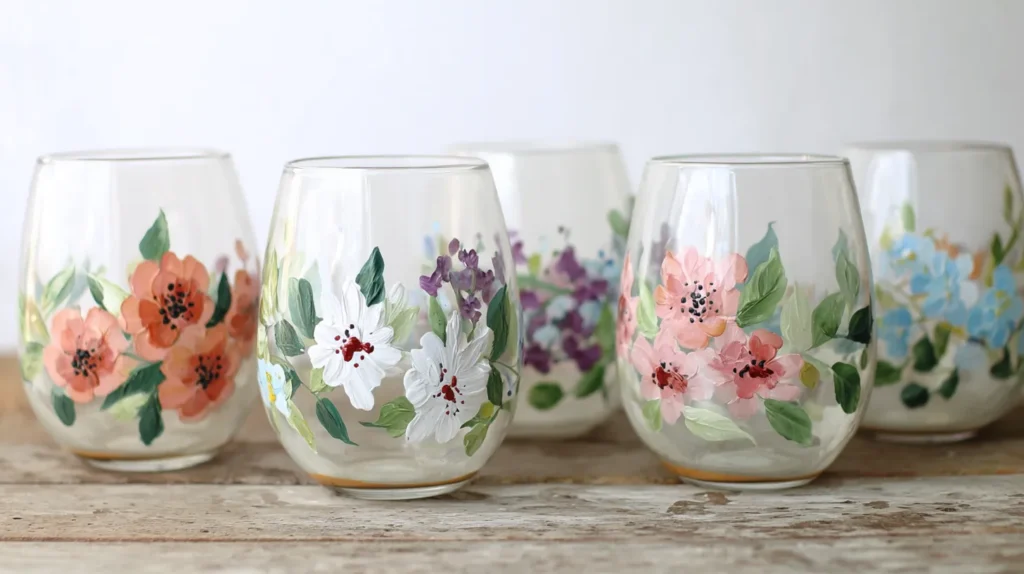
Wine glass painting sounds like one of those crafts that quietly judges you before you even start. The name alone comes across as formal and a little intimidating. Suddenly, it implies rules, talent, and someone hovering nearby asking, “Are you sure you’re doing that right?” Luckily, none of that pressure actually exists. Once you start, wine glass painting turns out to be relaxed, forgiving, and oddly grounding.
I’ve found that projects stick better when they serve a purpose. Painting wine glasses isn’t about décor that sits untouched on a shelf. These are glasses you actually use, wash, and reach for without thinking. During a conversation, someone eventually pauses, tilts the glass, and asks, “Did you make these?” That moment always lands in the best way.
There’s something quietly satisfying about taking an everyday object and making it personal. Instead of shouting for attention, the result stays thoughtful and understated. Thoughtful things, I tend to notice, age far better than trends.
The best crafts also don’t rush you. Glass forces patience because paint dries on its own timeline. No amount of hovering speeds that up. That slower pace feels refreshing in a world that pushes urgency everywhere.
Living in Orlando means gatherings happen year-round, which makes having painted glasses on hand surprisingly practical. They work for porch nights, casual dinners, and those spontaneous friends-over moments that pop up without warning.
This post isn’t a class. It’s a conversation. I’ll share what actually matters, what doesn’t, and how to keep everything food and drink safe without turning it into homework.
Some of the links on this page are affiliate links. That means if you click and make a purchase, I may earn a small commission at no extra cost to you. If you’re curious about the fine print, you can check out my full disclosure.
Why Wine Glass Painting Isn’t As Intimidating As It Sounds
Wine glass painting gets a reputation for being fussy. That reputation is wildly undeserved. The process itself is simple, even if the finished product looks fancy. That contrast is part of the charm.
I’ve found that most hesitation comes from glass itself. It feels fragile. It feels expensive. However, glass is tougher than it looks. It’s also very forgiving once paint is involved. Mistakes don’t scream at you. They soften. They blend.
Another reason people stall is the idea of permanence. Paint on glass feels final. Yet that’s not really true. Before curing, you can wipe mistakes away easily. Even afterward, imperfect lines still read as handmade. Handmade has grace built in.
Wine glass painting also doesn’t demand artistic talent. Patience and light pressure matter far more. Drawing skills won’t make or break the result, and symmetry isn’t the prize. What helps most is a steady-ish hand and the ability to slow down.
I tend to notice that confidence grows fast with glass. The first stroke feels scary. The second feels easier. By the third glass, you’re relaxed enough to enjoy it.
It also helps that the surface does half the work. Glass reflects light beautifully. Even simple designs look elevated.
Reasons this craft feels easier than expected:
• Paint sits on top instead of soaking in
• Designs don’t need precision to look intentional
• Mistakes clean off quickly before curing
• Light reflects flaws into charm
Once you realize perfection isn’t the goal, wine glass painting becomes playful. That’s when it gets fun.
What You Actually Need For Painting Wine Glasses
Supplies can spiral quickly if you let them. Thankfully, painting wine glasses requires restraint, not abundance. The basics work beautifully.
I’ve found that fewer tools lead to better results. Too many options invite second-guessing. That’s never helpful.
Here’s what truly matters:
• Plain, clean wine glasses
• Paint made for glass or enamel
• A few soft brushes
• Rubbing alcohol
• Paper towels
That’s it. No secret gadgets. No specialty kits required.
The paint matters most. Look for paint labeled for glass or multi-surface enamel. These are designed to cure and stay put. Craft acrylics alone won’t cut it for drinkware.
Brushes don’t need to be fancy. Small round brushes handle details. Flat brushes help with bands or fills. Soft bristles prevent streaks.
Cleaning matters more than people admit. Glass holds invisible oils. Alcohol removes them quickly. That step helps paint adhere evenly.
I tend to notice smoother results when I avoid foam brushes. They trap air and create bubbles. Brushes glide better.
Optional but helpful extras include toothpicks for tiny fixes and cotton swabs for quick cleanup.
What you don’t need:
• Sealant sprays
• Glitter additives
• Complicated stencils
• Heat guns
Simple tools support relaxed creativity. Overbuying kills momentum.

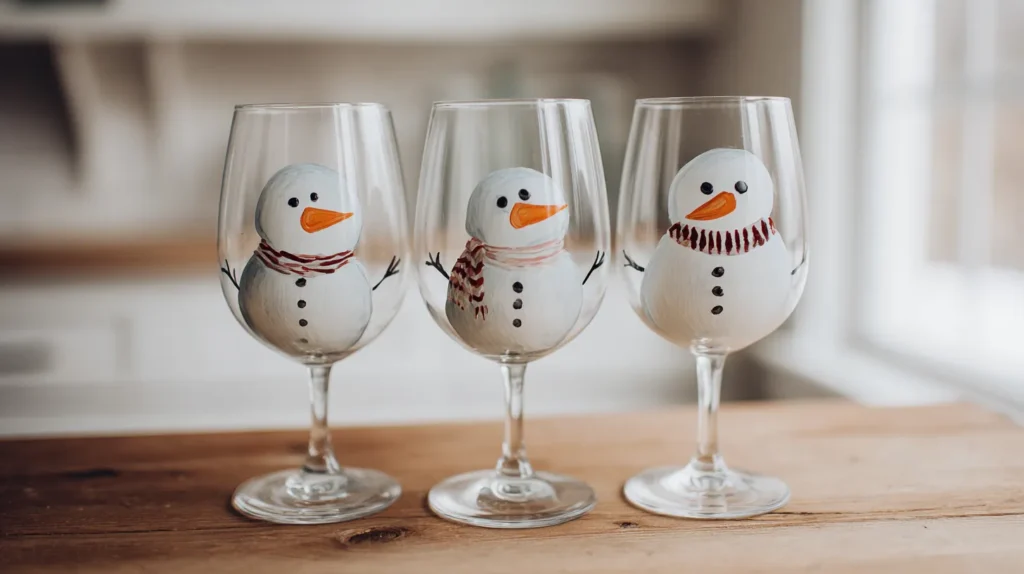
Holiday Wine Glass Painting Ideas That Look Thoughtful
Sometimes you want the holiday to be obvious. I get that. Wine glass painting can absolutely be literal without tipping into cheesy. The trick is choosing one clear symbol per holiday and committing to it confidently.
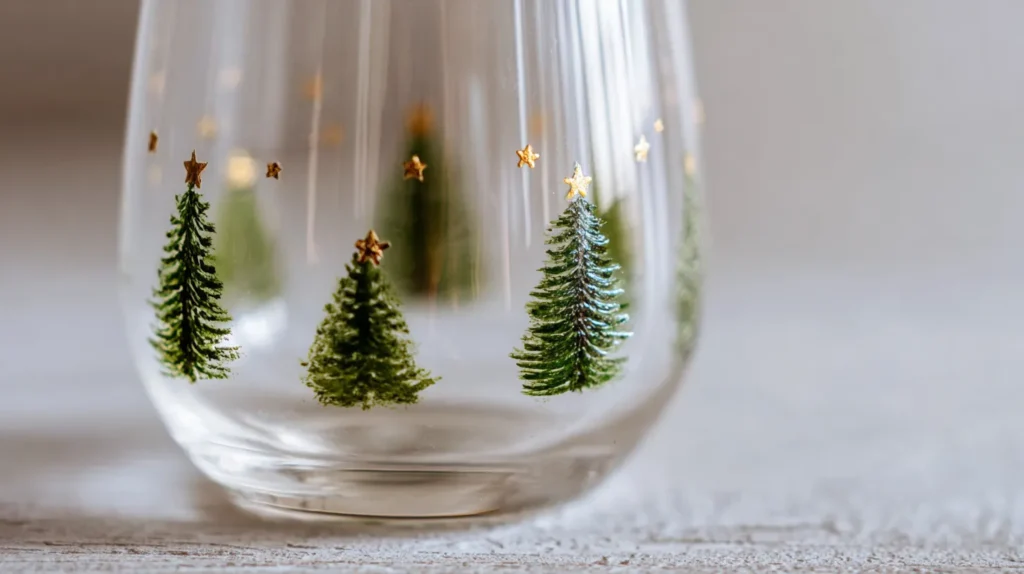
For Christmas, I like painting small evergreen trees spaced evenly around the bowl. Each tree stays simple, almost cartoonish. A tiny gold dot at the top turns them into ornaments instead of forests. That small tweak keeps them festive, not busy.
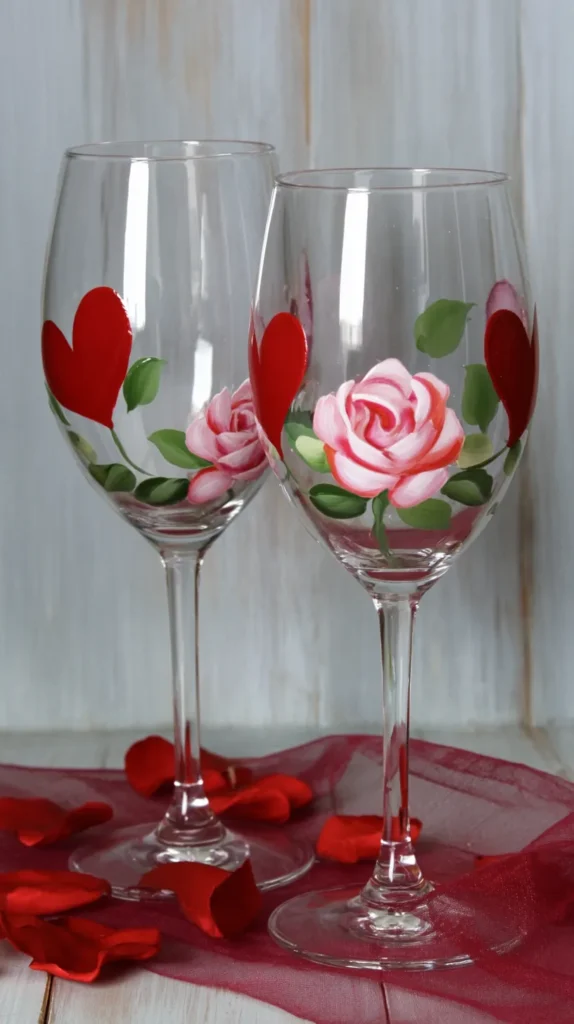
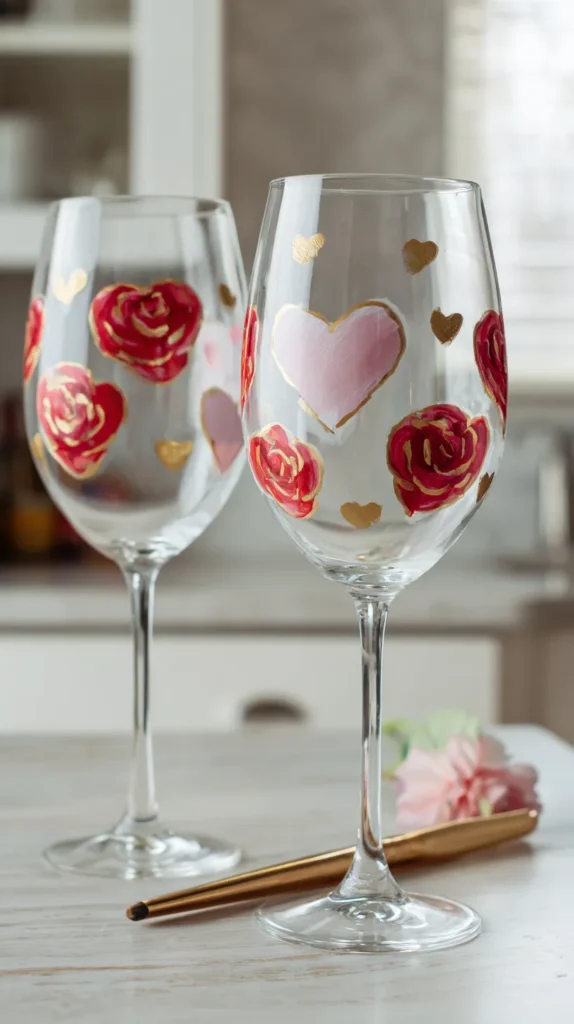
Valentine’s Day works best with repetition. I paint a trail of small hearts wrapping once around the glass, just above the widest point. Solid red feels bold, but blush pink reads sweeter. Keeping the hearts uniform avoids the craft-kid look.
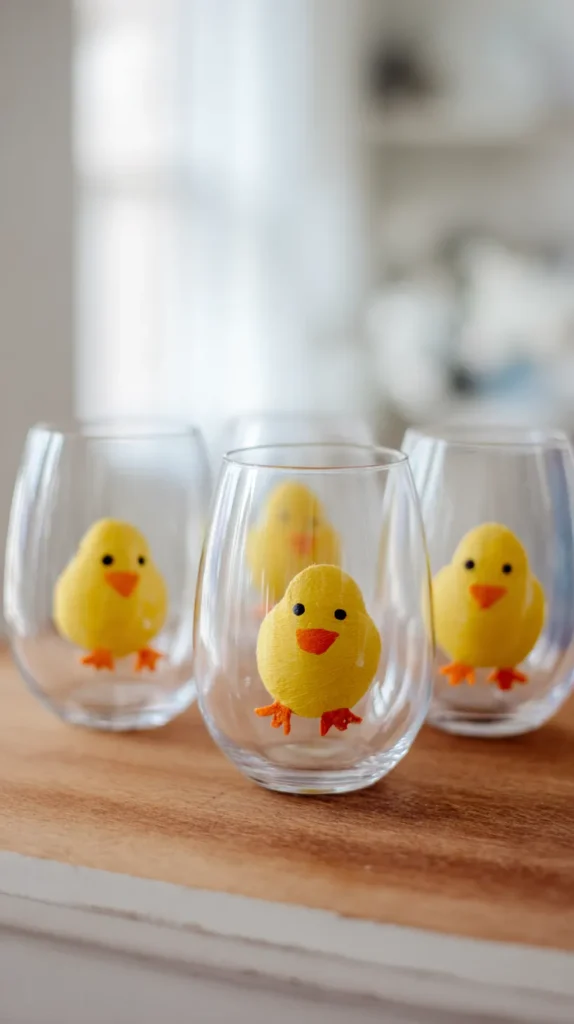
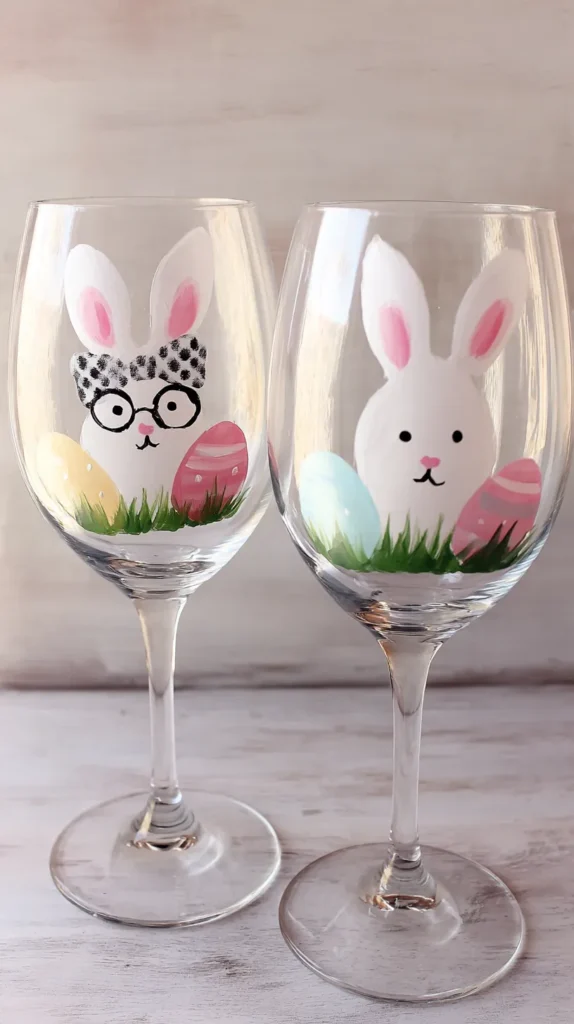
Easter designs shine with eggs, but stylized ones. I paint oval egg shapes with one thin stripe or dot pattern inside each. Pastels stay soft, but outlines keep everything crisp. Spacing the eggs evenly makes the glass look intentional.
Halloween begs for icons, so I lean in. Simple black jack-o’-lantern faces painted small and repeated around the bowl look playful, not childish. White eyes over orange paint pop nicely in low light.
Thanksgiving gets literal with turkeys, but minimal ones. I paint a single turkey feather shape instead of the whole bird. Rust, brown, and gold layered lightly read instantly as Thanksgiving.
New Year’s glasses work well with numbers. I paint the year in small script once on the bowl. A few scattered gold stars finish the look without clutter.
Wine glass painting shines when literal designs stay clean and consistent. Clear symbols plus restraint make holiday glasses fun and usable.
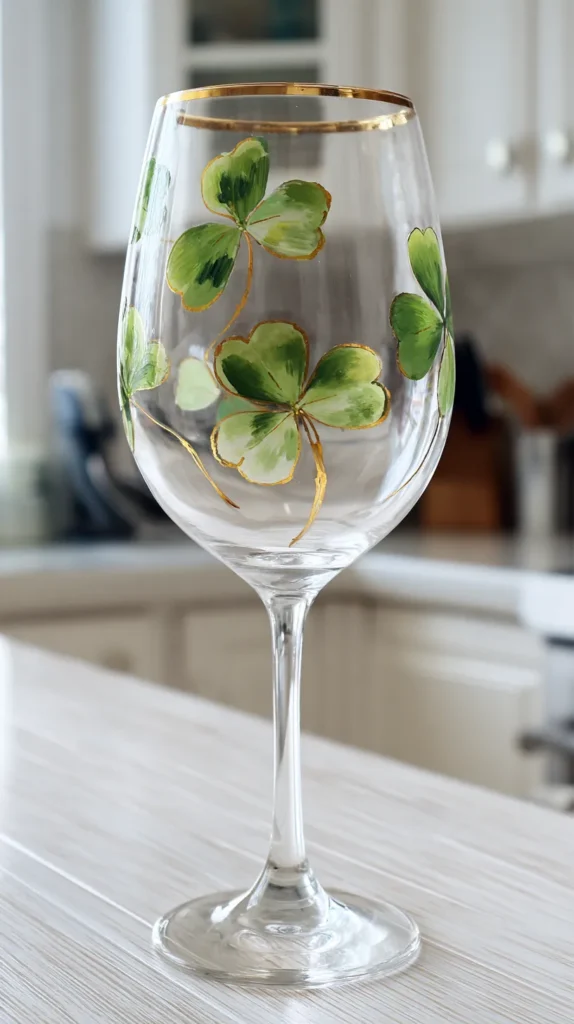
How To Paint Wine Glasses Without Overthinking It
The actual painting process is gentler than most tutorials make it sound. That’s good news. You don’t need to hover or micromanage.
Start by washing your glasses normally. Once dry, wipe them with rubbing alcohol. This removes residue you can’t see. Let them air dry completely.
Next, plan lightly. Visualize your design before touching paint. I tend to notice that mental rehearsal prevents hesitation later.
Hold the glass by the stem or base. Avoid touching the paint area. That keeps oils away.
Dip your brush lightly. Less paint beats more paint every time. Thin layers dry smoother and look cleaner.
Work slowly. Let your hand rest between strokes. Glass shows pressure changes clearly. Gentle strokes read best.
If something goes wrong, pause. Don’t panic. A damp cotton swab fixes fresh mistakes instantly.
I’ve found that rotating the glass instead of moving my wrist keeps lines steadier. That small adjustment helps a lot.
Helpful reminders while painting wine glasses:
• Thin layers look better
• Let sections dry before overlapping
• Rotate the glass, not your arm
• Stop sooner than you think
Once the design is done, let it dry untouched. That patience pays off later.
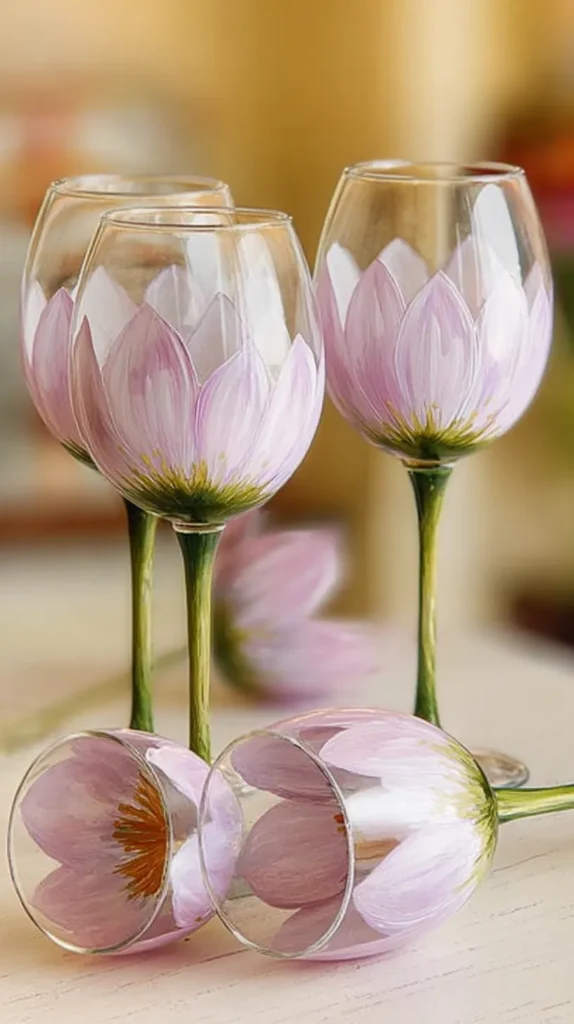
Designing Wine Glass Painting Around How People Actually Hold The Glass
Most designs ignore how hands interact with glass. That’s always surprised me. Wine glass painting works better when placement matches real use, not just aesthetics. I’ve found that people grip glasses higher than expected. Fingers land mid-bowl, not near the base. That detail changes everything.
Instead of centering designs visually, I design for touch zones. Patterns sit where fingers don’t rub constantly. As a result, paint lasts longer without extra effort. This approach quietly solves wear issues people blame on paint quality.
Another thing I tend to notice is sightline. People don’t stare straight at glasses. They tilt them slightly while talking. Designs angled toward that tilt read clearer in motion. Straight-on artwork often disappears during use.
Light also plays a role most tutorials ignore. Evening gatherings mean low light. Fine lines vanish. Wider strokes catch reflections better. That’s why bolder shapes age better than delicate ones.
I plan designs in thirds. The lower third stays mostly clear. The middle third carries the design. The upper third remains untouched for drinking comfort. That structure keeps everything practical.
Color choice matters too. Translucent paints glow under candlelight. Opaque paints flatten quickly. Mixing both adds depth without complexity.
Wine glass painting improves dramatically when you design for hands, light, and movement together. Suddenly, the glass works with the moment, not against it.
This mindset removes pressure entirely. You’re not decorating an object. You’re supporting how it’s used. That shift feels freeing.
Once I started designing this way, results looked intentional without trying. That’s the sweet spot I keep chasing.

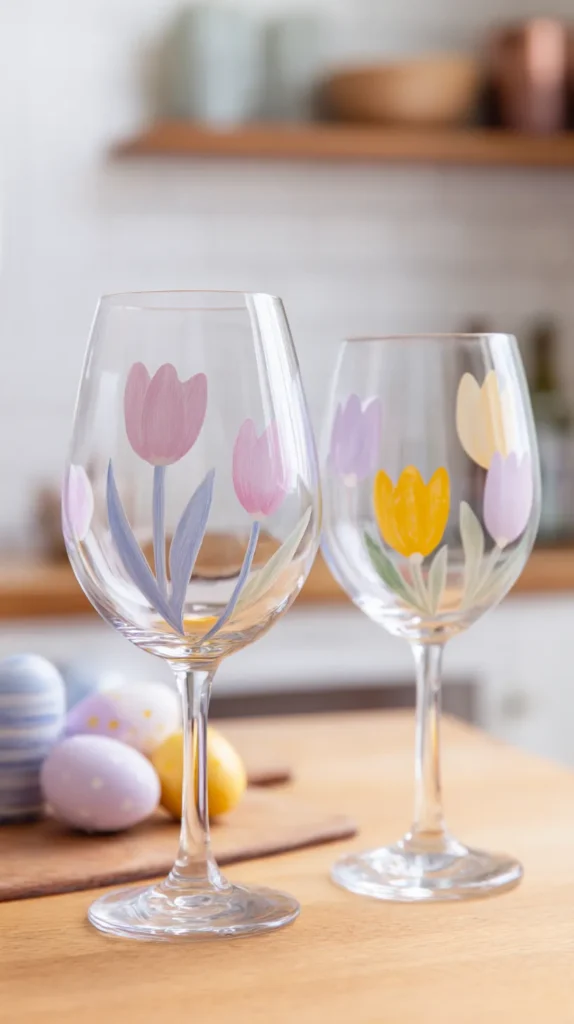
A Calm, Clear Way To Do Wine Glass Painting Without Guesswork
Sometimes you just want the facts laid out plainly. I get that. Wine glass painting doesn’t need mystery to be charming. It needs clarity so you can relax.
I start with plain wine glasses and wash them with regular dish soap. After they dry, I wipe the painting area with rubbing alcohol. That removes invisible oils that mess with paint adhesion. I let the glass air-dry for five minutes.
For paint, I use enamel or glass paint labeled food-safe once cured. That label matters. Craft acrylic alone won’t hold up. I squeeze a small amount onto a paper plate. Less paint works better here.
When painting, I apply thin layers only. One light coat dries in about 20 minutes. I usually wait 30 minutes anyway (because impatience always backfires). If I add another layer, I wait another 30 minutes.
Once painting is done, I let the glass air-dry for at least 24 hours. Longer is fine. Rushing here causes smears later.
For oven curing, I place the glasses on a baking sheet in a cold oven. I set the oven to 350°F. Once it reaches the temperature, I bake the glasses for 30 minutes. Afterward, I turn the oven off and leave the door closed until everything cools completely. Sudden temperature changes crack glass.
After curing, I wait 72 hours before washing. I hand wash gently and skip the dishwasher.
That’s it. No drama. No mystery. Just a clear path that lets the fun part stay fun.
Making Painted Wine Glasses Food And Drink Safe
This part matters. Thankfully, it’s straightforward.
Paint made for glass becomes durable after curing. Curing bonds the paint to the surface. Without curing, designs stay fragile.
Most glass paints cure one of two ways. Some air cure. Others require heat. Always check the paint label.
For oven curing, start with room-temperature glass. Place glasses in a cool oven. Then heat gradually. Sudden temperature changes crack glass.
Typical curing instructions look like this:
• Place glasses on a baking sheet
• Heat oven gradually to specified temperature
• Bake for the recommended time
• Turn oven off and cool completely
Air-curing paints require patience instead. Let them sit undisturbed for several days. Avoid handling during that time.
I tend to notice better durability when I wait longer than the minimum cure time. Extra patience never hurts here.
Once cured, painted wine glasses are safe for use. However, avoid painting the rim. Lips touch there. Paint belongs below the drinking line.
Care tips after curing:
• Hand wash gently
• Avoid soaking
• Skip dishwashers
• Dry carefully
Treated kindly, painted glasses last surprisingly well.
Simple Design Ideas That Always Look Intentional
Design pressure ruins enjoyment. Simple ideas shine on glass.
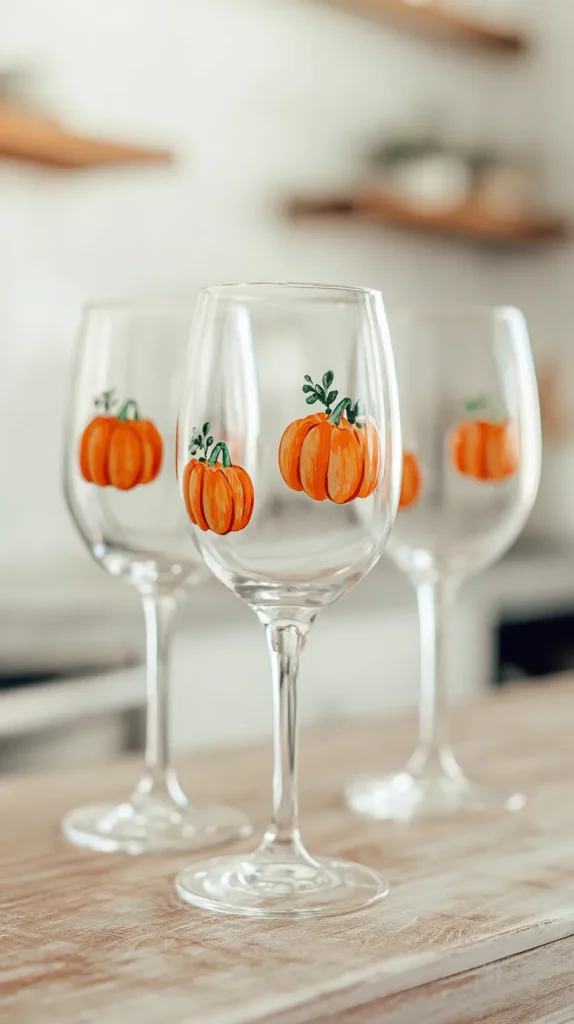
I’ve found that repetition beats complexity. Small motifs repeated around the glass look polished.
Popular easy options include:
• Thin stripes near the base
• Polka dots spaced evenly
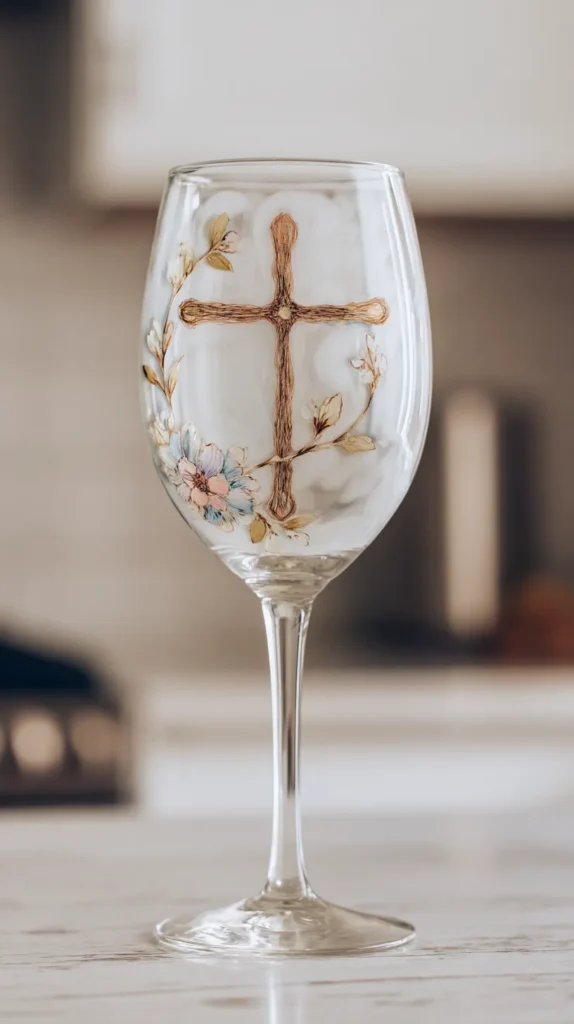
• Single-line florals
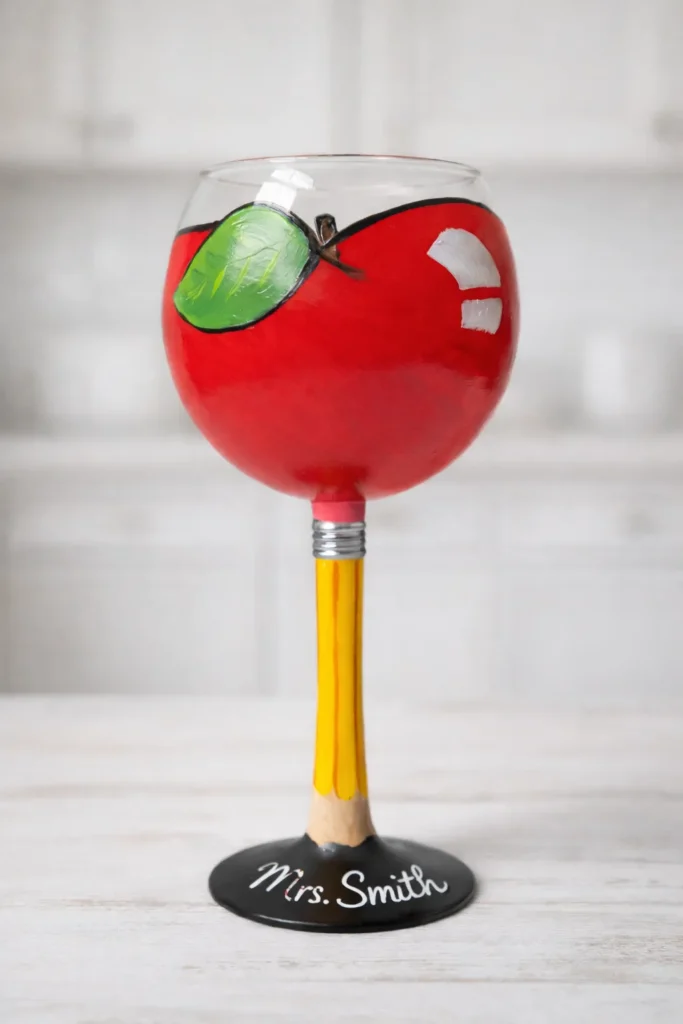
• Initials or short words
Negative space helps designs breathe. You don’t need to cover the glass. Partial designs feel modern and intentional.
I tend to notice that metallic accents catch light beautifully. Gold, copper, and silver pop without effort.
Seasonal touches work nicely too. Leaves, stars, or subtle color themes adapt easily.
Avoid crowding. Let the glass do some of the visual work.
If symmetry stresses you, freehand designs hide wobble better than rigid patterns. Organic shapes forgive more.
Design reminders for wine glass painting:
• Keep it minimal
• Let light enhance details
• Embrace uneven charm
• Stop before filling every space
Less effort often looks more confident.

Common Mistakes And How To Avoid Them
Everyone stumbles a bit with glass paint. That’s normal. I’ve found that most hiccups come from enthusiasm, not inexperience. Excitement makes hands move faster than paint prefers.
Too much paint sneaks up on people. It looks harmless at first. Then it slides, pools, and does its own thing. Thin layers behave better, even when they test your patience.
Touching paint early is another classic move. I’ve done the hover, the pause, then the “maybe it’s dry?” thought. It never is. A few extra minutes usually save a lot of sighing later.
Skipping the alcohol wipe feels tempting. Glass looks clean already. However, invisible oils love causing tiny rebellions. Paint beads up and refuses cooperation. That’s always the moment I remember the step.
Curing brings its own drama. Glass dislikes surprises. Fast heat changes crack enthusiasm quickly. Slow temperature shifts keep everything calm and intact.
Painting near the rim seems logical until it isn’t. That area sees the most action. Lips, washing, and handling all target it. Lower designs stay happier longer.
Things that tend to cause trouble during wine glass painting:
• Heavy paint layers
• Impatience during drying
• Skipping the alcohol wipe
• Dishwasher optimism
When something goes sideways, I remind myself this isn’t fine art. It’s functional beauty. That thought usually resets the mood fast (and kindly).
Last Few Ideas
Wine glass painting stays in my creative orbit because it slips into real life without announcing itself. It’s decorative, yet useful, which always earns my attention. I’ve found that projects like this age better than trendy crafts. They don’t expire once the moment passes.
Over time, I’ve noticed how painted glasses invite small pauses. Someone lifts a glass. Someone looks closer. Then comes a soft comment, usually mid-sip. That casual noticing matters more than praise ever could.
Living in Orlando means evenings stretch longer than planned, especially when friends linger. Painted glasses show up naturally during those moments. They hold sangria, sparkling water, or whatever happens to be nearby.
I like that this craft respects patience without demanding ceremony. Paint dries quietly. Glass cools slowly. Meanwhile, conversation fills the space. That rhythm suits me.
Wine glass painting also works beautifully as a giving gesture. Finished glasses feel thoughtful without trying too hard. They say, “I thought of you,” not “I stressed about this.” That difference counts.
Pinterest offers endless inspiration, yet I tend to notice something important. The most satisfying designs come from trusting your own instincts. Trends pass. Personal touches stick.
Ultimately, this craft fits the way I like to create now. It’s calm. It’s practical. It leaves room for life to keep happening around it. And honestly, that balance feels just right (even on imperfect days).