
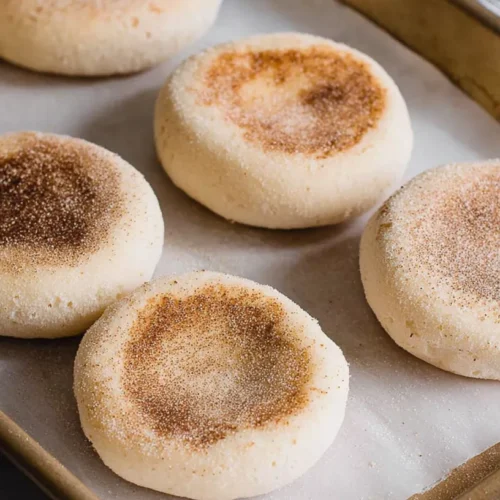
I’ve found that a good sourdough English muffin recipe sits in a very specific sweet spot. It’s cozy, yes, but it also has a tiny bit of attitude. It asks for patience, then pays you back with nooks, crannies, and that golden skillet top that looks almost too good for butter. Almost.
What gets me is how misleading English muffins can be. They look simple. They look like the plain cousin at the breakfast table. Then you split one open, toast it, add salted butter, and suddenly everyone gets very quiet. That’s always a sign.
I also think homemade versions have better personality than store-bought ones. Store ones can taste flat, dry, and weirdly stiff. These don’t. These have a little tang, a softer middle, and a richer flavor that actually tastes worth the effort. Not dramatic. Fine, slightly dramatic.
Living in Orlando, I notice bread projects make more sense on days when the air already feels warm and sleepy. Dough seems less stubborn, and I’m less interested in rushing anything anyway. That part matters more than people admit.
This post is not about being precious with starter or turning breakfast into a personality test. I’m giving you the whole thing. The ingredients. The measurements. The method. The little things that save the batch. The questions people always ask after the pan gets hot. Because that’s where the real story starts.
And there is one sneaky trick here that makes the texture so much better. It’s small. It’s easy. It changes everything a little, which is usually my favorite kind of kitchen detail.

Some of the links on this page are affiliate links. That means if you click and make a purchase, I may earn a small commission at no extra cost to you. If you’re curious about the fine print, you can check out my full disclosure.
Why This Sourdough English Muffin Recipe Works So Well
I tend to notice that people expect homemade English muffins to act like bread rolls in disguise. They’re not. That’s the first shift. They should stay low, tender, and just chewy enough to push back a little when toasted.
That texture comes from a few things working together. The dough stays soft, but not sloppy. The fermentation brings flavor, but it shouldn’t bulldoze the structure. Then the stovetop cooking sets the outside without drying the middle. That last part matters a lot.
Most recipes either go too dense or too fluffy. Dense ones eat like hockey pucks with commitment issues. Fluffy ones miss the point. I want that in-between bite. You know the one. Light enough for jam. Strong enough for an egg sandwich.
This is also where people assume harder means better. I don’t buy that. You do not need a dramatic, high-maintenance dough to make a sourdough English muffin recipe worth repeating. You need balance. That’s less glamorous, but it wins.
Another thing? Flavor should build quietly. A good sourdough English muffin recipe doesn’t smack you in the face with tang. It gives you a warm, toasty depth first. Then the sour note shows up softly, like it knows it already looks good.
I also like that this recipe fits real life. You can mix the dough, let time do most of the work, then cook them when you’re ready. That rhythm feels sane. I respect sane.
And yes, the cornmeal matters. It’s not just there for bakery theater. It keeps sticking under control and gives the bottoms that classic look. Tiny detail. Big payoff.
What You Need For This Sourdough English Muffin Recipe
This is a simple ingredient list, which sounds innocent. However, simple lists can get bossy fast. So I’m being specific, because vague baking advice makes me tired.
You’ll need:
- 100 grams active sourdough starter, about 1/2 cup
- 240 grams warm whole milk, 1 cup
- 25 grams honey, 1 tablespoon
- 28 grams unsalted butter, 2 tablespoons, softened
- 300 grams all-purpose flour, 2 1/2 cups
- 6 grams fine salt, 1 teaspoon
- 1 teaspoon baking soda
- Cornmeal for dusting
- Neutral oil or butter for cooking the muffins
That’s it. No weird flour blend. No mystery powder. And no ingredient that costs more than brunch.
A few ingredient notes help, though. Use active starter, not sleepy starter from the back of the fridge that has seen things. It should look bubbly and lively. Whole milk gives the best texture, too. You can use lower-fat milk, but the crumb won’t taste quite as tender.
Honey adds a soft sweetness, not a dessert moment. I like that because sourdough already brings enough personality. The butter also rounds things out, which keeps the dough from tasting lean.
Then there’s the baking soda. People sometimes blink at that one. I get it. It looks random. It isn’t. You’ll add it later, and it helps lighten the dough while taming extra acidity. That’s the sneaky trick I mentioned earlier.
So yes, this sourdough English muffin recipe keeps the ingredient list humble. But humble doesn’t mean boring. It means the method gets to do the flirting.
The Dough Stage That Makes Or Breaks The Texture
I’ve found that English muffin dough should look softer than many people expect. Not batter. Not soup. Just soft enough to make you wonder whether it needs more flour. Usually, it doesn’t.
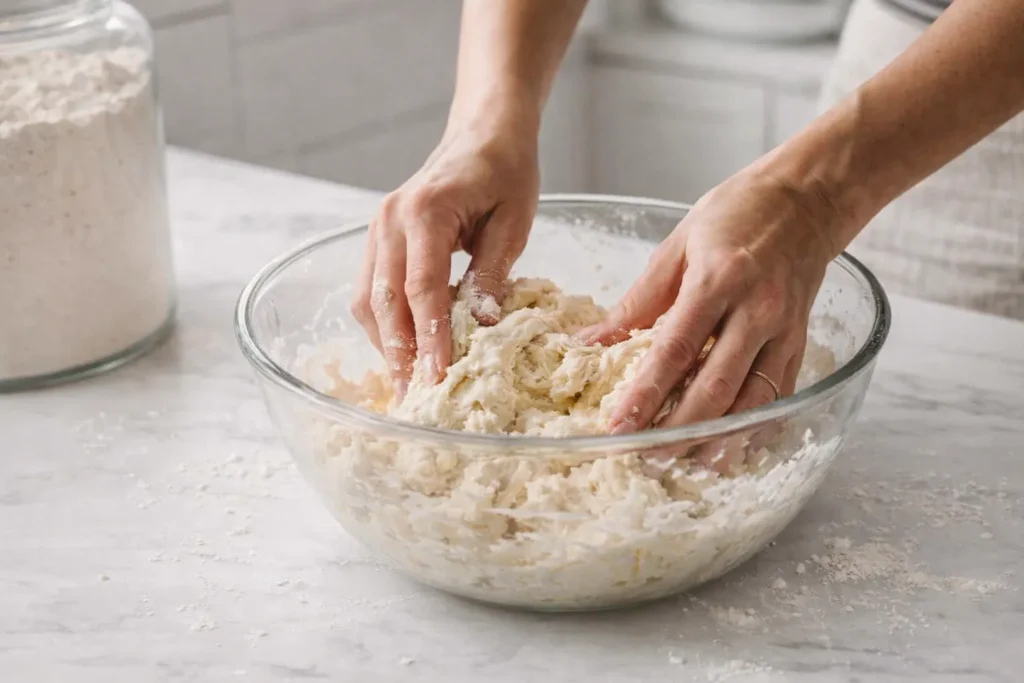
Start by mixing the starter, warm milk, honey, and softened butter in a large bowl. Stir until the starter loosens up and the mixture looks mostly smooth. Then add the flour and salt. Mix until no dry bits remain.
Now leave it alone for 20 to 30 minutes. That short rest helps the flour hydrate, which makes the dough easier to handle later. It also gives the texture a head start. Tiny rest. Big difference.
After that, knead briefly. You can do this in the bowl or on a lightly floured counter. The dough should turn smoother after a few minutes. It may still feel tacky. Good. Tacky is not a crisis.
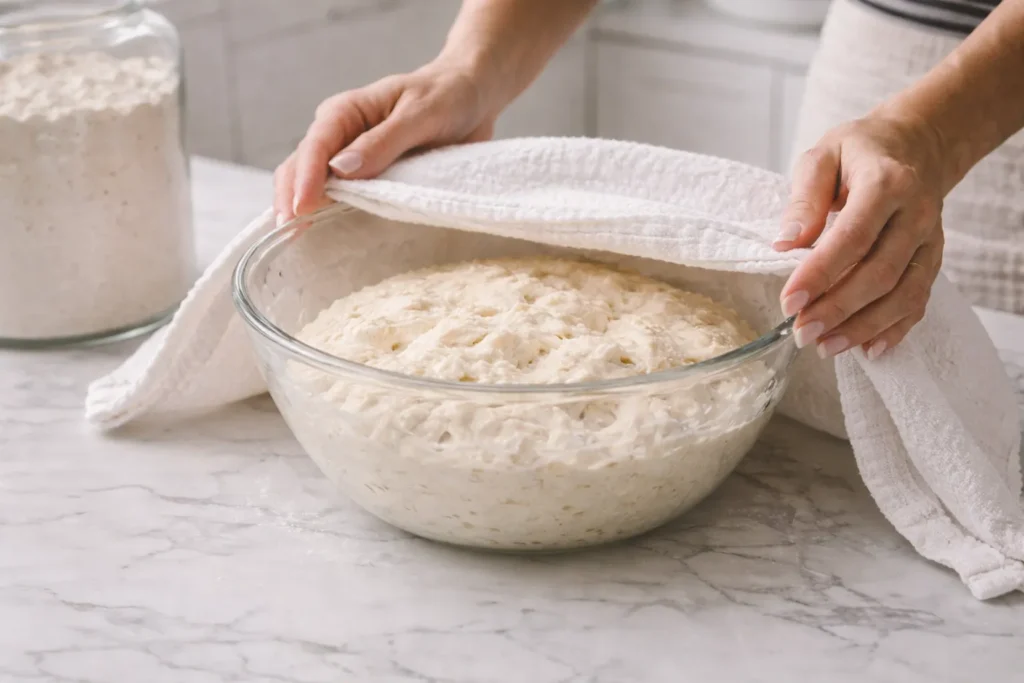
Cover the bowl and let the dough rise until puffy. Depending on your kitchen, that can take 4 to 8 hours. Warmer rooms move faster. Cooler rooms take their sweet time. Dough loves to be inconvenient in very specific ways.
You’re not waiting for a dramatic double here. You want visible lift and a softer, airier look. That’s enough. If you let it go too far, the dough can get overly sour and slightly slack. Nobody wants floppy muffin rounds.
Then comes the part people rush. Don’t. Chill the dough for about 30 minutes if it feels too sticky. That makes shaping much easier. More importantly, it saves you from adding too much flour, which keeps the finished muffins tender instead of heavy.

The Full Sourdough English Muffin Recipe
Here’s the full recipe in one place, because scrolling back and forth with flour on your hands is deeply annoying.
Ingredients:
- 100 grams active sourdough starter
- 240 grams warm whole milk
- 25 grams honey
- 28 grams softened unsalted butter
- 300 grams all-purpose flour
- 6 grams fine salt
- 1 teaspoon baking soda
- Cornmeal, for dusting
- Oil or butter, for the skillet
Method:
- In a large bowl, mix the starter, milk, honey, and butter until mostly smooth.
- Add the flour and salt. Stir until a shaggy dough forms.
- Rest the dough for 20 to 30 minutes.
- Knead for 3 to 5 minutes, until smoother.
- Cover and let rise until puffy, about 4 to 8 hours.
- Sprinkle in the baking soda and knead gently until fully worked in.
- Chill the dough for 30 minutes if it feels very sticky.
- Roll the dough to about 3/4-inch thickness on a cornmeal-dusted surface.
- Cut rounds with a 3-inch cutter.
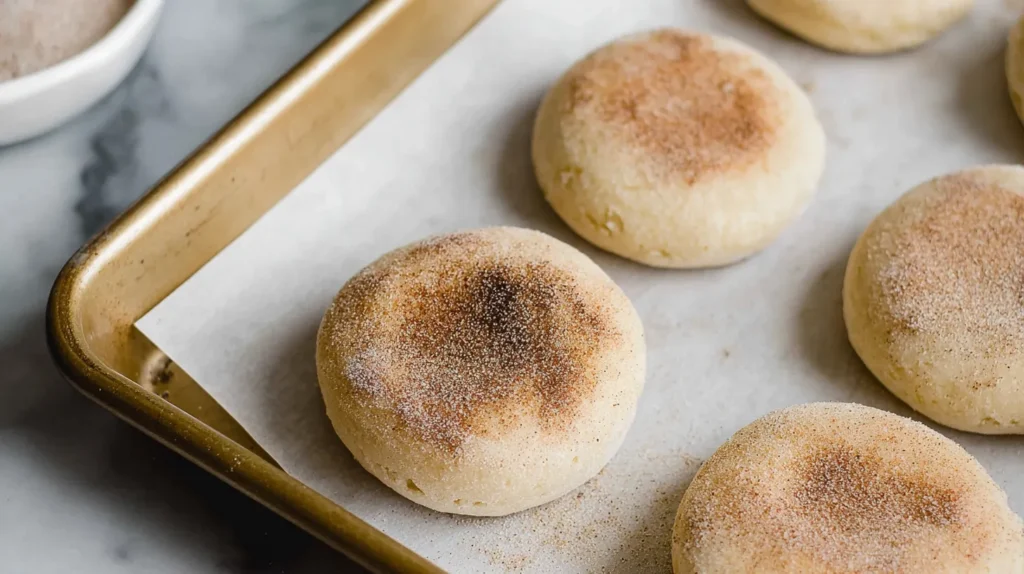
- Place rounds on a cornmeal-dusted tray and rest 30 to 45 minutes.
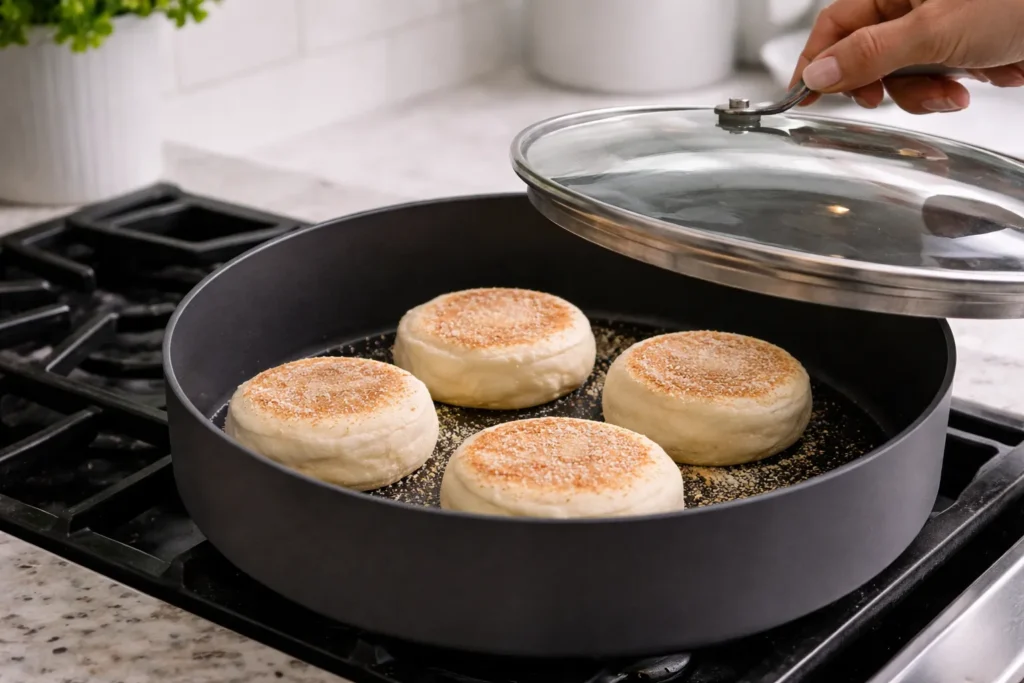
- Heat a skillet over low heat and lightly grease it.
- Cook muffins for about 5 to 7 minutes per side.
- If needed, finish them in a 300°F oven for 5 minutes.
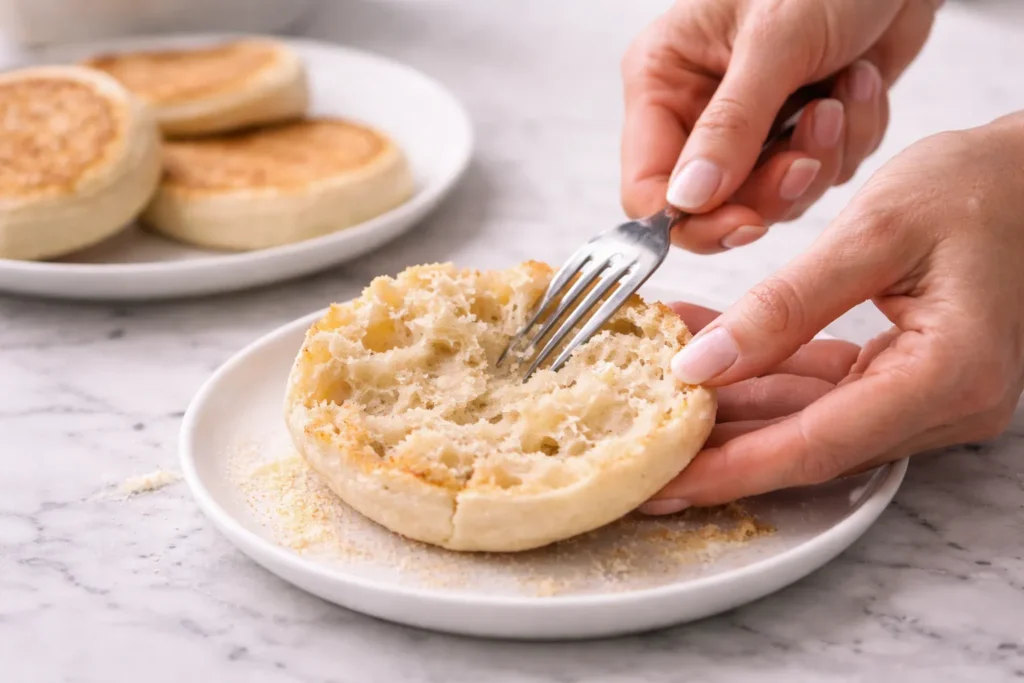
Cool before splitting with a fork. That last detail matters more than people think. A knife slices too neatly. A fork gives you those craggy edges that catch butter like it owes them money.

How To Shape, Rest, And Cook Them Without Regret
This part looks simple, but it’s where a lot of batches go slightly sideways. Not ruined. Just a little rude.
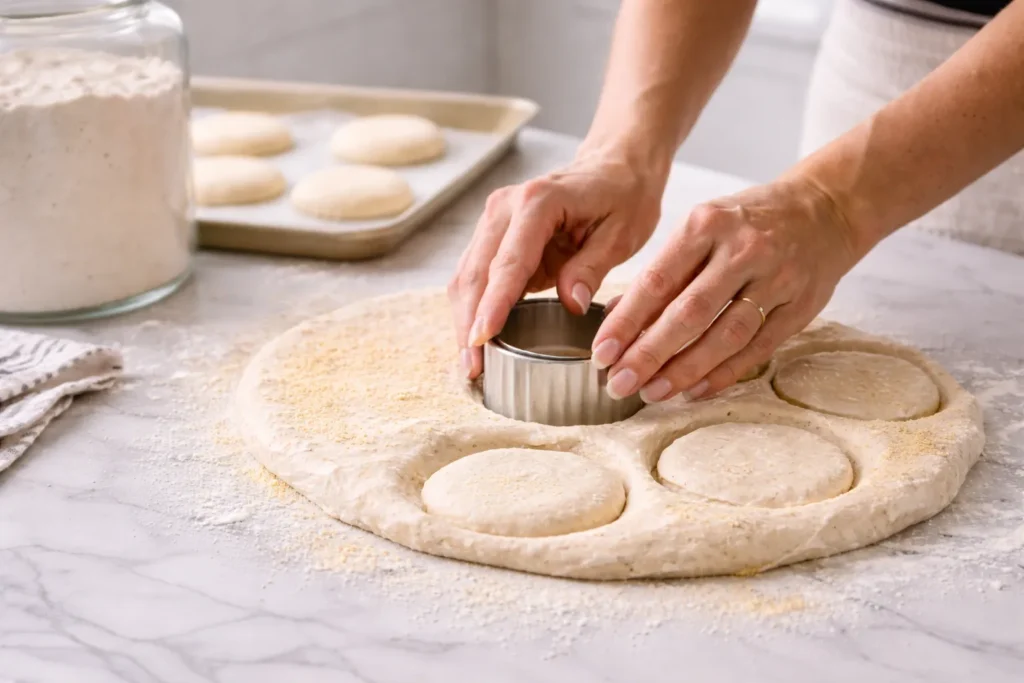
Once the dough has risen, work in the baking soda gently. You’ll notice the dough soften and puff a bit more. That’s normal. Then turn it onto a well-cornmealed surface and pat or roll it to about 3/4 inch thick. Keep that thickness. Thin dough makes sad muffins.
Cut the rounds straight down. Don’t twist the cutter. Twisting can seal the edges a little, which limits rise. I know. It sounds fussy. Still true.
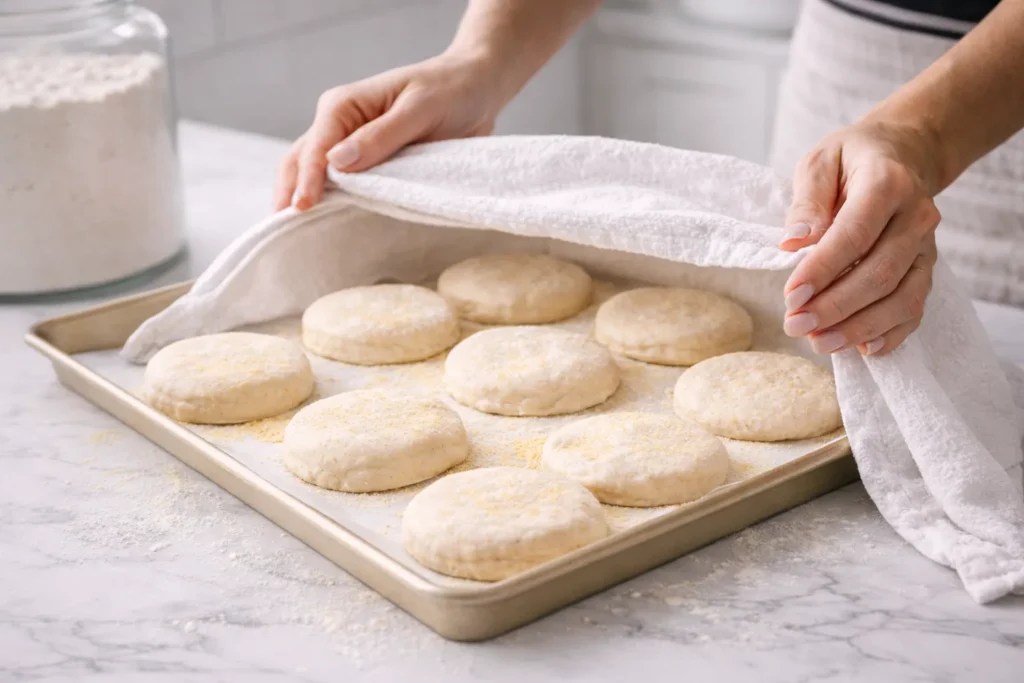
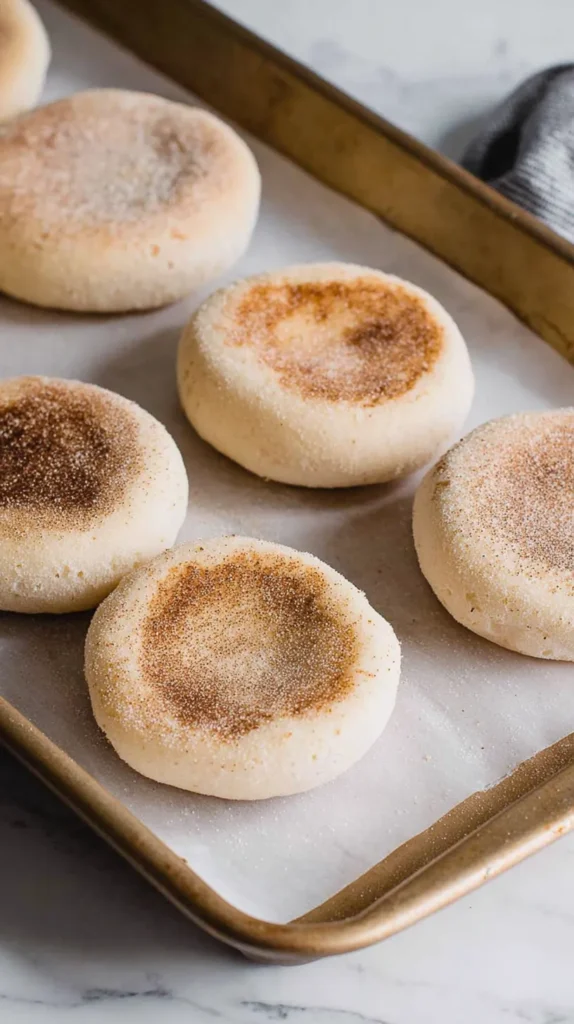
Set the rounds on a tray dusted with cornmeal, then let them rest. Here’s the simple flow:
- Rest the cut muffins for 30 to 45 minutes
- Keep them covered with a towel or loose wrap
- Heat the skillet on low, not medium
- Grease lightly, not heavily
- Flip once the bottoms turn golden brown
- Check the centers before pulling the whole batch
Low heat is the real headline here. High heat gives you dark outsides and raw middles. That is the English muffin betrayal nobody warns you about loudly enough.
I also like using a cast-iron skillet or heavy nonstick pan. Thin pans run hot, and these need steady heat. If they brown too fast, lower the heat immediately. The centers need time.
Once cooked, transfer them to a rack. Don’t stack them while hot. Steam will soften the crust too much, and then the texture gets a little sulky. Let them cool, then split them with a fork.
That fork trick is not cute nonsense. It creates the rough interior that makes this sourdough English muffin recipe taste like the version you wanted all along.

Common Mistakes In A Sourdough English Muffin Recipe
I’ve found that most problems come from three things: too much flour, too much heat, or too much impatience. Sadly, impatience remains very popular.
The first trap is stiff dough. People get nervous when dough sticks, so they keep adding flour. I understand the impulse. I reject the result. Dry dough gives you dense muffins, and dense muffins are not charming.
The second trap is overproofing. A dough that rises too long can flatten out, taste too sour, and cook unevenly. Bigger is not always better. That rule applies in more places than breakfast.
Then there’s skillet heat. If the pan runs too hot, the outside browns before the middle cooks through. You think you’re winning because they look gorgeous. Then you split one open and realize it’s gummy inside. That’s a rough emotional turn before coffee.
Another common mistake? Skipping the baking soda. People assume the starter handles everything alone. Technically, sure. But the baking soda improves texture and balances flavor. I would not leave it out unless I had absolutely no choice.
Cutting them too thin causes problems, too. English muffins need enough height for that soft center. If you roll the dough like cookie dough, they’ll cook fast and disappoint faster.
And here’s the sneaky one: slicing with a knife. A knife gives you flat, smooth surfaces. A fork gives you nooks and crannies. This is not the time for clean lines. This is the time for little buttery pockets.
So yes, a sourdough English muffin recipe has a few pressure points. None are hard. They just matter. That’s different.

My Best Tips For A Better Sourdough English Muffin Recipe
I tend to notice that tiny adjustments matter more here than fancy tricks. Good news, because I love an easy win.
Here are the tips I actually think matter:
- Feed your starter so it peaks near mixing time
- Use warm milk, not hot milk
- Let the dough stay a little tacky
- Dust with cornmeal generously
- Keep the skillet heat low and steady
- Use a thermometer if your stove runs wild
- Finish in the oven if the centers seem underdone
- Cool fully before splitting and toasting

That last one annoys people. I know. Warm bread tempts everyone. Still, cooling helps the crumb set. Split too soon, and the inside can turn gummy.
I also like weighing ingredients for this recipe. Cups work, but grams remove the guesswork. Flour especially loves to behave differently depending on how it’s scooped. Flour is dramatic that way.
Another tip: cook one test muffin first. Just one. It tells you whether your pan heat is right and whether your thickness works. That single muffin can save the batch. Quiet hero stuff.
If your dough looks sluggish, give it more rise time before shaping. If it looks very loose, chill it briefly. You do not need to panic. Dough changes with room temperature, starter strength, and humidity. That’s normal kitchen behavior, not failure.
And toast before serving whenever possible. Fresh is good, but toasted is where the texture really wakes up. Crisp edges. Tender inside. Better flavor. Better everything, frankly.
A solid sourdough English muffin recipe doesn’t need drama to shine. It just needs a few smart moves, done at the right time.

FAQs About Homemade Sourdough English Muffins
People always ask the same handful of questions, and honestly, I get it. This recipe looks calm on paper. Then dough starts doing dough things.
Can I make the dough the night before?
Yes, and I like that option. Mix the dough, let it rise partly, then refrigerate it overnight. The next day, let it warm slightly before shaping.
Do I need to use commercial yeast?
No. This recipe relies on active sourdough starter only. That keeps the flavor deeper and the ingredient list simpler.
Why add baking soda if I already use starter?
Baking soda lightens the dough and softens extra tang. It gives the finished muffins a better texture. Small move. Big improvement.
Can I freeze them?
Yes. Cool them fully first, then freeze in a sealed bag. Split before freezing if you want faster toasting later.
Why are my muffins gummy inside?
Usually the skillet heat ran too high, or the muffins were too thick. Sometimes they simply need a few oven minutes to finish.
Can I use discard instead of active starter?
You can, but the rise will be weaker. The flavor may still be nice, though the texture won’t match this version as closely.
Should I use a ring mold?
You don’t need one. A round cutter works well. The dough holds shape nicely after the rise.
How long do they stay fresh?
They’re best within two days at room temperature. After that, I toast or freeze them.
That’s the thing about a sourdough English muffin recipe. It sounds rustic and casual. Underneath, it rewards the details.



Serving Ideas, Storage, And The Best Way To Eat Them
This is where things get fun, because English muffins play well with sweet and savory toppings. They’re basically the friend who never makes dinner awkward.
For sweet options, I love:
- Salted butter and raspberry jam
- Honey and soft cream cheese
- Peanut butter with sliced banana
- Mascarpone with berries
- Apple butter with a pinch of cinnamon
For savory options, go with:
- Fried egg and cheddar
- Bacon, egg, and hot honey
- Avocado and flaky salt
- Turkey sausage and melty cheese
- Ham, Swiss, and mustard

I also think they make a ridiculous grilled breakfast sandwich. Split, toast, fill, and press lightly in a pan. Suddenly breakfast looks much more put together than it really is. My favorite kind of kitchen lie.
For storage, keep the cooled muffins in an airtight container at room temperature for two days. Refrigeration dries them out faster, so I skip that unless the kitchen runs very warm.
Freezing works beautifully, though. Place cooled muffins in a freezer bag, and tuck parchment between layers if needed. Toast straight from frozen, or thaw briefly first.
And please split them with a fork before storing if you know you’ll toast them later. That makes busy mornings easier, and it keeps the texture right where it should be.
A good sourdough English muffin recipe earns repeat status because it does more than sit beside eggs. It becomes the base for breakfast sandwiches, lazy afternoon snacks, and those little “I need something warm immediately” moments that seem to appear out of nowhere.

Sourdough English Muffin Recipe
Ingredients
- 100 grams active sourdough starter
- 240 grams warm whole milk
- 25 grams honey
- 28 grams unsalted butter softened
- 300 grams all-purpose flour
- 6 grams fine salt
- 1 teaspoon baking soda
- Cornmeal for dusting
- Oil or butter for the skillet
Instructions
- In a large bowl, mix the starter, milk, honey, and butter until mostly smooth.
- Add the flour and salt.
- Stir until a shaggy dough forms.
- Rest the dough for 20 to 30 minutes.
- Knead for 3 to 5 minutes, until smoother.
- Cover and let rise until puffy, about 4 to 8 hours.
- Sprinkle in the baking soda and knead gently until fully worked in.
- Chill the dough for 30 minutes if it feels very sticky.
- Roll the dough to about 3/4-inch thickness on a cornmeal-dusted surface.
- Cut rounds with a 3-inch cutter.
- Place rounds on a cornmeal-dusted tray and rest 30 to 45 minutes.
- Heat a skillet over low heat and lightly grease it.
- Cook muffins for about 5 to 7 minutes per side.
- If needed, finish them in a 300°F oven for 5 minutes.
- Cool before splitting with a fork.

The Breakfast Mood I Keep Coming Back To
I’ve found that a sourdough English muffin recipe changes the whole mood of a kitchen in a weirdly satisfying way. Not in a grand, life-altering way. More in a “well, now this morning has standards” way.
There’s something about splitting one open with a fork and seeing those craggy little pockets inside. It makes store-bought versions look a bit stiff and overly polite. These have character. They have texture. They have the confidence to handle too much butter, which I respect deeply.
I also like that they aren’t flashy. They don’t walk in like a layer cake. They don’t beg for attention. Yet once they hit the toaster, suddenly everyone notices. That’s a power move.
Living in Orlando, I think a lot about foods that work, whether the morning feels cozy or already borderline tropical. This one does both. It works with coffee, with eggs, with jam, and with those slightly chaotic weekends when Pinterest makes breakfast look much calmer than it really is.
That’s probably why I keep coming back to this sourdough English muffin recipe. It gives just enough project energy to be interesting, but not enough to become annoying. Big difference.
And when a recipe lands in that sweet spot, I trust it more. It becomes the kind of thing I want to make again before I even finish the first batch. That’s always the sign.
Some recipes whisper. Some recipes shout. This one just shows up golden, toasty, and fully aware of its own value.