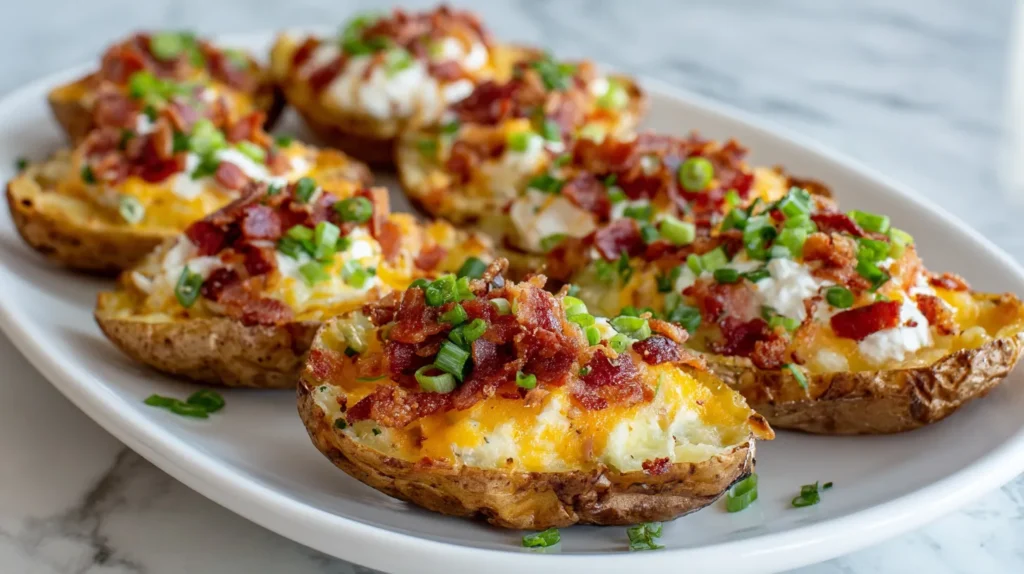
Potato skins are one of those foods that instantly change the mood in a room. Someone says the words, and people perk up. Conversations pause. Eyes wander toward the kitchen. Suddenly, everyone has opinions. Cheese level matters. Bacon amount matters. Crispness becomes a personality trait. I’ve found potato skins expose strong preferences fast, and honestly, I kind of love that.
What bugs me is how often they fall short. One bite in, the shells go soft, the toppings slide off, and the cheese barely commits. Suddenly, you’re thinking, “That should’ve been better,” which somehow feels worse than bad. I wanted potato skins that don’t rely on nostalgia to do the heavy lifting. Instead, I wanted crisp edges, rich toppings, and balance that holds up bite after bite. Nothing greasy, nothing skimpy, and nothing collapsing halfway through.
I cook food like I’m thinking out loud, not performing a demonstration. I tend to notice that when recipes overcomplicate familiar snacks, they lose their charm. Potato skins shouldn’t feel fussy or precious. They should feel confident and reliable, like the thing everyone quietly hopes shows up. (You know the one.) These hit that mark without trying too hard.
Living in Orlando means casual gatherings happen often and last longer than planned. Because of that, I lean on snacks that don’t need babysitting. These potato skins show up strong, stay crisp, and disappear fast. That’s the energy I want on my table.
Some of the links on this page are affiliate links. That means if you click and make a purchase, I may earn a small commission at no extra cost to you. If you’re curious about the fine print, you can check out my full disclosure.
Why The Potato Skins Base Is The Real Dealbreaker
Before toppings even enter the conversation, the potato itself has to do its job. I always reach for russet potatoes because they hold structure and crisp beautifully. Other varieties taste fine, but they tend to soften too quickly, and that’s where disappointment sneaks in. Medium to large russets work best here because they give you enough surface area without turning into a balancing act.
I bake the potatoes directly on the oven rack at 400 degrees. That airflow dries the skins properly, which matters more than people think. If the skin holds moisture, no topping can save it later. Once baked and cooled slightly, I slice them lengthwise and scoop out most of the inside, leaving a sturdy shell. I’ve found that leaving about a quarter-inch of potato gives you structure without heaviness.
Butter comes next, brushed generously on both sides. Olive oil works, but butter browns better and tastes fuller. I season with salt, garlic powder, and smoked paprika because plain potatoes taste unfinished. Then comes the most skipped step: the second bake. I place the skins cut-side down and bake again until they crisp. This step sets the foundation so the potato skins don’t collapse under toppings.
Skipping this is how soggy happens. Crisp shells create confidence. Everything else builds from there.
The Cheese Situation For Potato Skins (Yes, It Matters)
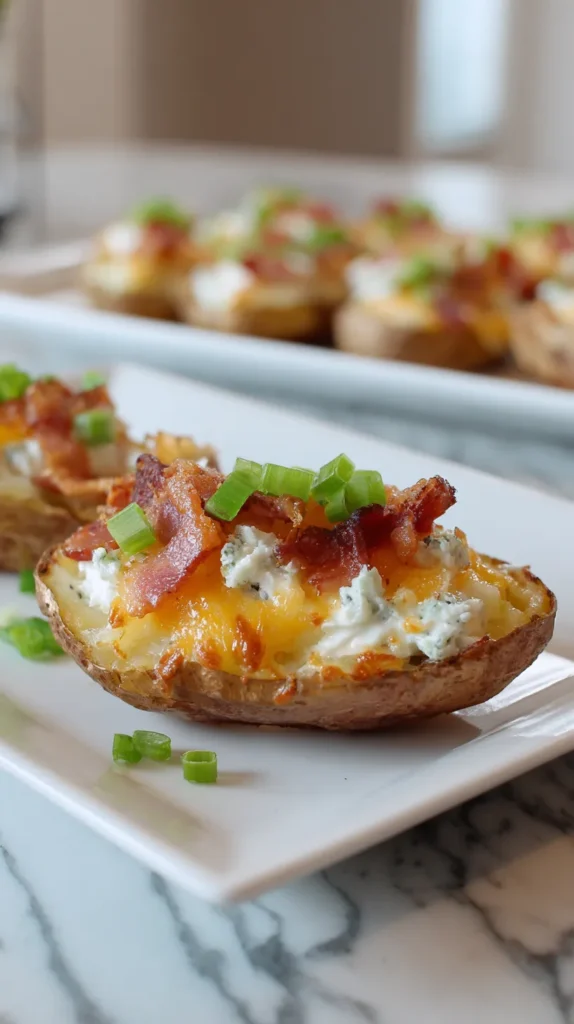
Cheese deserves some boundaries here. Too much, and everything slides. Too little, and people feel cheated. I stick with a blend that melts evenly and keeps flavor front and center. Sharp cheddar is my base because it actually tastes like something. I always shred it myself because pre-shredded cheese doesn’t melt the same way.
I usually pair cheddar with Monterey Jack for balance. It softens the sharpness and melts smoothly without stealing attention. When I want a deeper note, I add a small amount of smoked gouda. Not a lot. Just enough to add richness without overpowering the potato. Mozzarella can work, but only in small amounts, or it dulls everything.
I avoid crumbly cheeses as main players. Blue cheese, goat cheese, and feta dominate the bite instead of supporting it. Those are better added sparingly after baking, if at all. I layer cheese intentionally on potato skins. A light sprinkle goes directly on the shell first, creating a barrier. Then come the toppings, followed by more cheese on top.
This layering keeps everything cohesive and prevents that uneven melt situation where half the skin is bare and the other half is overloaded. Melted, bubbly, and contained is the goal.

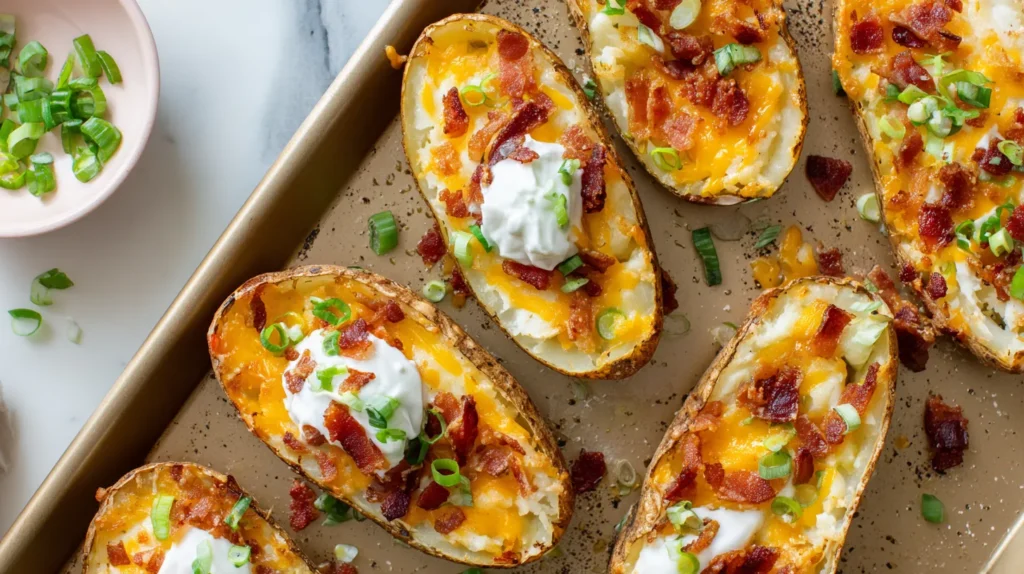
Bacon Choices That Don’t Hijack The Potato Skins
Bacon is powerful, which means it needs boundaries. I’ve found that when bacon gets reckless, potato skins lose their balance fast. Thick-cut bacon sounds impressive, but it stays chewy and steals attention. Instead, I stick with regular-cut bacon cooked until fully crisp. That crunch works with the potato instead of fighting it. It adds contrast without turning every bite into a bacon situation.
I bake bacon on a sheet pan at 400 degrees because it cooks evenly and behaves. Flipping halfway helps, but I don’t hover. Once it cools, I chop it fairly small. Large chunks look dramatic, but they create uneven bites. Smaller pieces spread flavor evenly, which matters more than people admit. I tend to notice that balanced bites disappear faster than overloaded ones.
Turkey bacon can work here, but only when cooked aggressively. Limp turkey bacon ruins texture and mood. I cook it until deeply crisp, then chop it finely. Otherwise, I skip it. Once bacon enters the picture, I never add extra salt. Bacon already brings plenty, and too much turns everything harsh. Sometimes, I add a pinch of black pepper, especially if the cheese leans rich. That little bite helps.
When assembling potato skins, I sprinkle bacon evenly across the surface. I don’t pile it in the center or clump it in corners. Every bite should get some crunch without feeling bacon-heavy. That balance keeps the potato present.
Here’s what I always keep in mind:
- Regular-cut bacon over thick-cut
- Fully crisp before chopping
- Smaller pieces spread better
- No extra salt after bacon
Potato skins should taste like potatoes first. Bacon supports that role, not the other way around.

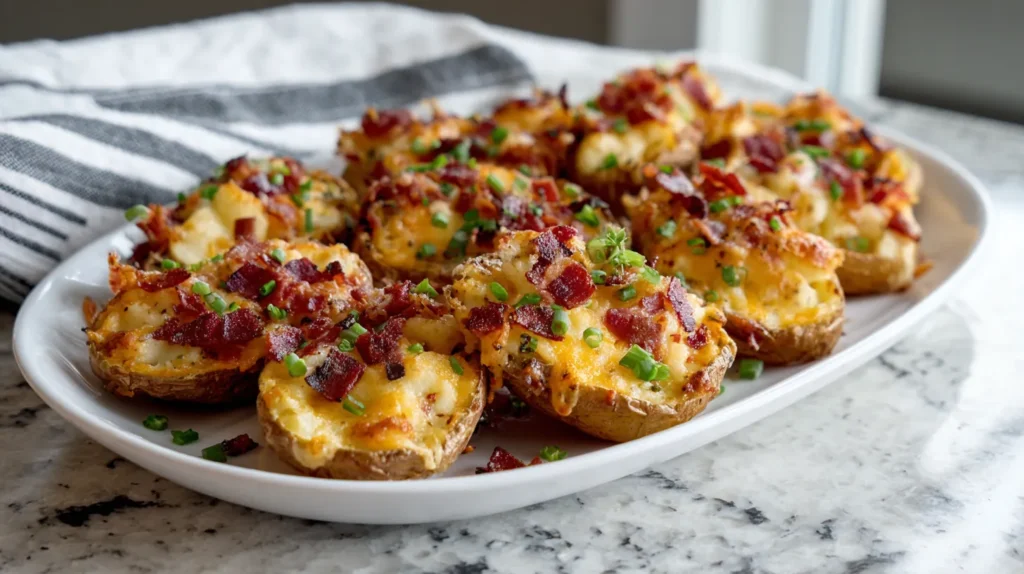
Potato Skins Ingredients And Measurements
I keep ingredient lists tight on purpose because clarity makes cooking calmer. When a recipe asks for everything under the sun, I start doubting it. I’ve found potato skins shine when the basics stay strong and nothing crowds the plate. Each ingredient here earns its spot, and nothing sneaks in without a reason. That restraint keeps the final result confident instead of busy.
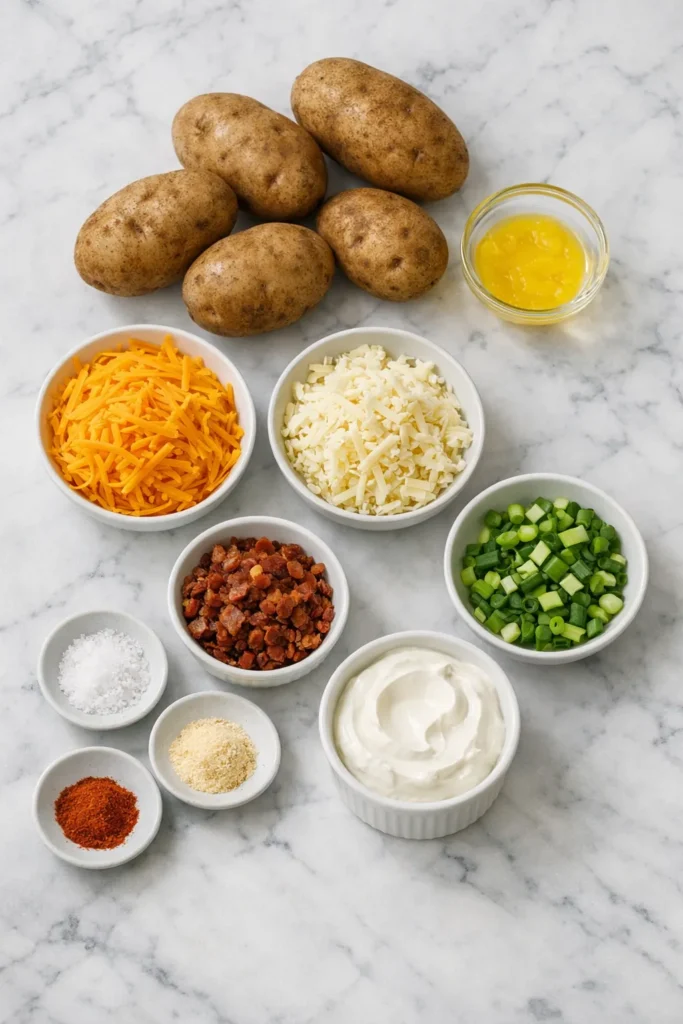
The potatoes matter most, so I choose medium russets with sturdy skins. Butter adds richness and helps crisp the shells properly. Salt brings everything into focus, while garlic powder adds depth without distraction. Smoked paprika gives warmth and color without overpowering anything. I like cheeses that melt smoothly and stay balanced, which is why sharp cheddar and Monterey Jack work well together. Bacon adds crunch and salt, but only when used thoughtfully. Sour cream and green onions finish things cleanly and fresh.
Here’s everything I use, exactly as listed:
- 6 medium russet potatoes
- 4 tablespoons unsalted butter, melted
- 1 teaspoon kosher salt
- 1 teaspoon garlic powder
- ½ teaspoon smoked paprika
- 1½ cups freshly shredded sharp cheddar cheese
- ½ cup shredded Monterey Jack cheese
- 6 slices bacon, cooked and finely chopped
- Sour cream, for serving
- Sliced green onions, for topping
I tend to notice that when ingredients stay simple, execution improves naturally. Nothing here requires a special trip or a long explanation. Potato skins don’t need a pantry raid to succeed. Instead, they need balance, good timing, and ingredients that cooperate. When the list stays focused, the outcome tastes intentional every single time.
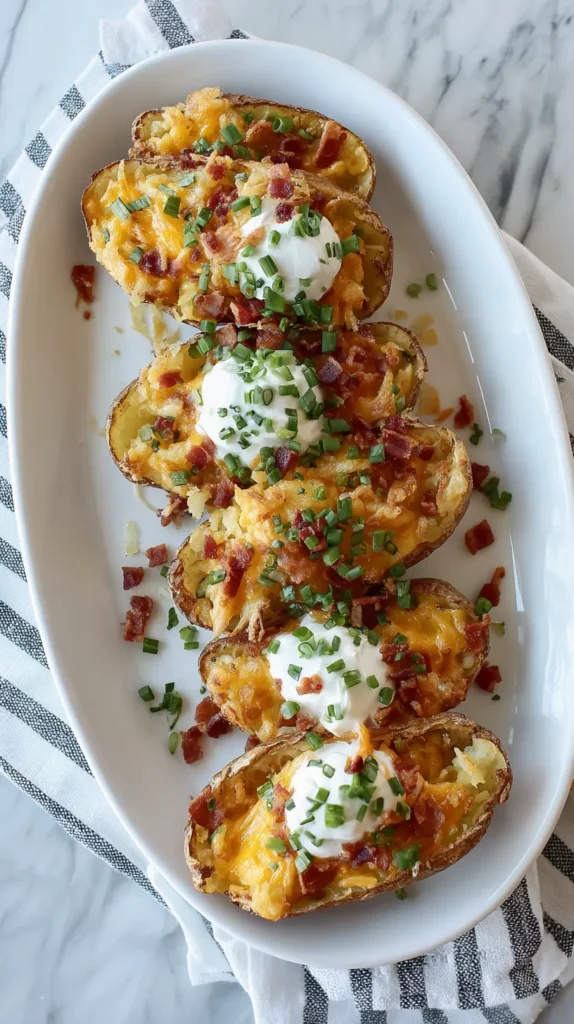
How I Make Potato Skins Simply and Without Overthinking It
I make potato skins the same way I approach most comfort food. I want a plan, but I don’t want a performance. I’ve found that when I keep the process clear and predictable, the result stays consistent. That matters more than fancy tricks. First, I heat the oven to 400 degrees and scrub the potatoes well. After drying them completely, I pierce each one a few times and bake them directly on the oven rack. That airflow keeps the skins dry, which saves me later.
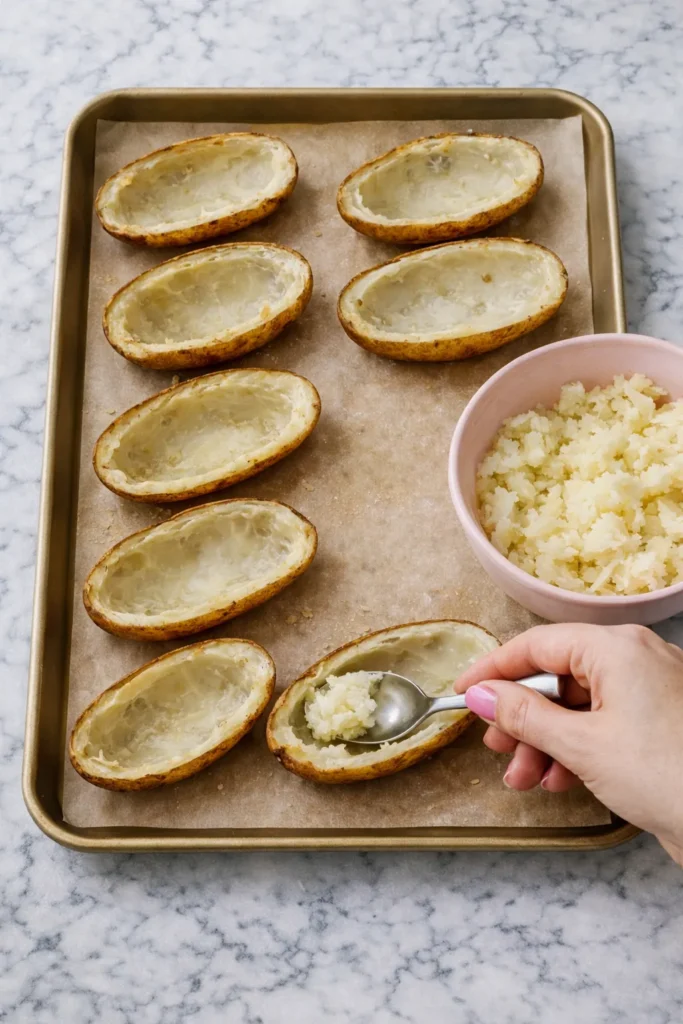
Once the potatoes finish baking, I let them cool just enough to handle. Then I slice them lengthwise and scoop out most of the inside. I leave enough potato to keep the shells sturdy. Too thin, and they collapse. Too thick, and they taste heavy. I tend to notice that balance right there determines everything that follows.
Next, I brush both sides with melted butter and season generously. Salt matters. Garlic powder helps. Smoked paprika adds warmth without taking over. Then the potato skins go back into the oven, cut-side down, until crisp. This second bake is the quiet hero of the whole recipe. (Skip it and regret follows.)
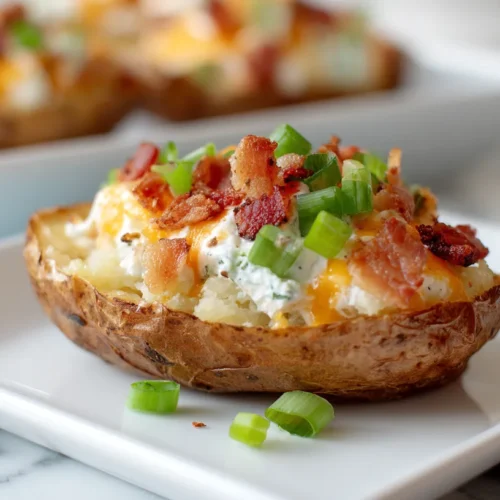
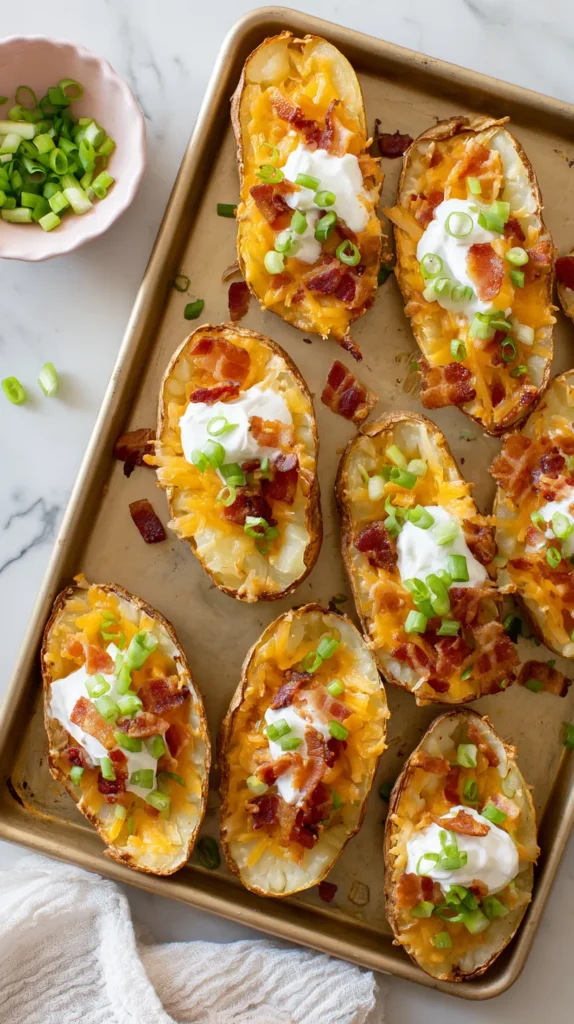
Once crisp, I flip them over and start layering. I add a light sprinkle of cheese directly onto the shell first. That step protects the potato. Bacon comes next, spread evenly, not piled. Then I finish with more cheese, because balance matters. I bake them just until bubbly and melted, watching closely.
Here’s what I always keep in mind:
- Crisp the shells before toppings
- Layer cheese with intention
- Spread bacon evenly
- Bake just until melted
When they come out, I top with green onions and serve immediately. Potato skins should arrive hot, crisp, and ready to disappear.

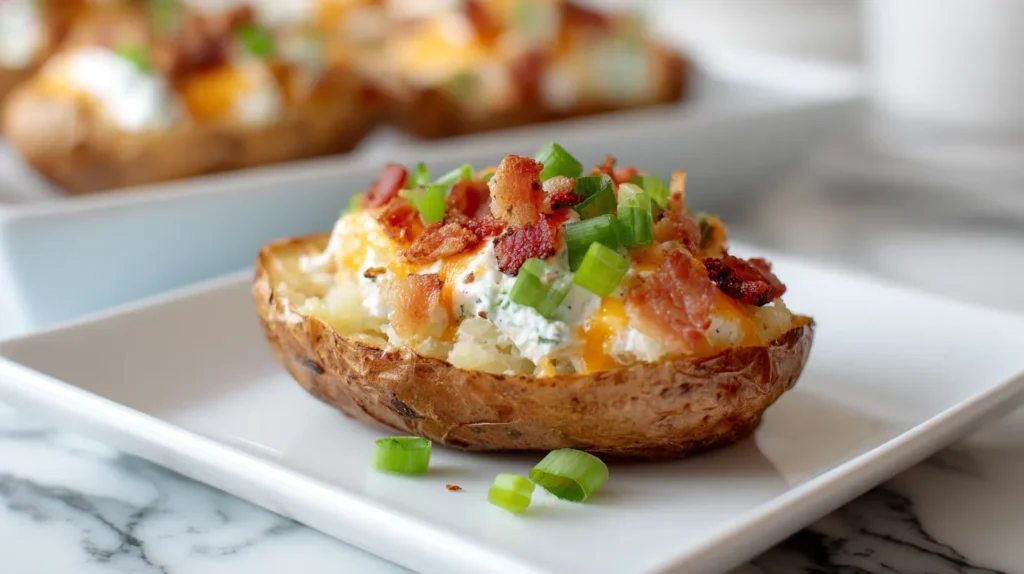
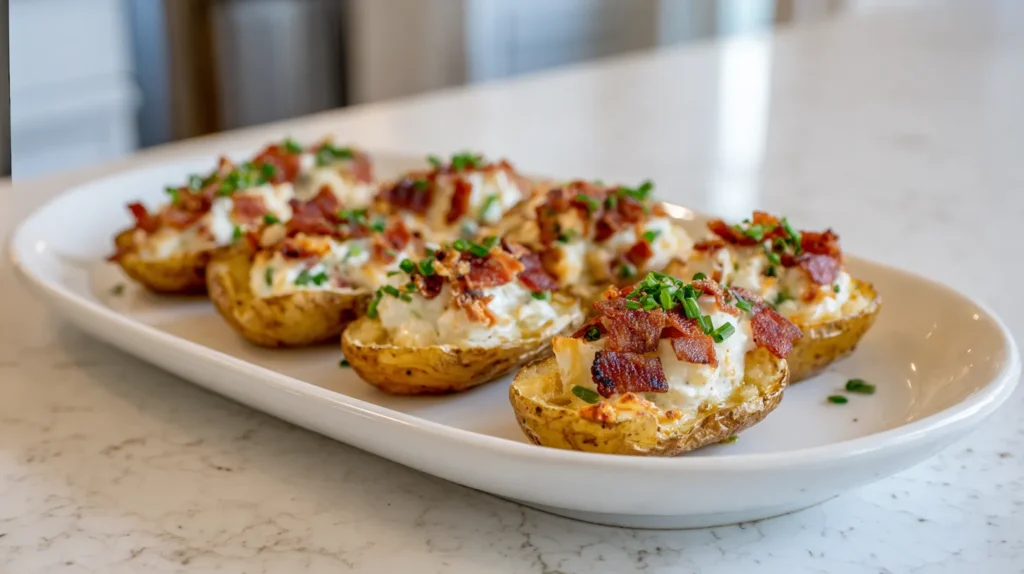
Add-Ons And Variations That Don’t Get Messy
I keep add-ons intentional because potato skins can spiral fast if nobody’s watching. Once the base works, everything else should support it, not hijack it. I’ve found that when toppings start competing, the potato gets lost, and that’s never the goal. These are still potato skins, not a loaded appetizer sampler pretending to be cohesive.
Green onions always earn their spot. They add freshness and a little bite without overpowering anything. Pickled jalapeños work better than fresh here, because they bring heat without sharpness. I tend to notice that raw jalapeños distract from the cheese, while pickled ones blend in more smoothly. Onions can work too, but only after a quick sauté. Raw onion tastes aggressive on hot potatoes, and that’s not the vibe I want.
Protein add-ons need restraint. Pulled chicken works in small amounts, especially when lightly seasoned. Too much protein makes the skins heavy, and suddenly they feel like work. Sometimes, I add a pinch of ranch seasoning directly into the cheese mixture. That approach keeps flavor balanced instead of coating everything in sauce.
Here are add-ons that stay in bounds:
- Sautéed onions or shallots
- Pickled jalapeños
- Lightly seasoned pulled chicken
- A small sprinkle of smoked Gouda
- Extra green onions right before serving
I avoid piling on sauces directly. Instead, I serve dips on the side so the potato skins stay crisp. Barbecue sauce works in moderation, brushed lightly before the final cheese layer. Ranch belongs mixed in, not poured on top. The key is knowing when to stop. When potato skins stay balanced, people keep reaching for another without thinking twice.
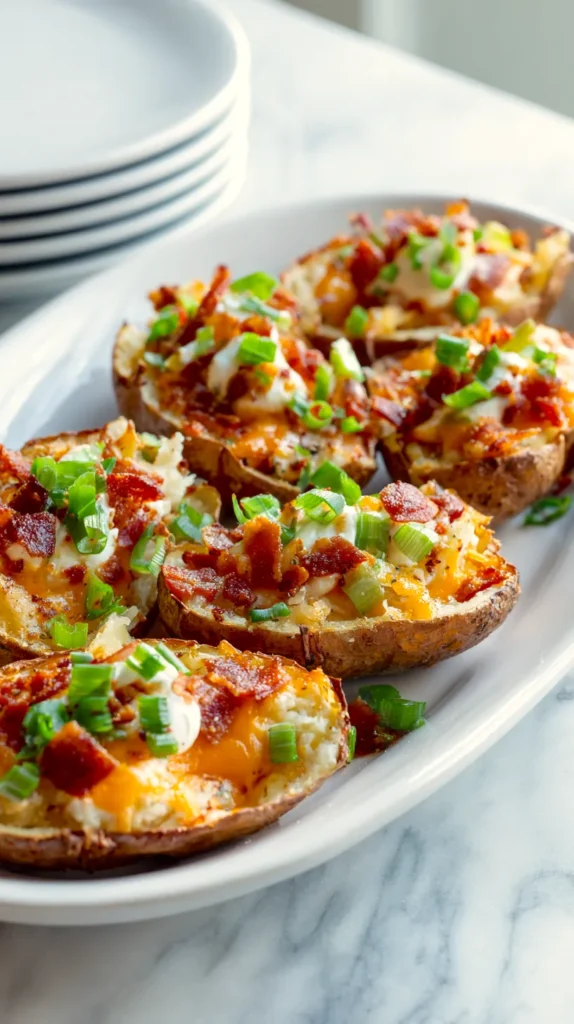
Potato Skins
Ingredients
- 6 medium russet potatoes
- 4 tablespoons unsalted butter melted
- 1 teaspoon kosher salt
- 1 teaspoon garlic powder
- ½ teaspoon smoked paprika
- 1½ cups freshly shredded sharp cheddar cheese
- ½ cup shredded Monterey Jack cheese
- 6 slices bacon cooked and finely chopped
- Sour cream for serving
- Sliced green onions for topping
Instructions
- Preheat the oven to 400 degrees.
- Scrub the potatoes clean, dry them well, and pierce each potato several times with a fork.
- Bake the potatoes directly on the oven rack for about 50 minutes, until tender inside and dry outside.
- Remove the potatoes from the oven and let them cool slightly until safe to handle.
- Slice each potato lengthwise and scoop out most of the flesh, leaving sturdy shells.
- Brush both sides of the potato shells with melted butter.
- Season the shells with kosher salt, garlic powder, and smoked paprika.
- Place the potato shells cut-side down on a baking sheet.
- Bake for 10 minutes, then flip and bake for 5 more minutes until crisp.
- Remove the baking sheet from the oven and flip the shells cut-side up.
- Sprinkle a light layer of cheese directly onto each shell.
- Evenly scatter the chopped bacon over the cheese.
- Top with the remaining cheese.
- Return the baking sheet to the oven and bake until the cheese melts and bubbles, about 8 to 10 minutes.
- Remove from the oven and top with sliced green onions.
- Serve immediately with sour cream on the side.
Last Few Ideas and Thoughts
I tend to trust recipes that don’t overpromise but still show up strong. That’s how I think about food I actually make again. Potato skins fall into that category when they’re done with intention instead of shortcuts. I’ve found that once the base works, everything else relaxes into place. The cheese melts the way you hope. The bacon behaves. The bites stay balanced instead of chaotic.
At this point, I know exactly what I want from comfort food. Something familiar should still earn its place on the table. I don’t want a project or a checklist. Instead, I want confidence on a plate. These potato skins deliver that without trying to impress anyone. They simply work, which feels refreshing. (That shouldn’t be rare, but here we are.
Living in Orlando means casual plans turn into long nights pretty easily. Because of that, I gravitate toward snacks that don’t need babysitting. These hold their crispness, keep their structure, and disappear faster than expected. I always take that as a good sign.
I also notice I save recipes like this for repeat moments. They’re the ones I pin without overthinking and come back to later. Pinterest has plenty of flashy ideas, but reliable ones earn long-term loyalty. This recipe lives in that space for me.
If you want something indulgent without being messy, this is it. Potato skins like these don’t ask for attention. They just quietly win people over, one bite at a time.