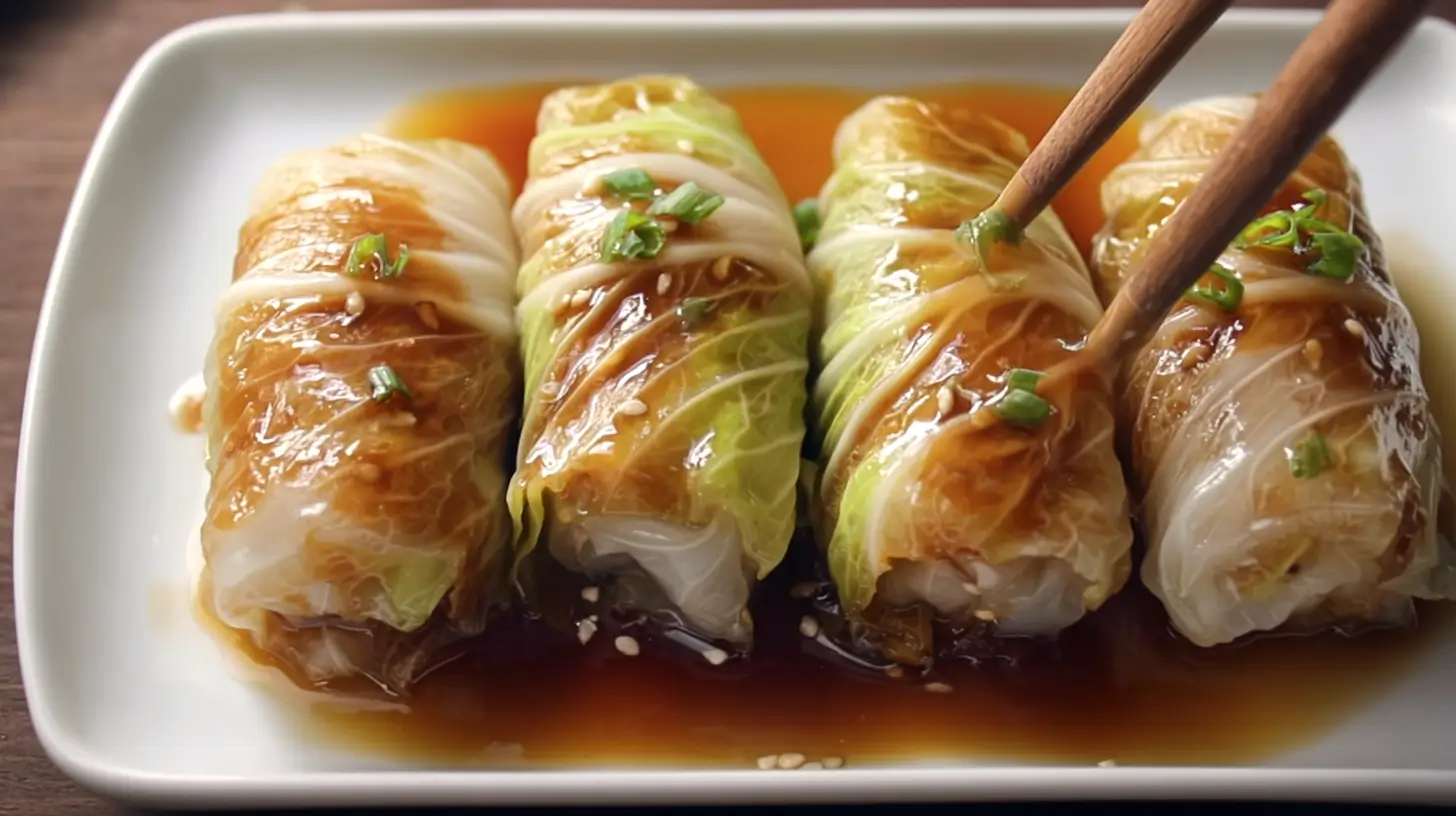
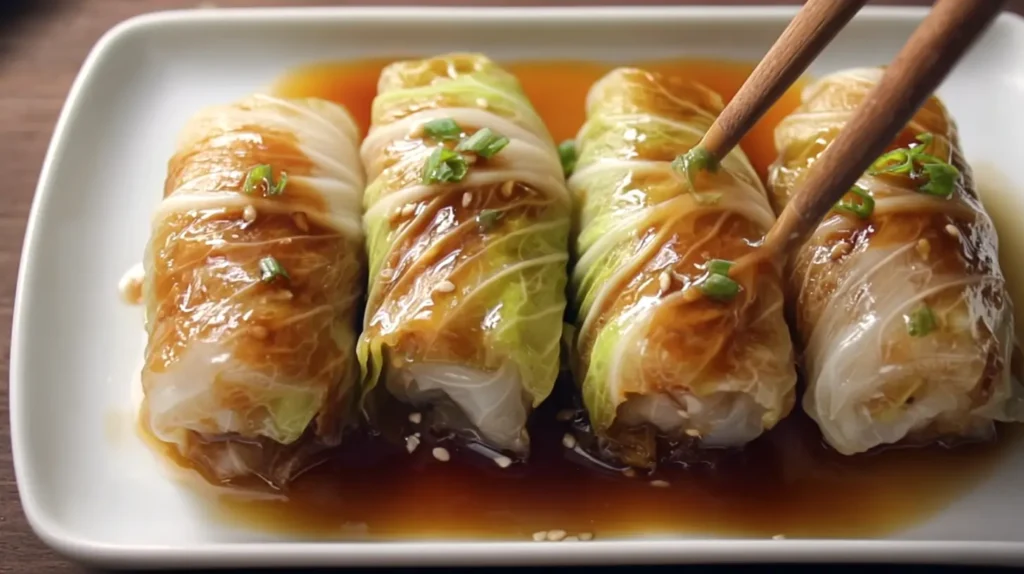
Napa cabbage rolls are my kind of dinner because they look impressive without acting dramatic. Big flavor shows up early. The process stays calm. Asian-style napa cabbage rolls hit that perfect middle ground between cozy and fresh, which I always appreciate. Ginger brings warmth. Garlic adds depth. Soy keeps everything grounded. Sesame ties it together without taking over. Nothing tastes muddy. Nothing gets lost.
Instead of tomato sauce and beef, this version leans into clean, savory flavors. The plate stays light. The meal still satisfies. Because napa cabbage softens quickly, the whole process moves faster than traditional rolls. That matters on busy nights, when patience runs low, and when the day has already used up your energy.
Living in Florida shapes how I cook. Heavy meals do not always make sense here. Warm evenings change the mood. However, dinner still needs structure. Asian-inspired napa cabbage rolls fit that rhythm perfectly. They bring comfort without the sluggish aftermath. They work year-round without feeling out of place.
Throughout this post, every step is spelled out. Exact measurements are included. Clear instructions are baked in. No guessing gets invited. No vague directions sneak through. The goal stays simple. Good food should support your life, not complicate it.
If you like food that looks thoughtful without being precious, you are in the right place. If personality in a recipe matters to you, even better. These napa cabbage rolls are practical, flavorful, and steady. That combination earns repeat status in my kitchen.
Some of the links on this page are affiliate links, which means that if you click on them and buy something, I might get a small commission. But don’t worry; it never costs you more. You can peek at my full disclosure if you’re curious about the fine print.
Why Asian-Style Napa Cabbage Rolls Work So Well
Asian-style napa cabbage rolls earn their spot because they solve several problems at once. Quick prep helps. Easy rolling matters. Even cooking saves stress. Those details add up fast during real life. Unlike green cabbage, napa bends easily. As a result, rolling stays simple. Fewer tears happen. Less frustration shows up.
Because the leaves are thinner, they soak up sauce well. Therefore, every bite carries flavor. No dry pockets sneak in. No bland spots ruin the mood. That balance makes each roll taste intentional. Meanwhile, the ginger and garlic keep things lively. The soy adds depth. Sesame brings warmth without heaviness.
Weeknight dinners need reliability. Busy schedules demand cooperation. These rolls understand that assignment. Additionally, they reheat well. Texture stays consistent. Flavor holds up. That matters when leftovers show up the next day.
Here is why they stay in rotation:
- Leaves soften quickly
- Rolls hold shape
- Sauce clings well
- Portions stay neat
- Flavor stays balanced
Balance plays a role too. Ginger brings warmth. Garlic adds depth. Soy keeps things grounded. Sesame ties it together. Nothing overpowers. Everything belongs. Because the flavors stay clean, the dish never feels heavy.
Plated dinners look intentional. Casual meals still feel special. That range makes these rolls flexible. Some recipes fight back. These do not. Instead, they move with you. They cooperate. They get the job done without attitude.
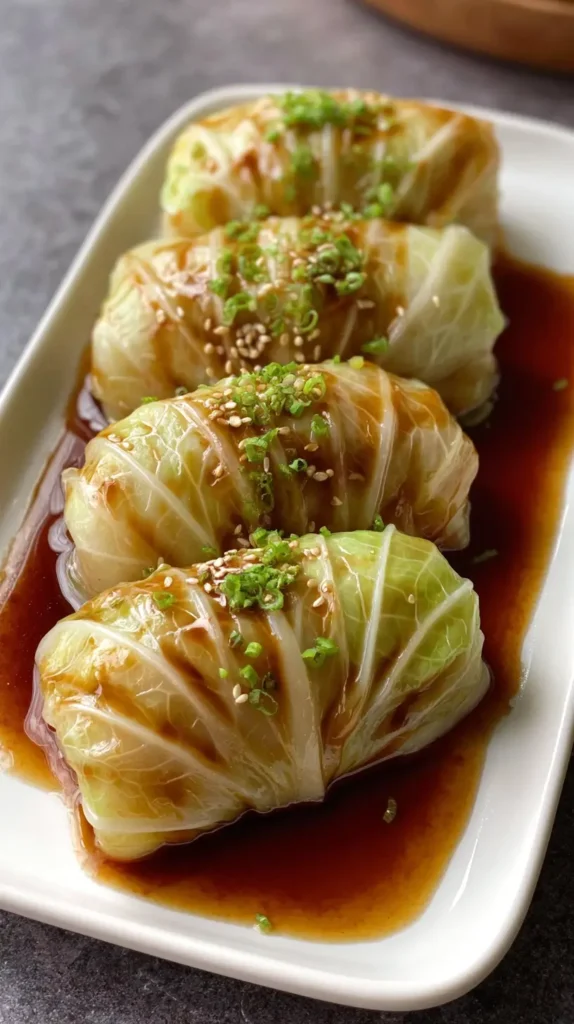
Ingredients For A Flavorful Recipe
This ingredient list stays practical. No obscure items appear. No specialty store trips are needed. Everything should be easy to grab. That keeps the process friendly.
For the napa cabbage rolls:
- 1 large napa cabbage head, about 2 pounds
- 1 pound ground chicken or ground turkey
- 1 cup cooked jasmine rice
- 1 small yellow onion, finely diced
- 3 cloves garlic, minced
- 1 tablespoon fresh ginger, grated
- 1 large egg
- 2 tablespoons soy sauce
- 1 teaspoon sesame oil
- 1/2 teaspoon black pepper
- 1/2 teaspoon salt
- 1 tablespoon chopped green onions
For the sauce:
- 1 cup low-sodium chicken broth
- 1/4 cup soy sauce
- 2 tablespoons hoisin sauce
- 1 tablespoon rice vinegar
- 1 tablespoon honey
- 1 teaspoon sesame oil
- 1 teaspoon cornstarch
Every ingredient has a job. Nothing sits around for decoration. No filler sneaks in. The rice adds structure. The egg binds. The onion brings moisture. Ginger wakes things up. Garlic builds depth. Green onions add a fresh finish.
I have found that ground chicken keeps things lighter. Turkey works just as well. Both hold shape. Both cook evenly. The sauce stays balanced. Sweet, salty, and savory all show up. Nothing screams. Everything blends.
Because the list stays tight, shopping feels easy. Prep moves faster. Cleanup stays reasonable. That combination matters when time is limited.
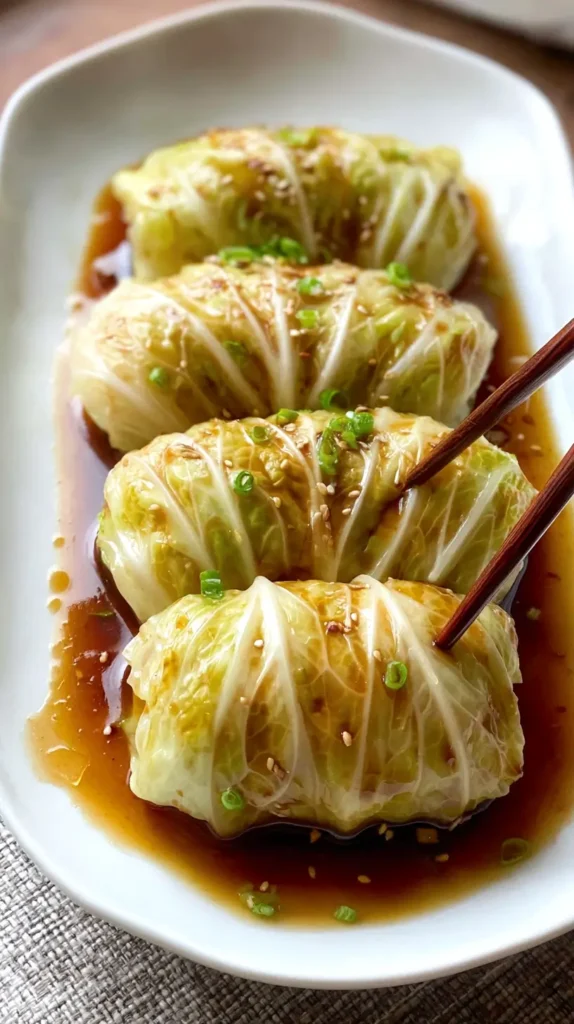
Prepping Napa Cabbage Leaves Without Stress
Start by removing the outer leaves. Rinse the cabbage well. Shake off excess water. Meanwhile, bring a large pot of water to a gentle boil. Place the whole cabbage head inside. Let it sit for two minutes. Remove it carefully.
Leaves should loosen easily. If they resist, give them another minute. Do not force them. Tearing wastes patience. Once loose, peel off ten to twelve large leaves. Set them on a clean towel. Let them cool slightly.
Trim the thick stem at the base of each leaf. Do not cut it off. Shave it down instead. This helps rolling later. Thick stems cause bulky rolls. Thin stems roll clean. That difference matters.
While the leaves cool, prep the filling. Multitasking keeps momentum. This step keeps things moving without feeling rushed. Because napa cabbage softens quickly, this process stays simple. No long boiling. No messy peeling. And no wrestling with stubborn leaves.
I have found that this quick blanch method works best for napa cabbage rolls. It softens without turning the leaves limp. It also saves time. Once prepped, the leaves should bend easily. Cracking should not happen. Resistance should not show up.
If a leaf tears, keep it. Place it inside. No one will know. The roll will still cook properly. That flexibility keeps stress low.

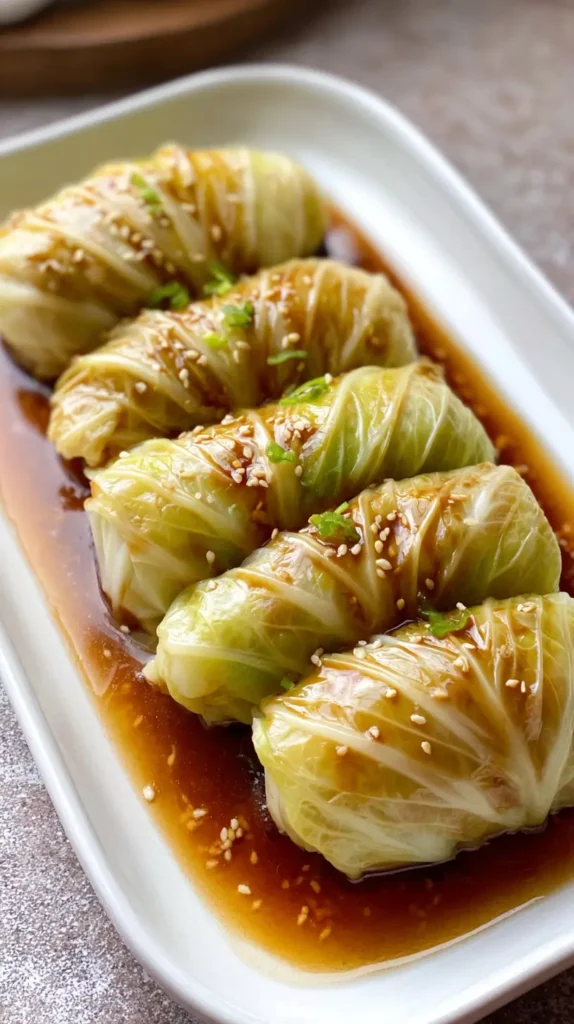
The Asian-Inspired Filling For Napa Cabbage Rolls
In a large bowl, add the ground chicken or turkey. Drop in the cooked rice. Add the diced onion. Add the minced garlic. Next, stir in the grated ginger. Crack in the egg. Pour in the soy sauce. Add the sesame oil. Sprinkle in the salt and black pepper. Fold in the chopped green onions.
Mix everything with clean hands. Stop when combined. Overmixing makes things dense. The mixture should hold when pressed. It should not crumble. It should not slide apart. Balance matters here.
If the mixture feels dry, add one tablespoon of broth. If it feels wet, add one tablespoon of rice. Adjust slowly. Small changes go a long way. Because the filling cooks inside the cabbage, moisture control matters.
Smell the mixture. Ginger and garlic should come through. Soy should smell balanced, not sharp. That check helps before cooking. This filling works beautifully in napa cabbage rolls. It stays juicy. It stays tender. Plus, it cooks evenly.
Set the bowl aside. Grab the cabbage leaves. Assembly time is coming. Having everything ready keeps the process smooth. That rhythm matters when you want dinner done without chaos.

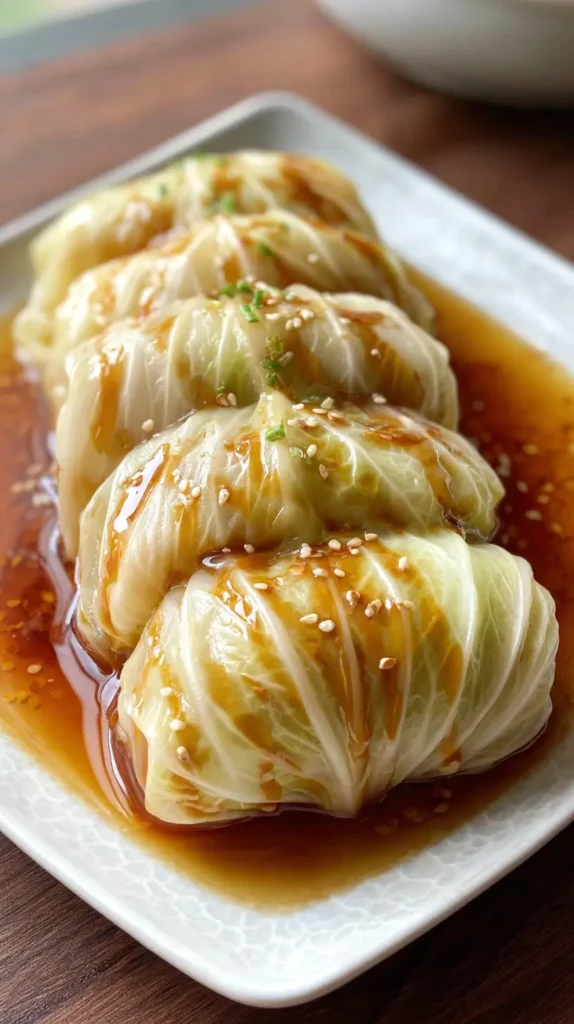
How To Roll Napa Cabbage Rolls Neatly
Lay one leaf flat on a cutting board. Place one-third cup of filling near the base. Fold the bottom of the leaf over the filling. Tuck in the sides. Roll upward tightly. Place the roll seam-side down in your baking dish. Repeat with remaining leaves and filling.
Do not overstuff. Large rolls split. Neat rolls behave. If a leaf feels small, use less filling. If a leaf feels large, add a little more. Flexibility helps here.
Here are a few tips that help:
- Keep rolls snug, not tight
- Tuck sides in firmly
- Always place seam-side down
- Line rolls closely in the dish
- Use torn leaves on the inside
Napa cabbage rolls like a cozy pan. Gaps cause tipping. Tipping causes a mess. By the end, the dish should look full and tidy. That is a good sign.
Once the rhythm sets in, this step moves fast. Hands learn the motion quickly. The process becomes smooth. That ease makes this recipe weeknight-friendly.

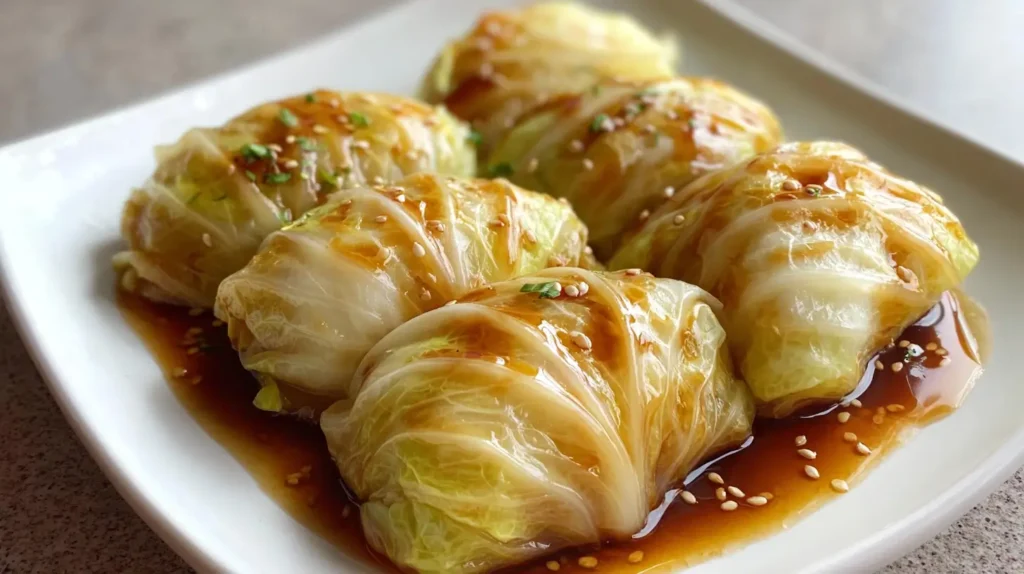
Step-By-Step Instructions For Cooking Napa Cabbage Rolls
Preheat your oven to 375 degrees. In a small bowl, whisk the chicken broth, soy sauce, hoisin sauce, rice vinegar, honey, sesame oil, and cornstarch. Pour one-third of the sauce into the bottom of a 9×13 baking dish. Spread it evenly.
Arrange the napa cabbage rolls seam-side down in the dish. Keep them close together. Pour the remaining sauce over the rolls. Make sure each roll gets covered. Cover the dish tightly with foil.
Bake for 40 minutes. Remove the foil. Bake for another 15 minutes. The internal temperature should reach 165 degrees. The sauce should bubble gently.
Remove the dish from the oven. Let the rolls rest for ten minutes. Resting helps the rolls set. It also cools them slightly. Serve warm.
Here is the full ingredient list again for easy reference:
- 1 large napa cabbage head
- 1 pound ground chicken or turkey
- 1 cup cooked jasmine rice
- 1 small yellow onion, diced
- 3 cloves garlic, minced
- 1 tablespoon grated ginger
- 1 large egg
- 2 tablespoons soy sauce
- 1 teaspoon sesame oil
- 1/2 teaspoon black pepper
- 1/2 teaspoon salt
- 1 tablespoon chopped green onions
- 1 cup chicken broth
- 1/4 cup soy sauce
- 2 tablespoons hoisin sauce
- 1 tablespoon rice vinegar
- 1 tablespoon honey
- 1 teaspoon sesame oil
- 1 teaspoon cornstarch
Every step has purpose.

Sauce Variations And Flavor Swaps
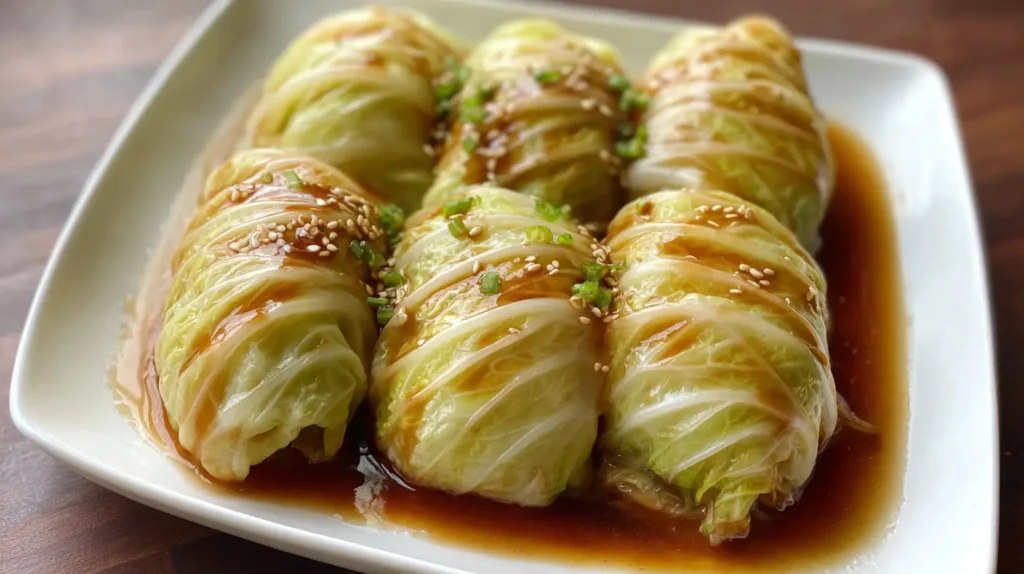
Once the base is mastered, changes get easy. That is where napa cabbage rolls get fun. For extra heat, add one teaspoon of chili garlic sauce. For more sweetness, add another teaspoon of honey. Or for tang, add more rice vinegar.
Here are a few simple swaps:
- Ground pork instead of chicken
- Brown rice instead of jasmine
- Finely chopped mushrooms added to filling
- Crushed red pepper for spice
- Water chestnuts for crunch
For sauce changes, try:
- Teriyaki sauce thinned with broth
- Sweet chili sauce mixed with soy
- Ginger scallion sauce with chicken broth
- Light miso mixed with honey and water
Each option keeps the structure. The rolls still hold. The flavors shift cleanly. I have found that napa cabbage rolls handle bold sauces well. They absorb flavor without falling apart.
If gluten-free is needed, use tamari instead of soy sauce. Check the hoisin label. If lower carb is the goal, use cauliflower rice. Texture changes slightly, but structure stays. Flexibility makes these rolls practical. Variety keeps them interesting.
A Smarter Way To Build Napa Cabbage Rolls
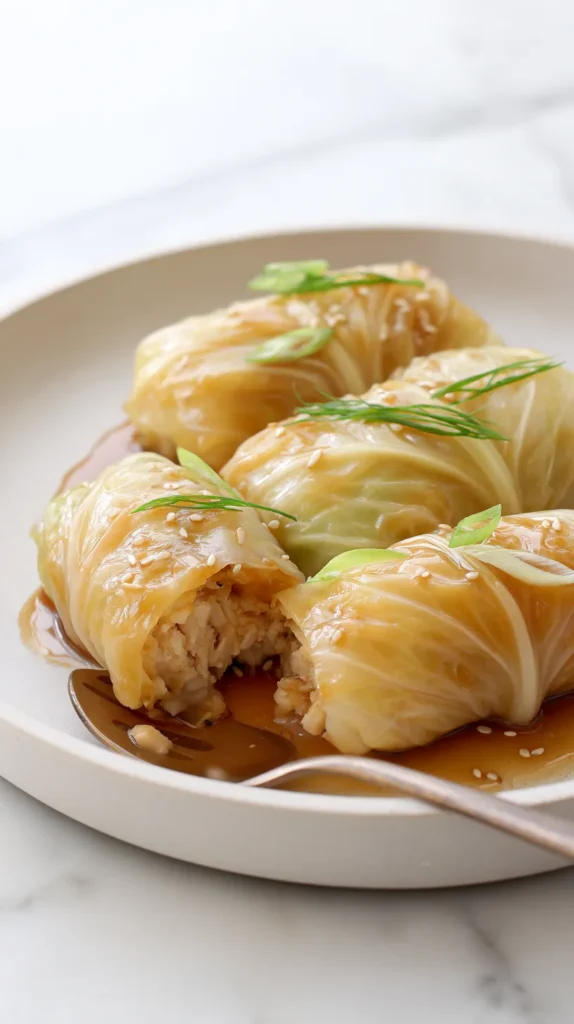
One thing I rarely see mentioned with napa cabbage rolls is what to do with the center leaves. Most recipes skip them and move on. I think that is a missed opportunity. Those soft inner ribbons can make the filling lighter, juicier, and more connected from the inside out.
After I blanch the outer leaves for rolling, I finely chop some of the pale inner napa cabbage. Then I salt it lightly and let it sit for five minutes. A quick squeeze pulls out extra water. That chopped cabbage folds right into the meat and rice mixture without making it loose or watery.
This small move changes the texture in a smart way. The filling stays softer and more layered. Ginger, garlic, and soy spread more evenly too, because the chopped cabbage carries those flavors through every bite. Instead of little pockets of rice and meat, you get a more even texture from edge to center.
I’ve found this works especially well with ground chicken or turkey, which can dry out faster than pork. The extra cabbage keeps the center moist without making the rolls heavy. It also stretches the filling, which helps when the leaves run larger than expected. That matters more than people admit.
Another benefit shows up after baking. When you cut into the rolls, the center looks cohesive instead of crumbly. The filling holds neatly, yet it still stays tender. You also waste less of the head, which I appreciate on principle and on price.
If your napa cabbage rolls seem dense, dry, or flat, this is the first change I’d make. It is simple, useful, and oddly under-discussed online. And yes, that surprises me.
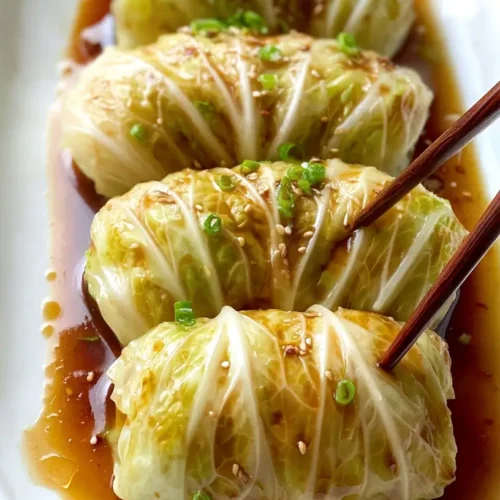
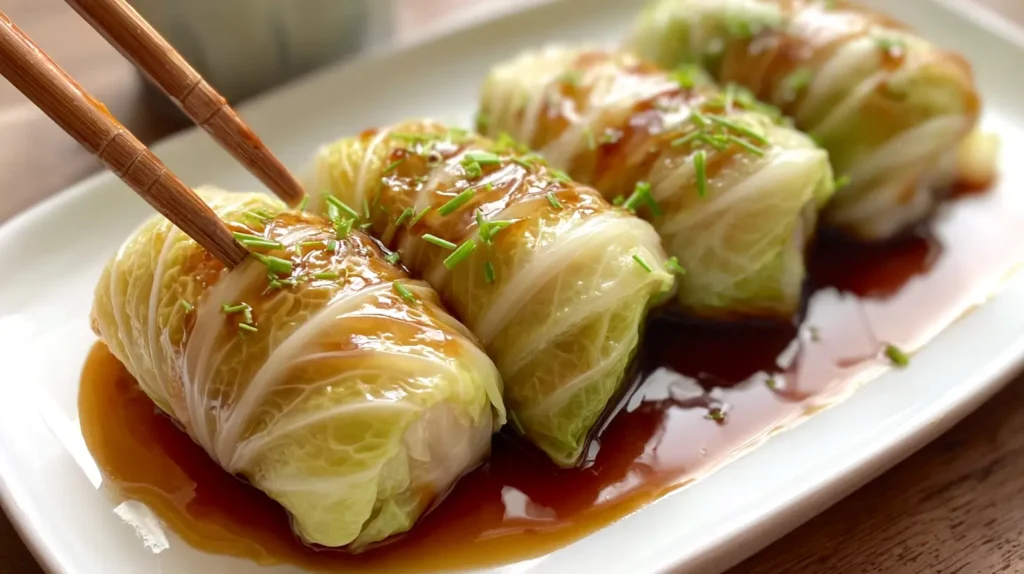
Asian-Style Napa Cabbage Rolls with Ginger Soy Glaze
Ingredients
- 1 large head napa cabbage
- 1 pound ground chicken or ground pork
- 1 cup cooked jasmine rice cooled
- 2 green onions finely chopped
- 2 cloves garlic minced
- 1 tablespoon fresh ginger grated
- 2 tablespoons soy sauce
- 1 tablespoon sesame oil
- 1 tablespoon rice vinegar
- 1 teaspoon sugar
- 1 tablespoon cornstarch
- 1 cup chicken broth
- 2 tablespoons hoisin sauce
- 1 tablespoon honey
- 1 tablespoon water
- Sesame seeds for garnish
- Chopped green onions for garnish
Instructions
- Preheat the oven to 375°F.
- Bring a large pot of water to a boil.
- Carefully separate 10 to 12 large napa cabbage leaves.
- Add the leaves to the boiling water and blanch for 2 minutes until pliable.
- Remove the leaves and place them on a clean kitchen towel to cool and drain.
- In a large bowl, combine the ground chicken, cooked rice, green onions, garlic, ginger, soy sauce, sesame oil, and rice vinegar.
- Mix until just combined without overworking the meat.
- Lay one cabbage leaf flat on a work surface with the stem end facing you.
- Spoon about ⅓ cup of filling near the base of the leaf.
- Fold the sides in and roll tightly into a neat bundle.
- Place the roll seam side down in a lightly greased baking dish.
- Repeat with remaining leaves and filling.
- In a small saucepan, whisk together the chicken broth, hoisin sauce, honey, sugar, and cornstarch.
- Bring the mixture to a simmer over medium heat and cook until slightly thickened, about 3 to 4 minutes.
- Stir in the water to loosen the sauce slightly.
- Pour the sauce evenly over the cabbage rolls.
- Cover the dish tightly with foil.
- Bake for 30 minutes.
- Remove the foil and bake uncovered for an additional 5 minutes to let the tops glaze.
- Remove from the oven and let rest for 5 minutes before serving.
- Spoon extra sauce from the pan over the rolls.
- Garnish with sesame seeds and chopped green onions before serving.
Frequently Asked Questions
Can I make napa cabbage rolls ahead of time?
Yes, I would. You can assemble the rolls, cover the dish, and refrigerate them for up to 24 hours before baking. When you are ready, pour on the sauce and bake as directed. If the dish is very cold, add a few extra minutes to the oven time.
Do I have to boil the napa cabbage first?
You do need to soften the leaves first. A quick blanch makes them flexible enough to roll without tearing. Napa cabbage softens faster than regular green cabbage, so this step does not take long. That is one reason I like using it here.
What meat works best in napa cabbage rolls?
Ground chicken, turkey, and pork all work well. Chicken and turkey keep the rolls a little lighter. Pork gives you a richer flavor and slightly juicier texture. I tend to like chicken or turkey for this Asian-style version because the ginger, garlic, and soy come through so well.
Can I freeze napa cabbage rolls?
Yes, these freeze well. Let them cool fully, then store them in an airtight container with some of the sauce. Freeze them for up to 2 months. For the best texture, thaw them in the fridge overnight before reheating.
Are napa cabbage rolls gluten free?
Not as written, because regular soy sauce usually contains wheat. However, you can make them gluten free by using tamari or a certified gluten-free soy sauce. If your recipe uses hoisin, check that label too. Some brands contain gluten.
Why is napa cabbage better than regular cabbage for this recipe?
Napa cabbage is softer, thinner, and easier to roll. It cooks faster and does not need as much prep. The texture also stays more delicate after baking. If you want cabbage rolls that feel lighter, napa cabbage is a great choice.
How do I keep the rolls from falling apart?
Do not overfill them. That is the biggest issue most of the time. Also, trim the thick stem area so the leaf folds more easily, then place the rolls seam-side down in a snug baking dish. A close fit helps them hold their shape while they bake.
What should I serve with napa cabbage rolls?
I like serving them with steamed rice, cucumber salad, or simple roasted vegetables. If you want something lighter, sliced cucumbers with rice vinegar work really well. For a fuller dinner, add edamame or a side of stir-fried green beans.

Final Thoughts On Napa Cabbage Rolls
Napa cabbage rolls stay in my rotation because they handle real life well. Busy evenings need structure, and this recipe delivers that without extra effort. The flavors stay bold. The texture stays balanced. Dinner ends up looking planned, even when the day was not.
What I appreciate most is how steady they are. Messy days still get good food. Leftovers still taste right. Reheating does not ruin the texture. That reliability makes a difference when schedules are unpredictable.
Because I live in Florida, heavy meals can feel like too much, especially in warmer months. Lighter dinners simply work better here. Asian-inspired napa cabbage rolls hit that sweet spot. Comfort shows up without the sluggish aftermath. Flavor stays strong without weighing you down.
There is also something satisfying about rolling a meal together by hand. The process stays simple. The steps stay clear. The result feels intentional. That combination makes cooking feel calmer, not rushed.
When I plan content for Pinterest, I look for dishes that photograph well and perform well. These rolls check both boxes. Clean lines show up. Neat stacks hold. Visual appeal stays strong. That matters when presentation and performance both count.
From a practical angle, this recipe fits into regular life easily. Grocery lists stay short. Prep stays manageable. Cleanup does not become a project. Those details add up.
If dinner needs to feel thoughtful without being complicated, this one delivers. When variety is needed without chaos, this one works. On nights when energy is low but standards are not, napa cabbage rolls still show up strong.
That is exactly the kind of recipe I keep. And honestly, that is exactly what I want on my plate.