
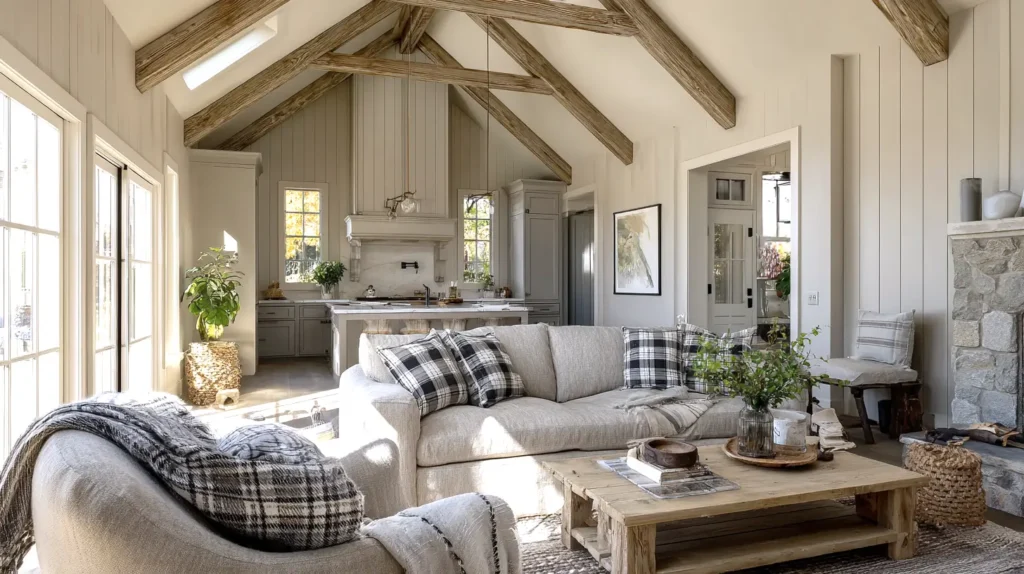
Farmhouse living room style keeps popping up because it mixes comfort, character, and everyday function. I like that it never tries too hard. Instead, it leans into lived-in charm, soft layers, and simple beauty. This style works for busy seasons and quiet ones. It welcomes people without demanding perfection. That balance matters, especially when life already feels full. Because trends move fast, farmhouse stays steady. It borrows from the past while staying flexible. I’ve found that it works in small spaces and open layouts alike. It also adapts well to different budgets. That alone makes it appealing.
While many styles feel staged, this one feels approachable. Furniture looks meant to be used. Decor looks collected, not styled overnight. Colors stay calm, yet never boring. Texture does most of the talking. Wood, cotton, metal, and stone all play nicely together. Because of that mix, rooms feel layered instead of flat. Even better, mistakes blend in. Scratches and wear add character instead of stress.
Since I live in Orlando, bright light and heat matter when decorating. Farmhouse living room choices work well with sunshine and airflow. Light woods and soft fabrics help rooms breathe. Therefore, the style never feels heavy or closed in. That matters in warmer places. Also, it works just as well in cooler climates.
Throughout this post, I’m sharing practical ideas that actually translate to real homes. Nothing here requires a full renovation. Instead, small choices build the look over time. Let’s talk through what makes this style work so well.
Some of the links on this page are affiliate links, which means that if you click on them and buy something, I might get a small commission. But don’t worry; it never costs you more. You can peek at my full disclosure if you’re curious about the fine print.
Why A Farmhouse Living Room Always Feels Inviting
A farmhouse living room starts with intention, not perfection. The goal is comfort first. Because of that, every piece needs a purpose. Seating invites people to sit longer. Tables hold drinks without worry. Lighting stays soft instead of harsh. That combination creates ease.
Rather than chasing trends, farmhouse style focuses on timeless elements. Neutral colors anchor the room. Wood tones add warmth. Metal accents bring contrast. Together, these pieces feel grounded. However, nothing feels stiff or formal. That balance matters.
I’ve found that inviting rooms share a few common traits:
- Seating arranged for conversation, not display
- Surfaces that welcome use, not fear
- Decor that looks collected over time
- Lighting that layers instead of glares
Because the style values function, clutter feels out of place. Still, empty spaces feel cold. Therefore, the sweet spot sits in the middle. Open shelves hold meaningful items. Coffee tables stay styled but usable. Rugs soften sound and steps.
Another reason this style works is flexibility. A farmhouse living room can lean rustic or polished. It can skew modern or traditional. Small swaps shift the vibe. For example, clean-lined sofas feel modern. Meanwhile, slipcovered seating feels classic. Both still fit.
Also, this style ages well. Scratches blend in. Fabrics soften with time. Pieces gain character instead of losing appeal. That takes pressure off decorating. Because life happens, forgiving spaces matter. Ultimately, that ease is what makes farmhouse rooms so inviting.
Choosing Colors That Anchor
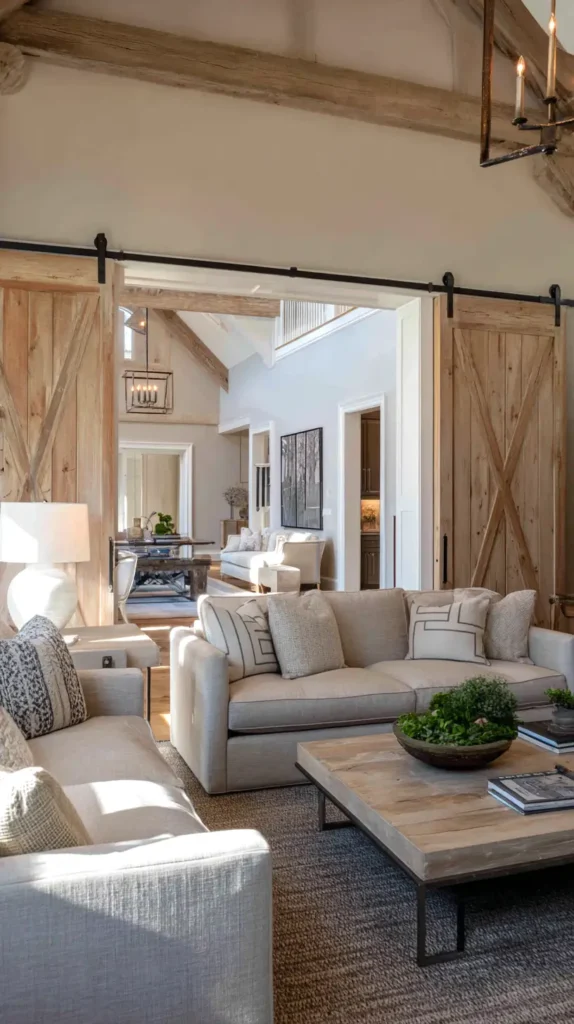
Color choices shape the entire room. In a farmhouse living room, colors stay calm and grounded. White often leads the way. However, warm whites work better than stark ones. Cream, ivory, and soft beige feel gentle. These tones reflect light without glare.
Neutrals build the base. Then, accent colors add depth. Soft gray, muted green, and dusty blue work well. Because they echo nature, they feel timeless. Black appears in small doses. It anchors the palette and adds contrast. Without it, rooms can feel washed out.
I’ve noticed that successful palettes follow a loose rule:
- One main neutral for walls and large furniture
- One secondary tone for balance
- One darker accent for grounding
Because farmhouse style values calm, bright colors stay limited. Instead, texture does the heavy lifting. Linen, wood grain, and woven fibers add interest. That keeps rooms from feeling flat.
Paint finishes matter too. Matte or eggshell finishes look softer. Glossy walls feel out of place here. However, a satin finish works well on trim. It cleans easily while still looking classic.
When choosing color, lighting changes everything. Natural light shifts tones throughout the day. Therefore, always test samples first. Morning light reads cooler. Afternoon light reads warmer. Because of this, colors can surprise you.
A farmhouse living room palette should feel easy on the eyes. It should also support layering. Neutral walls allow seasonal changes. Pillows and throws rotate without clashing. That flexibility keeps rooms fresh without repainting. Over time, the palette becomes a quiet backdrop for life.
Designing Visual Breathing Room
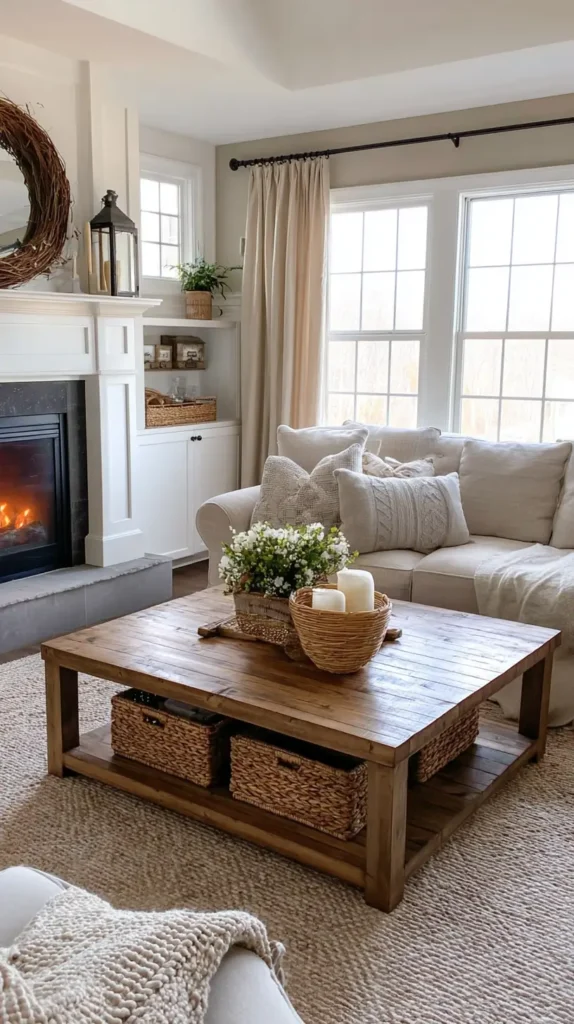
A farmhouse living room works best when the eyes get moments to rest. Most people decorate every surface without realizing visual noise causes quiet stress. I’ve found that creating intentional blank zones changes how a room functions emotionally. This idea focuses on sightlines, not stuff. It sounds abstract, yet it’s very practical.
Every room has natural stopping points for the eyes. Doorways, windows, fireplaces, and large furniture pieces already guide attention. Instead of filling every gap, leave space around these anchors. That pause gives the brain a break. Calm often comes from what you do not add.
In a farmhouse living room, this matters even more because texture runs high. Wood grain, woven fabrics, and layered rugs already create movement. Therefore, visual breathing room balances that richness. One empty wall section can make the whole room feel larger. A bare stretch of wall beside a console makes decor look intentional. Space frames objects better than clutter ever could.
Sightlines also affect flow. When you walk into the room, the first thing you see should feel calm. Avoid stacks, piles, or busy groupings at entry views. Instead, let one simple element lead. That might be a sofa back, a soft lamp glow, or a quiet wall color. The room then unfolds slowly.
This approach saves money too. You stop buying filler decor. You reuse what already works. Editing becomes the upgrade. Over time, the farmhouse living room feels lighter without losing warmth. Rooms breathe better when the eyes do. That calm sticks longer than trends ever do.
Furniture That Grounds A Farmhouse Living Room
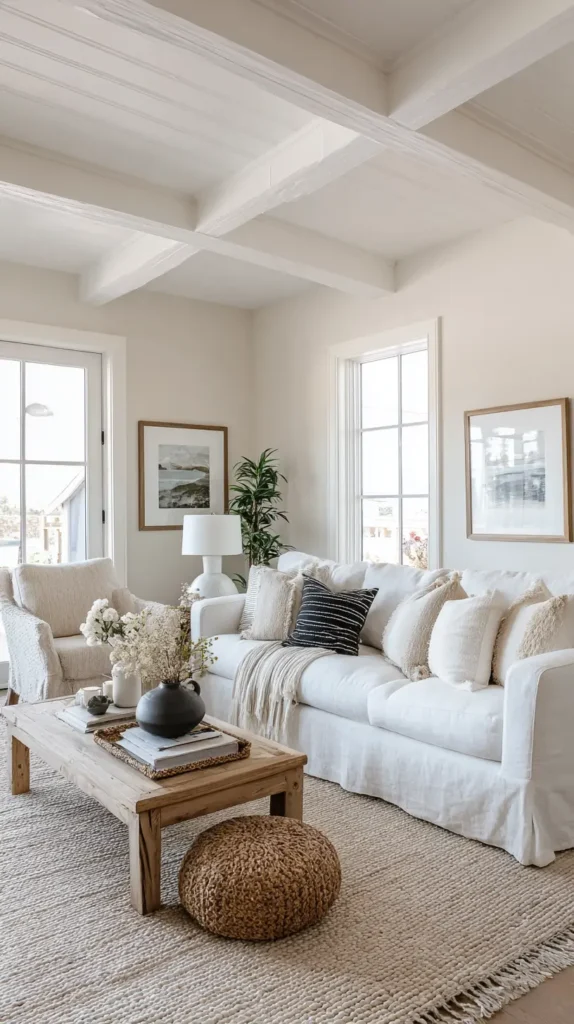
Furniture sets the tone more than decor. In a farmhouse living room, pieces feel sturdy and approachable. Overly delicate furniture feels wrong here. Instead, solid shapes work best. Sofas look inviting. Chairs feel supportive. Tables feel dependable.
Scale matters. Oversized pieces create comfort. However, balance prevents heaviness. A large sofa pairs well with lighter chairs. Open legs keep furniture from feeling bulky. That mix keeps rooms breathable.
I’ve found that farmhouse furniture shares a few traits:
- Simple lines without sharp edges
- Natural materials or natural finishes
- Comfort over formality
Wood plays a major role. Coffee tables often anchor the room. Reclaimed wood adds history. New wood with a distressed finish also works. Because perfection isn’t the goal, minor flaws add charm.
Slipcovered seating fits naturally here. It feels relaxed and washable. However, tailored upholstery also works. The key is fabric choice. Cotton, linen, and performance blends hold up well. Leather can work too, especially in warm brown tones.
Storage furniture matters as well. Console tables, baskets, and cabinets hide everyday items. Because clutter disrupts calm, storage earns its place. Open shelving mixes function with display. Closed storage keeps chaos contained.
A farmhouse living room benefits from furniture that ages gracefully. Trendy shapes date quickly. Classic forms last longer. Therefore, investing in fewer, better pieces makes sense. Over time, the room feels collected rather than replaced. That patience shows.
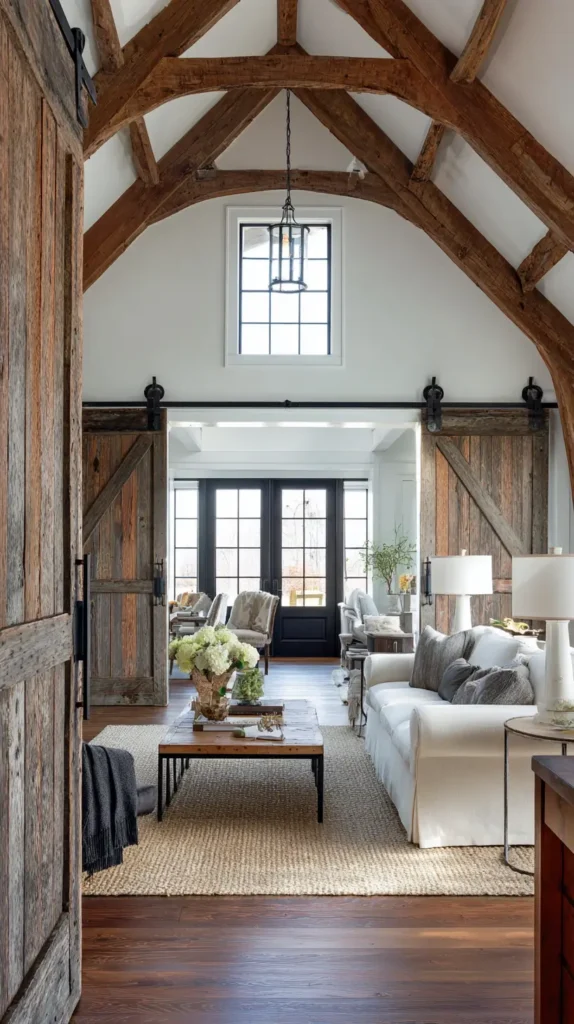
Texture Layers That Bring A Farmhouse Living Room To Life
Texture carries this style. Without it, a farmhouse living room falls flat. Because colors stay neutral, texture adds depth. It keeps rooms interesting without adding noise. This layering creates warmth.
Start with large textures. Rugs ground the space. Natural fibers like jute or wool work well. They add softness underfoot. Next, consider window treatments. Linen curtains filter light gently. They move with air instead of blocking it.
Then, layer smaller textures:
- Knit or woven throw blankets
- Cotton or linen pillows
- Woven baskets for storage
- Ceramic or stone accessories
Because variety matters, mix smooth with rough. Pair soft fabrics with rough wood. Combine matte ceramics with subtle shine. That contrast keeps the room dynamic.
Walls also offer texture. Shiplap adds character, though it isn’t required. Beadboard or subtle paneling works too. Even simple wood frames add depth. Because walls cover large areas, texture here makes impact.
Plants add living texture. Real greenery softens hard edges. If real plants struggle, quality faux options still help. The goal is organic shape. That breaks up straight lines.
I’ve noticed that texture also affects sound. Rugs and fabric soften echoes. That makes rooms calmer. Especially in open layouts, this matters. A farmhouse living room should sound as calm as it looks.
Ultimately, texture invites touch. It makes people want to sit, relax, and stay awhile. That comfort defines the style.

Decor That Tells A Story In A Farmhouse Living Room
Decor finishes the room, but restraint matters. In a farmhouse living room, decor feels personal, not crowded. Each piece earns its spot. Because of that, editing becomes important.
Start with meaningful items. Family photos, travel finds, or handmade pieces add soul. These items ground the room emotionally. However, they shouldn’t overwhelm. Negative space matters.
I’ve found that decor works best when grouped:
- Odd-number groupings feel natural
- Varying heights add movement
- Similar tones keep groups cohesive
Vintage pieces shine here. Old books, weathered frames, or antique vessels add history. Even new items with aged finishes work. Because farmhouse style values story, age adds depth.
Wall decor stays simple. Large art pieces make more impact than many small ones. Black frames add contrast. Wood frames add warmth. Either works depending on the room’s balance.
Seasonal decor rotates easily. Neutral bases allow subtle swaps. A new pillow cover or throw changes the mood. Because the foundation stays steady, updates feel effortless.
Avoid overly themed decor. Signs with phrases can feel dated quickly. Instead, choose pieces with texture or shape. Let materials speak louder than words.
A farmhouse living room feels curated, not styled. It looks like someone lives there. That authenticity matters. When decor reflects real life, the room feels grounded and welcoming.
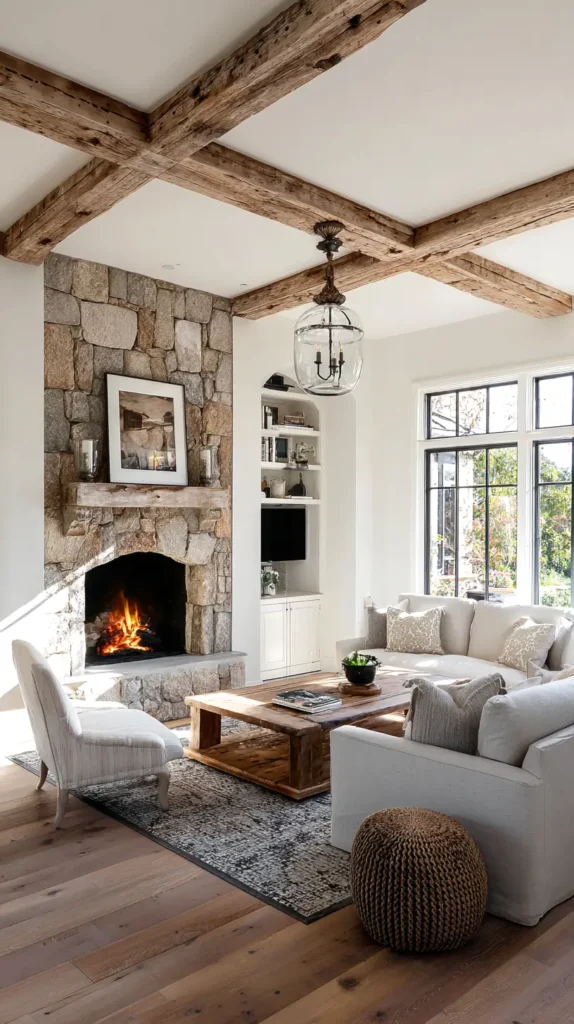
Lighting That Softens A Farmhouse Living Room
Lighting shapes mood instantly. In a farmhouse living room, lighting stays warm and layered. One overhead light isn’t enough. Instead, multiple sources create balance.
Start with ambient lighting. Ceiling fixtures provide general light. Simple chandeliers or lantern-style fixtures work well. Avoid overly ornate designs. Clean lines feel more timeless.
Next, add task lighting:
- Table lamps near seating
- Floor lamps by reading chairs
Then, include accent lighting. Small lamps on shelves or consoles add glow. Because light pools create warmth, they matter more than brightness.
Bulb choice matters. Warm white bulbs feel inviting. Cool bulbs feel harsh. Therefore, always choose warmth. Dimmers help too. They allow adjustment throughout the day.
Natural light also plays a role. Window treatments should filter, not block. Sheer or light fabrics keep rooms bright. Because farmhouse style loves light, darkness feels wrong.
I’ve noticed that lighting fixtures act as decor. Metal finishes add contrast. Black or aged brass works well. However, mixing finishes keeps things interesting. Match loosely, not exactly.
A farmhouse living room should glow, not shine. Soft lighting encourages rest. It supports conversation. Ultimately, it makes the room usable at any hour. That flexibility matters.

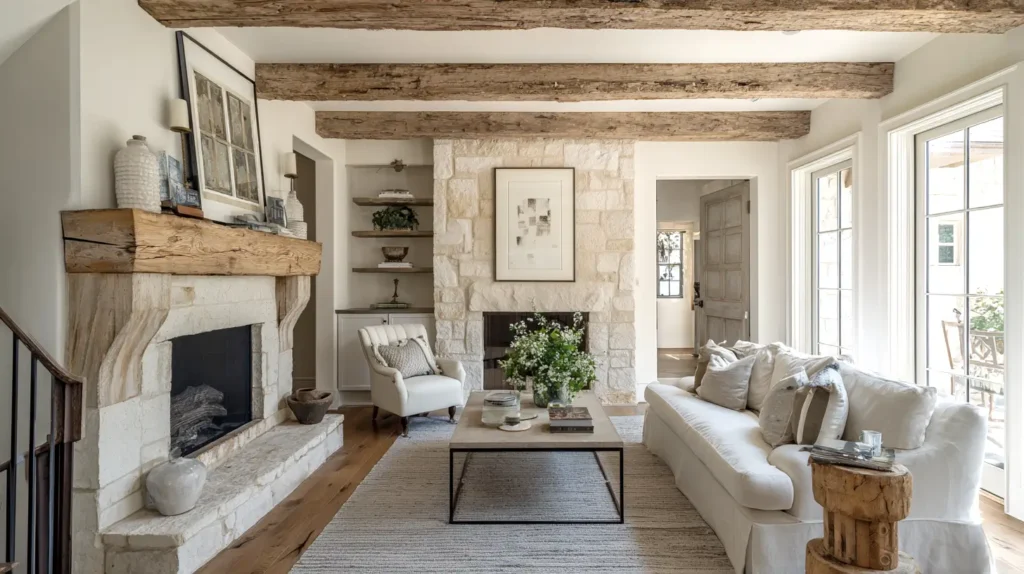
Making A Farmhouse Living Room Work For Real Life
Real homes need flexibility. A farmhouse living room supports everyday life without fuss. Furniture moves easily. Surfaces clean quickly. Decor stays forgiving.
Durability matters. Performance fabrics handle spills. Washable covers reduce stress. Because life gets messy, low-maintenance choices help. That doesn’t mean sacrificing style.
I’ve found that real-life rooms share these traits:
- Clear pathways for movement
- Storage near seating
- Tables within reach
Open layouts benefit from zoning. Rugs define seating areas. Furniture placement guides flow. That prevents the room from feeling chaotic.
If kids or pets share the space, choices matter more. Rounded edges prevent bumps. Darker rugs hide wear. Slipcovers simplify cleaning. Because stress kills enjoyment, smart choices protect peace.
Technology integrates quietly. TVs hide within cabinets or blend into decor. Cords stay managed. That keeps the room calm.
A farmhouse living room supports gatherings and quiet moments alike. It adapts without complaint. Because it values comfort, it grows with changing needs. That longevity makes the style practical.
When design supports life, rooms stay loved. They don’t need constant fixing. They just work.

Last Few Thoughts
A farmhouse living room isn’t about copying a picture. It’s about creating ease at home. I’ve found that this style works because it values comfort first. It doesn’t chase perfection. Instead, it welcomes use. That mindset changes how rooms function.
Over time, layers build naturally. Furniture settles in. Decor shifts slightly. Nothing feels rushed. Because patience guides the process, rooms gain character. They start telling a story without words.
I like that this style adapts. It works in apartments, houses, and everything between. It fits different budgets. And it also flexes with seasons. That versatility keeps it relevant.
Living in Orlando, bright light and casual living influence every design choice I make. Farmhouse living room elements support that lifestyle. Light fabrics, breathable layouts, and natural textures feel right here. They also travel well across climates.
Inspiration often starts online. Pinterest makes it easy to explore ideas. However, real homes need translation. That’s where intention matters. Choose what supports your life. Skip what doesn’t.
At its core, this style celebrates home. It values rest, connection, and comfort. Those things never go out of style. When rooms support real life, they stay loved longer. That, to me, defines good design.