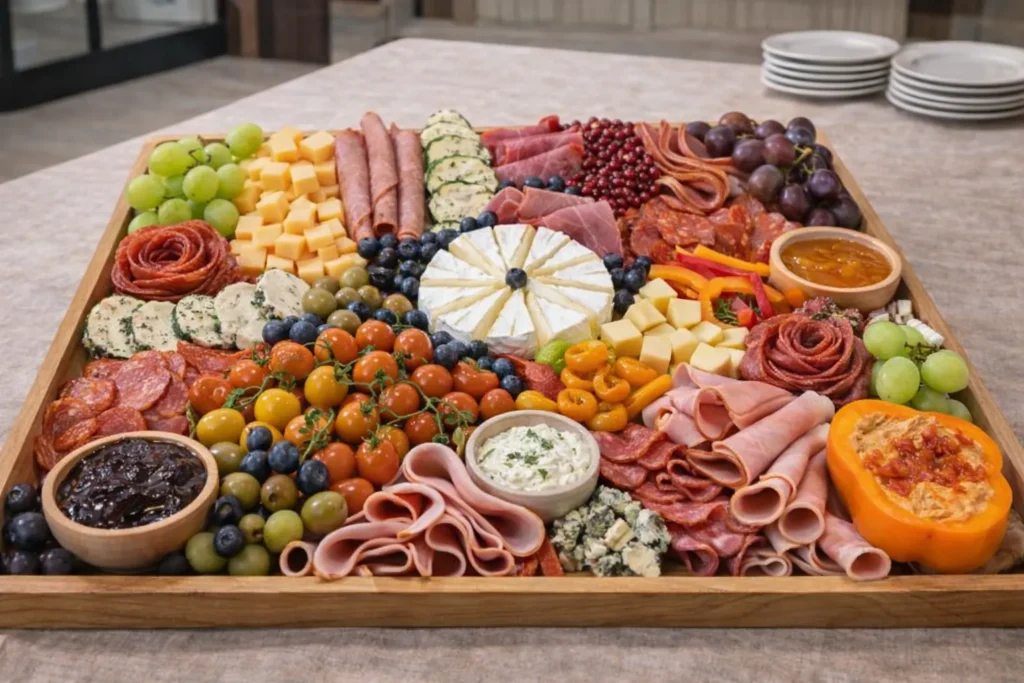
I’ve noticed that a charcuterie grazing table changes the whole mood before anyone even grabs a cracker. It does that sneaky party trick where the table starts talking before I do. Suddenly, people hover. They circle. They point at the salami like it’s a tiny work of art instead of lunch. That’s the power of a spread that looks generous, a little dramatic, and very ready for its close-up.
Most people think a grazing table for 50 people has to look like a wedding planner exploded in the kitchen. I don’t agree. I think it needs to look abundant, relaxed, and just polished enough. Nobody wants a snack display that looks stiff and nervous. Food should look inviting. A table should whisper help yourself, not please admire from a respectful distance.
Around Orlando, I’m always extra aware of party food that melts, slumps, or gives up too early. Heat has opinions here. So when I look at a wedding charcuterie table or a simple grazing table, I’m not chasing perfection. I’m chasing something pretty that still makes sense after twenty minutes in real life.
That’s where people get tripped up, though. They assume bigger automatically means harder. It doesn’t. A beautiful table charcuterie board setup usually comes down to rhythm, not fuss. Placement matters. Repetition matters. So does not buying seventeen random jars because they looked charming under store lighting.
I’ve found that the best graze table ideas don’t begin with ingredients anyway. They begin with one sly question. What do I want this table to say before anyone takes a bite?
Some of the links on this page are affiliate links. That means if you click and make a purchase, I may earn a small commission at no extra cost to you. If you’re curious about the fine print, you can check out my full disclosure.
Why A Charcuterie Grazing Table Works Better Than A Giant Platter
A lot of people start with one oversized board and call it a day. I get the appeal. It sounds easy. It photographs well for five minutes. Then real humans arrive, and the whole thing turns into shoulder traffic.
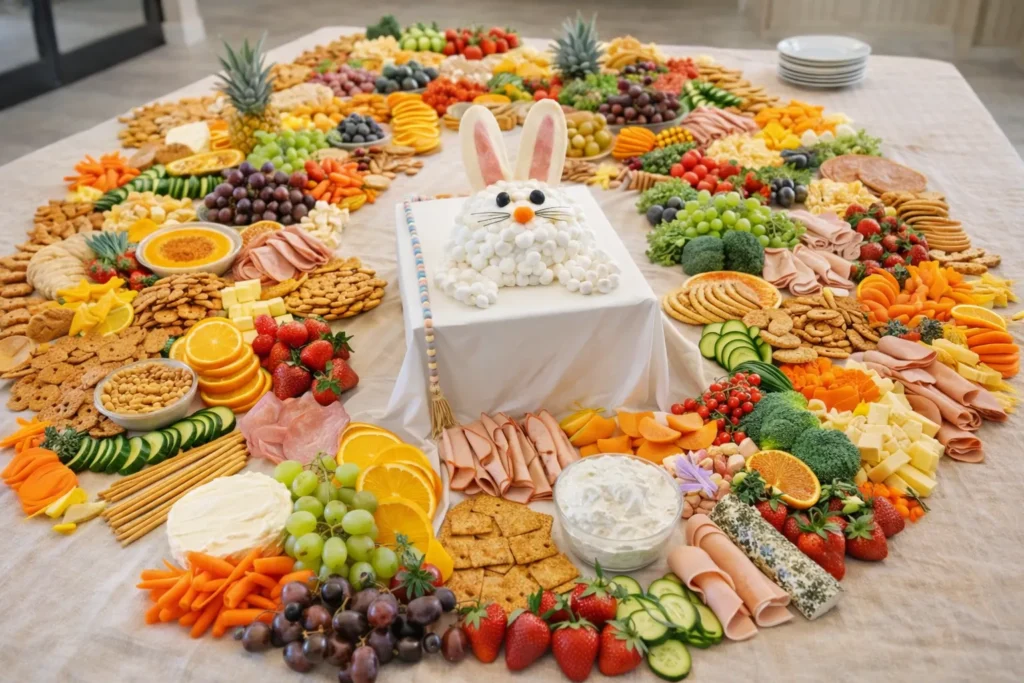
That’s why I keep coming back to a charcuterie grazing table instead. Guests spread out more naturally around it. The whole setup creates movement. It also makes a party look more generous, even when the amount of food stays reasonable. That detail matters more than people admit.
I’ve found that abundance is often about layout, not cost. A long table with repeated ingredients looks richer than one cramped board packed to the edge. Same olives. Same cheese. Very different energy.
There’s also a mental shift here. People assume a board is neater because it’s contained. Oddly, the opposite happens. Once a board gets picked over, it looks rough fast. A full table has more visual forgiveness.
That’s the sweet spot:
- More breathing room for guests
- Easier access from both sides
- Better places to hide refills
- More chances to vary textures
- Less pressure on one “perfect” centerpiece
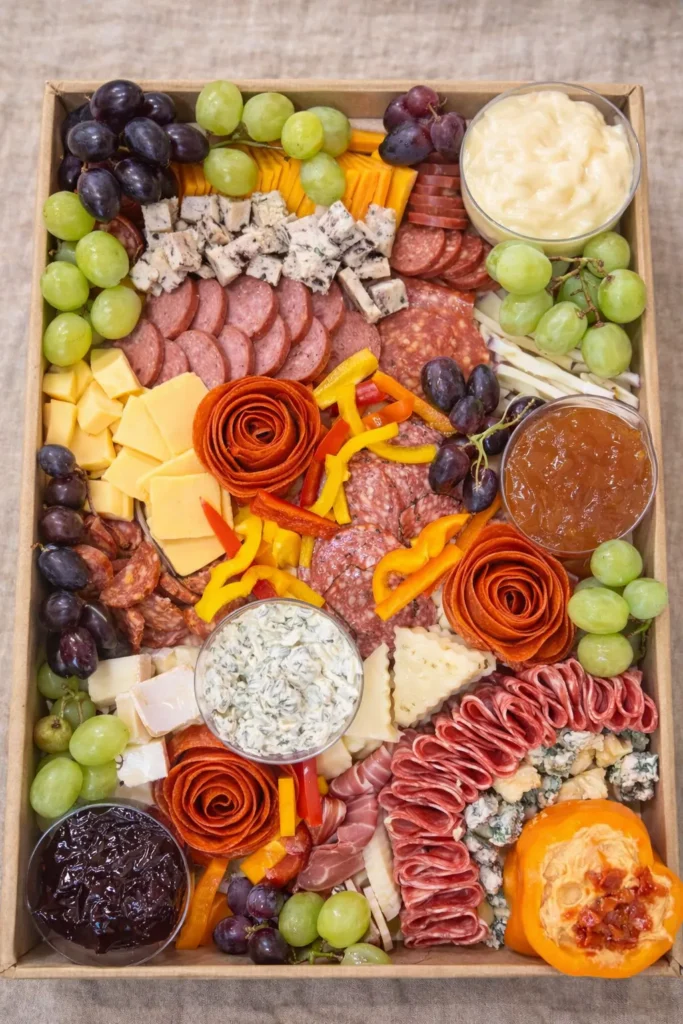
Another thing? A grazing board ideas diy setup can look cute but still read small. A table gives you room for contrast. Soft cheese beside crisp crackers. Glossy fruit near matte bread. Straight rows broken by loose clusters. That’s where the eye keeps moving.
And yes, movement matters. A good spread should make someone stop, scan, and then lean in. Not because it’s fussy. Because it looks alive.
That’s the part people notice first. They just don’t usually say it out loud.


The Biggest Mistake In Grazing Table Set Up Is Starting With Food
This is where I get a little opinionated. Starting with groceries is backward. I know that sounds dramatic, but I stand by it. A grazing table set up lives or dies by the surface first.
If the table is too small, everything looks stressed. When the linen is wrong, even expensive cheese looks confused. If the height is flat, the whole thing reads cafeteria. None of that gets fixed by adding prosciutto roses.
I tend to notice that people shop before they’ve made three basic choices. First, what shape is the table? Second, where will guests approach it? Third, what’s the visual mood? Not the menu. The mood.
That changes everything.
A wedding charcuterie table needs different pacing than a backyard birthday spread. One can lean soft and romantic. The other should look easy, sunny, and ready to survive kids darting past with juice boxes.
Before I buy one olive, I think through:
- Length and width of the table
- Whether guests reach from one side or both
- Shade, heat, and timing
- Plates, napkins, and trash flow
- Refill space that stays hidden
- The “pretty zone” versus the practical zone
That last part is wildly underrated. The pretty zone grabs attention. The practical zone keeps the whole thing functioning without a meltdown.
Here’s the reframe people miss. A diy grazing table isn’t mostly about arranging food beautifully. It’s about designing access beautifully. Once I started seeing it that way, every spread made more sense.
Food comes later. The table speaks first. Always.

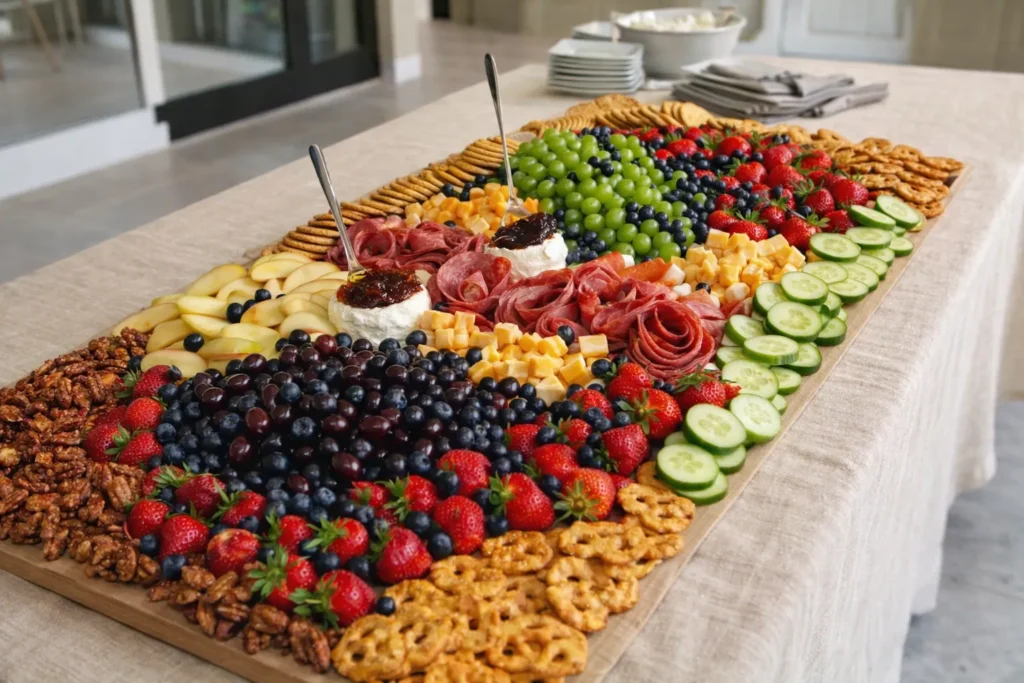
How I Size A Grazing Table For 50 People Without Going Overboard
This is where panic usually enters the chat. The phrase grazing table for 50 people makes people picture a grocery bill with attitude. I understand. Fifty sounds huge. It sounds like a serious event with clipboards.
But here’s the twist. Fifty people do not eat like fifty bottomless pits at the exact same moment. They snack in waves. Some hover early. Others arrive late. A few act like cubes of cheddar are a personality trait. Most don’t.
I’ve found that portion planning gets way easier when I stop imagining one giant feeding frenzy. Instead, I think in categories. Cheese. Meat. Crunch. Fresh. Sweet. Filler. Garnish. Suddenly, it’s a system, not a spiral.
For a charcuterie grazing table serving as appetizers, I want enough for sampling, not dinner. That means I’m building range more than excess. Variety does more work than sheer quantity. Frankly, that saves money and looks prettier.
I also like to remember this. Bread and crackers are quiet heroes. Grapes pull visual weight. Nuts fill awkward spaces. Dips make people think the table is more elaborate than it is. That’s not cheating. That’s strategy.
Here’s my rough thinking:
- 4 to 5 cheeses with different textures
- 3 to 4 meats, folded and layered
- 4 crunchy elements
- 3 fresh fruits
- 2 dips or spreads
- 2 sweet bites
- Several fillers and greenery accents
Now, would I rather overbuy triple cream brie than underbuy it? Absolutely. Still, “more” isn’t always the answer. Repetition is. When ingredients appear in several pockets, the table looks fuller and more intentional.
That’s the delayed payoff right there. People think the wow comes from rare ingredients. Usually, the wow comes from smart repeats.

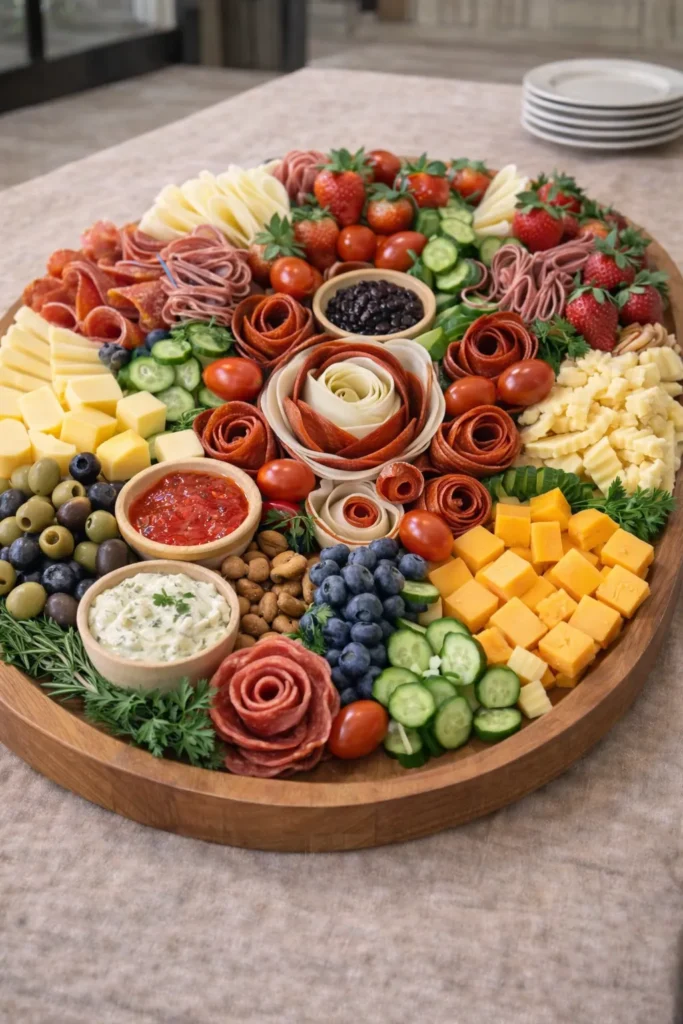
Small Grazing Table Ideas That Still Look Generous
I actually love smaller setups because they force better choices. A huge table can hide lazy decisions. A small grazing table cannot. It tells on everything. One weird plastic container, one lonely cheese wedge, one accidental color clash, and the whole thing starts looking a little tragic.
That sounds harsh. It’s also useful.
When I’m working with small grazing table ideas, I stop trying to copy those giant event spreads online. Those aren’t the assignment. The assignment is making a smaller surface look lush, easy, and fully thought through.
The best trick is editing. Ruthless, cheerful editing.
I want fewer items on my charcuterie grazing table, but each one needs a clear job:
- Something creamy
- Something salty
- Something crisp
- Something juicy
- Something sweet
- Something pretty enough to soften the edges
Then I build outward in little “moments” instead of straight lines. A chunk of brie beside blackberries. Crackers near a ramekin. Folded salami next to apricots. Tiny clusters work harder than one long strip of ingredients.
Height helps too, but not in a fussy way. I’m not trying to construct a snack skyscraper. I just want one or two lifted elements so the eye doesn’t flatten the scene. A cake stand. A wooden riser. Even a bowl turned upside down under a tray works.
Here’s the surprising opinion. A simple grazing table often looks more expensive than a crowded one. Crowding can read chaotic. Restraint looks confident.
That’s especially true when colors stay tight. I love letting one bright fruit do the flirting while the rest behaves. Suddenly, the table looks styled instead of stuffed.
Small does not mean skimpy. It means every inch has to pull its weight.

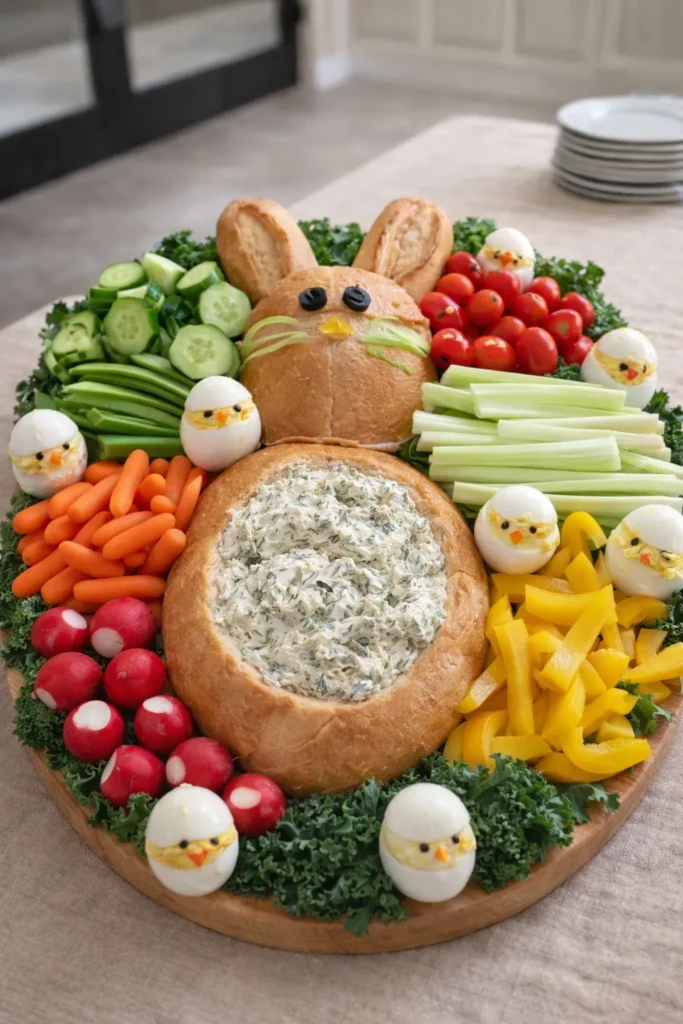

Springtime And Easter Charcuterie Grazing Table Ideas
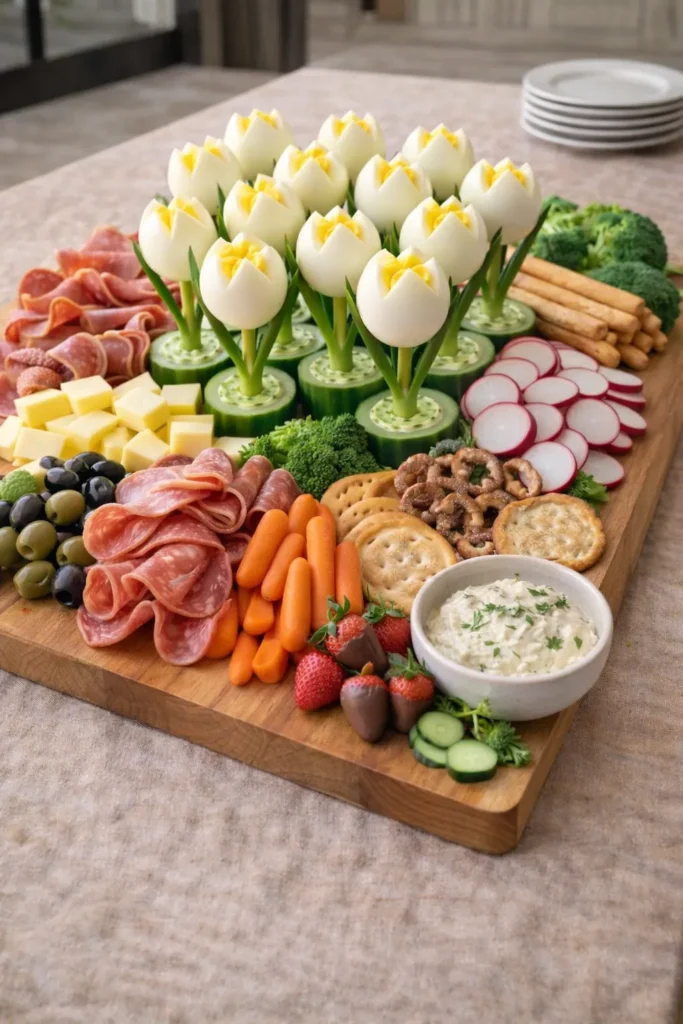
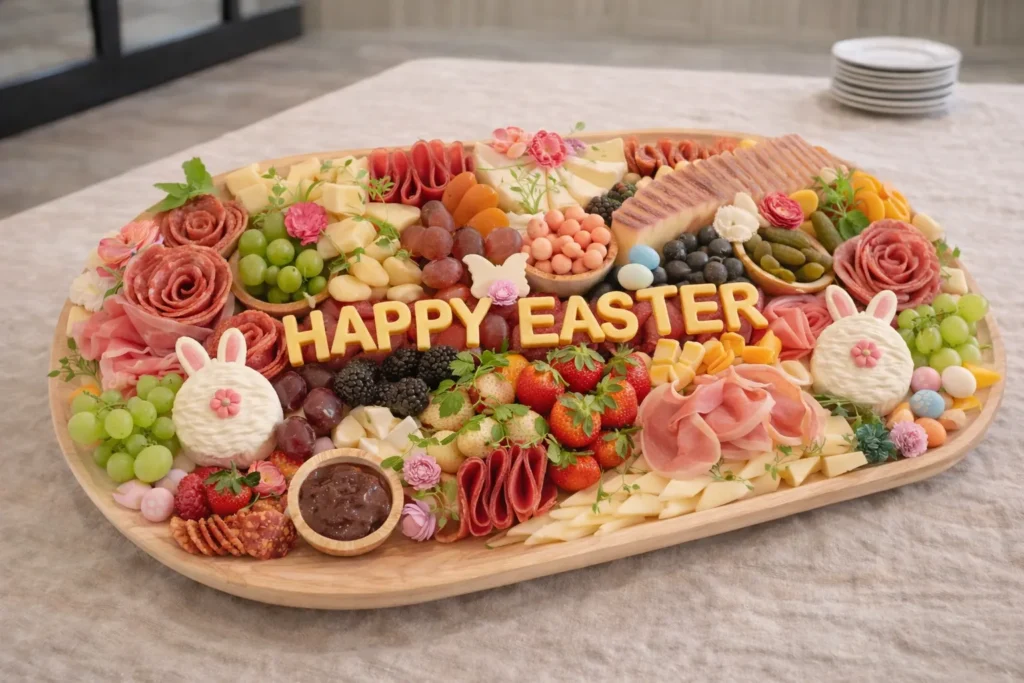
A springtime and Easter charcuterie grazing table has a whole different mood, and I love that. Winter boards can look rich and heavy. Easter tables should look lighter, brighter, and a little more playful. That shift changes everything. Suddenly, soft colors matter more. Fresh produce pulls more weight. Even the little details start doing more of the charm work.
I’ve found that this is one of the easiest times to make a table look special without making it fussy. A few simple swaps can push the whole thing into spring. Pastel candies help. Tulip-style deviled eggs look adorable. Bunny-shaped cheese rounds are cute when they’re done well. Fresh strawberries, green grapes, radishes, and cucumbers also make the table look crisp and alive.
The trick, though, is not turning it into a craft project. That’s where people get carried away. An Easter charcuterie grazing table still needs to look edible first. I want guests to think, wow, that’s pretty, not am I supposed to eat the decorations?
A few details I’d use:
- pastel candy eggs tucked into open spots
- mini carrots, cucumbers, and radishes for fresh color
- bunny cheese shapes or tulip deviled eggs
- strawberries, grapes, and blackberries for brightness
- soft cheeses with herbs for a spring look
- crackers and breads in pale, neutral tones
I also think flowers should stay in their lane here. A few edible blooms or soft floral touches can look beautiful. Too many, and the table starts looking like it has stage fright.
That’s the sweet spot I always come back to. A springtime and Easter charcuterie grazing table should look cheerful, fresh, and easy. It should hint at the holiday without shouting it across the room.

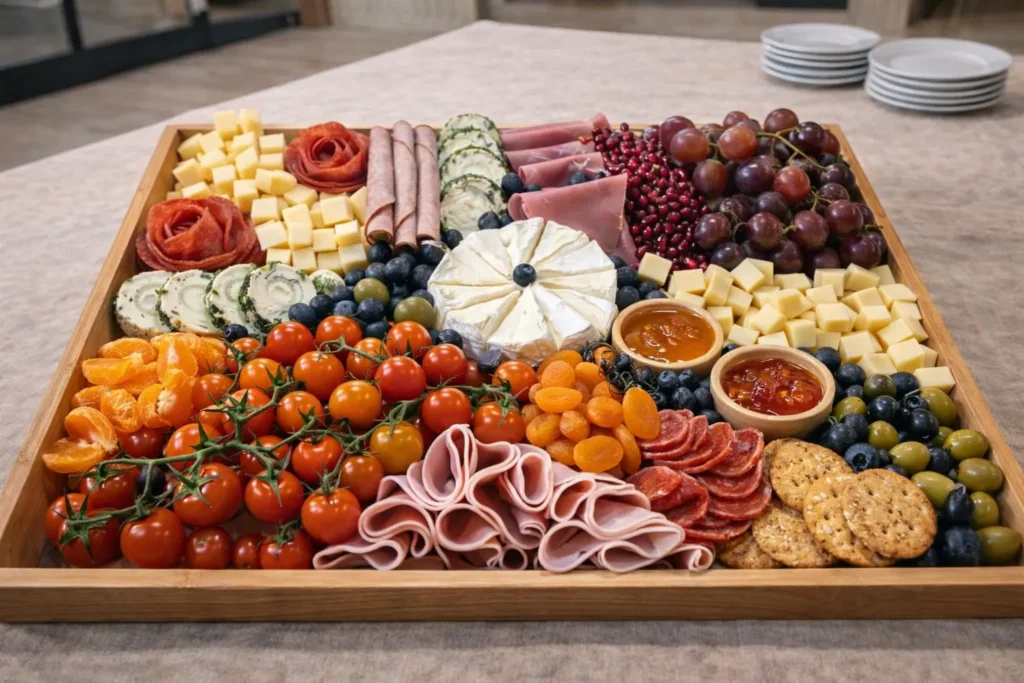
The Secret To A Wedding Charcuterie Table That Looks Romantic, Not Fussy
Wedding food can go left so fast. One minute, the vision is effortless romance. The next, the table looks like a craft project with a cheese budget. I say that with love.
A wedding charcuterie table needs softness, but it also needs backbone. Too many delicate touches, and the whole thing looks nervous. Too much rustic wood and burlap, and suddenly it’s giving farmstand at noon. There’s a middle ground, thank goodness.
I tend to start with color restraint. Weddings already have enough going on visually. Flowers, dresses, signage, candles, cake, somebody’s emotional aunt. The food table should support the mood, not compete with it.
That usually means I lean into:
- Neutral cheeses
- Deep red meats
- One or two soft fruit colors
- Light crackers and breads
- Green garnish used sparingly
- Serving pieces that don’t shout
The assumption people make is that romantic means dainty. I don’t think so. Romantic can still look abundant. In fact, abundance is part of the charm. Nobody looks at a sparse table and thinks, ah yes, love.
Texture matters even more than theme. Soft folds of prosciutto. Glossy grapes. Rustic bread slices. A whipped dip with a loose swirl. Those details create warmth without needing tiny labels tied with ribbon.
I also think romance lives in shape. Curves help. Meandering clusters help. Hard grids rarely do. A charcuterie grazing table for a wedding should guide the eye gently, not march it around like a school field trip.
And here’s the part people don’t expect. The most romantic table usually looks a little relaxed. Not sloppy. Just human. Like it expects guests, not judges.
That’s a very different vibe. It’s also the better one.
My Favorite Ideas When I Want It Pretty And Practical
Pretty is lovely. Practical is what saves the day. I want both, and I refuse to apologize for that. A table can be charming and still respect the fact that people need tongs, napkins, and a place to stand.
Some of my favorite graze table ideas come from solving boring problems before they become visible problems. Because once guests arrive, nobody wants to watch me hunt for a cheese knife like it’s a dramatic subplot.
I build practical beauty in layers. First comes the anchor food. Then the supporting bits. Then the useful pieces that should blend in so well they don’t scream utility.
That means I like:
- Small bowls for messy items
- Spoons inside sticky spreads
- Multiple cracker zones
- Separate stacks of plates and napkins
- Tiny signs only when needed
- Refill trays waiting offstage
Cracker zones deserve their own fan club, by the way. One pile is never enough. It creates a bottleneck, and people get weirdly polite around carbs. Spread them out. Let everyone live.
I’ve also found that dips do double duty. They soften the look of the table, and they make budget ingredients seem more generous. Hummus, whipped feta, pimento cheese, honey butter, herbed cream cheese. Suddenly, the spread reads fuller without buying six more cheeses.
Here’s the reframe. A diy grazing table should not ask guests to solve it. They shouldn’t need to wonder where to start, what pairs well, or how to reach the olives without invading someone’s elbow space.
The best tables quietly guide people. They make the next move obvious. That subtle ease is what makes the whole thing look expensive, even when it absolutely was not.
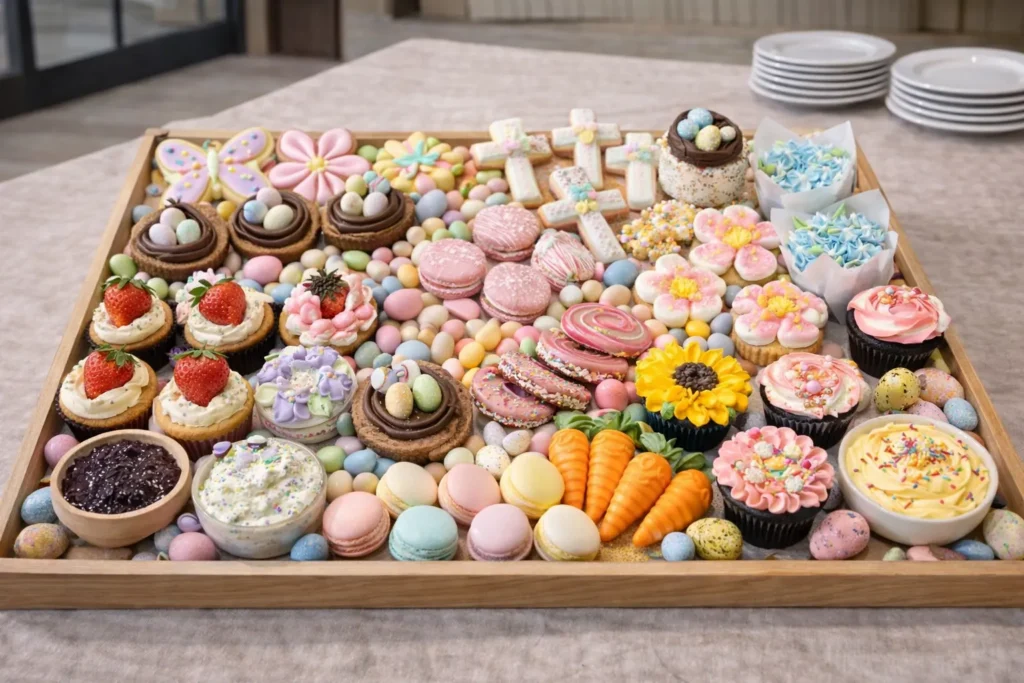

Table Charcuterie Board Styling That Makes Cheap Ingredients Look Good
This is my favorite little secret because it saves money and ego. A table charcuterie board does not need luxury ingredients to look good. It needs confidence, repetition, and a tiny bit of nerve.
I’ve seen expensive ingredients look flat because they were plopped down with zero charm. I’ve also seen grocery store cheddar look downright fabulous because someone sliced it cleanly and gave it good company.
That’s the game.
First, I stop apologizing for simple things. Cubed cheddar? Fine. Pretzel twists? Fine. Store crackers? Completely fine. Once they’re grouped with intention, they stop looking basic and start looking chosen.
I usually style affordable ingredients by focusing on:
- Clean cuts
- Repeated colors
- Tight little clusters
- A few loose, organic edges
- Bowls that upgrade the cheap stuff
- Garnishes that frame, not bury
The surprise is that garnish works best when it knows its place. I don’t want rosemary doing the most. I want it there to break a line, soften a corner, and then move along.
Another trick is mixing humble and polished elements on purpose. Put jam in a pretty ramekin. Slice apples thinly. Fold deli meat instead of stacking it flat. Break up crackers by shape, not brand. Suddenly, the whole diy grazing table starts looking considered.
And let me say this plainly. Price tags do not create atmosphere. Styling does.
That’s especially true for a simple grazing table. When the layout feels rhythmic, nobody’s asking whether the almonds came from a fancy market. They’re reaching for another handful because the table looks welcoming.
That’s the look people chase, except it isn’t complicated at all. Smart editing does the heavy lifting. Good spacing changes everything. Knowing where to let the cheap stuff shine is what makes it work.
The Best Ideas DIY Hosts Need
There are cute ideas, and then there are useful ideas. I enjoy both, but useful wins every time. A grazing board ideas diy list should make hosting easier, not give me twelve more things to wash.
So when I think about what actually earns a place on the table, I get picky fast. Some ingredients stay attractive longer than ten minutes, and those go to the front of the line. Serving pieces need to work hard too. I also love clever touches that don’t require a tiny construction crew.
That usually looks like this:
- Grapes instead of delicate berries in high heat
- Hard cheeses mixed with one soft option
- Salty snacks that don’t wilt
- Bread sliced small enough for easy grabbing
- One standout dip, not five confusing ones
- Honey or jam for contrast
- Dry fruit for color insurance
Color insurance is real, by the way. Fresh produce can turn moody. Dried apricots and dates never panic. I respect that.
I also think one unexpected item is enough. Hot honey can do the trick. Candied pecans work beautifully too. Even little pickles can wake up the whole table. After that, novelty starts to get noisy.
A lot of people assume more variety means better hosting. I think better hosting means better restraint. Guests don’t need a snack maze. They need a spread that makes sense at first glance.
That’s where the real charm lands. A charcuterie grazing table should look generous, yes. Still, it should also look easy to enjoy. Those are not the same thing.
When the table is thoughtful, people relax. Guests build a plate faster. Before long, they’re heading back for more. Better yet, they actually talk to each other instead of hovering in snack confusion!
And really, that’s the whole point.
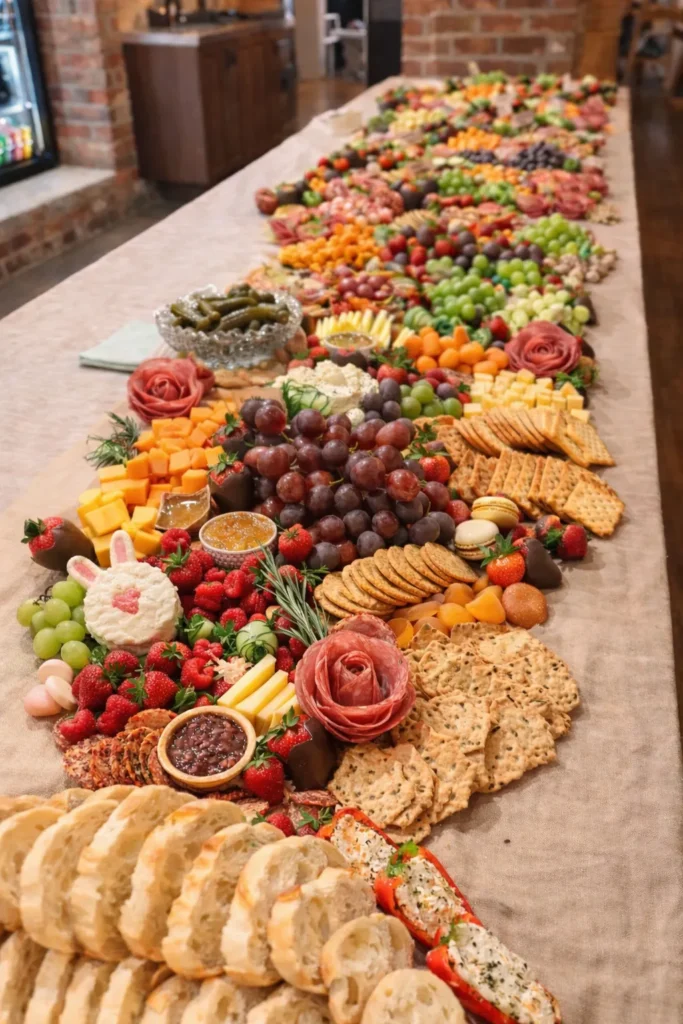
How to Achieve An Effortless Look (Even If It Wasn’t)
I’m always suspicious of the word effortless because it usually means someone definitely made a mess earlier. Still, a diy grazing table should look calm when guests see it. That’s the dream. Not perfection. Just calm abundance.
The easiest way to get there is not doing everything at once. I know. Revolutionary. But truly, the most stressed tables usually come from last-minute dumping. Crackers here. Meat there. Random strawberries tossed in like a prayer.
I’d rather build in passes.
First, I place boards, bowls, and anchors. Next, I add large items. Then the medium pieces. Tiny fillers come last. That order matters because it stops me from overfilling early and regretting it with nowhere left for bread.
I also give myself permission to leave breathing room. Not blank wasteland space. Just enough room so the eye can rest and the table can still look elegant once people start serving themselves.
A few things always help:
- Fold meats instead of flattening them
- Slice some cheeses, leave others chunky
- Use odd numbers for bowls and risers
- Tuck garnish near edges, not everywhere
- Refill low spots instead of rebuilding whole sections
That last one is a sanity saver. No guest expects a full reset. They expect the table to stay attractive and edible. Different goal.
Here’s the common assumption worth flipping. Effortless does not come from doing less. It comes from making fewer visible mistakes. Huge difference.
Once I understood that, my grazing table set up got better immediately. I stopped chasing perfection and started protecting the look. That’s how a spread survives a real party and still deserves a photo halfway through.
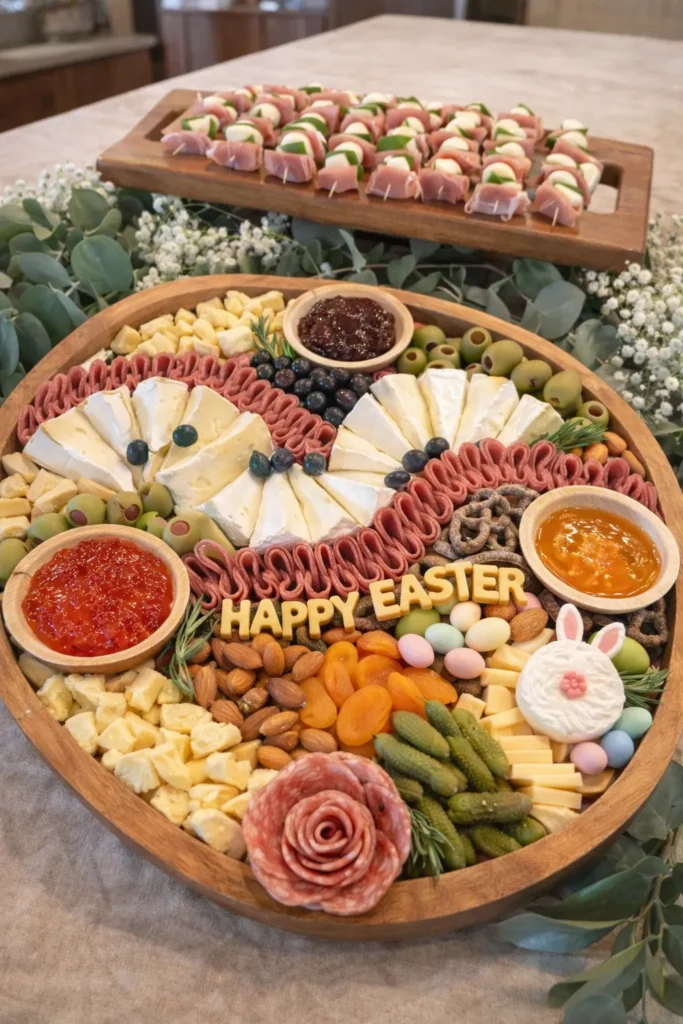
The Grazing Table Mood I Always Chase In The End
What I really want from a charcuterie grazing table has less to do with food than people think. Yes, I want the cheese to be good. I want the crackers to stay crisp. I want the salami to look cute without becoming a personality test. Still, the real goal is atmosphere.
I want the table to create that first little crowd. The casual one. The one where people lean in, point things out, and start talking before the room fully gets going. That moment matters. It loosens everything.
Living in Orlando has made me weirdly loyal to party setups that can survive real life, warm weather, and guests who show up hungry. Pretty food is nice. Pretty food that still works is better. That’s probably why I’m so drawn to a spread that looks generous without acting high-maintenance.
I also think Pinterest has made people believe every table needs to be a masterpiece. I love inspiration as much as anybody. But I don’t need a table that looks too precious to touch. I want one that pulls people in immediately and gets better once the party starts moving around it.
That’s why I keep coming back to this style. A charcuterie grazing table doesn’t just feed people. It sets the tone. It says the gathering is open, warm, and just indulgent enough to be fun.
And maybe that’s my favorite part. Done right, it doesn’t look like I tried too hard. It looks like I knew exactly what I was doing all along.