Some parties try too hard. A Bridgerton tea party does not need to. That’s the whole charm, really. It looks fancy, sounds fancy, and gives major duchess energy, yet it can still happen in a real house with real women and real life humming in the background. I love that. I also think we’ve all seen “elegant tea party” advice get weirdly stiff, like someone sucked the fun straight out of the teapot.
That’s not what I want.
I want the version that feels pretty, a little dramatic, and very alive. Romantic flowers matter more to me than anything fussy or overdone. Food should make people raise an eyebrow and say, well, this is adorable. More than anything, the whole thing should feel like a mood, not a museum display.
Living in Orlando, I notice people here understand themed gatherings almost instinctively. We know how to commit to a vibe without making it look tortured. That matters because a party like this can turn tacky fast if every detail starts screaming for attention.
And that’s where the fun begins.
A lot of people assume the secret is buying more stuff. I don’t think it is. In fact, some of the prettiest setups look almost suspiciously simple at first glance. First, you notice the little things. A minute later, the timing starts to register. Then the tiny bit of drama hiding in plain sight comes through.
That’s when it clicks.
A good tea party should flirt a little with excess, then pull back before it becomes silly. Easier said than done, obviously. Still, once you see what actually makes the whole thing sing, you stop chasing random decorations and start building something much better.
Some of the links on this page are affiliate links. That means if you click and make a purchase, I may earn a small commission at no extra cost to you. If you’re curious about the fine print, you can check out my full disclosure.
Why A Bridgerton Tea Party Works So Ridiculously Well
I’ve found that some party themes look better online than they do in a living room. This one somehow survives the trip. A Bridgerton tea party still feels charming when the chairs do not match and somebody’s purse lands on the table. That is rare.
Part of the magic sits in the contrast. It’s refined, but it’s also nosy. It’s delicate, yet slightly messy in spirit. Under all the lace and china, the whole thing runs on gossip, sugar, and side-eye. Frankly, that’s a solid foundation.
Most people think the visual appeal does all the heavy lifting. I disagree. The real draw is permission. This kind of party gives everyone permission to be a little extra, a little playful, and a little more dressed than the day requires. Women love that, and I say that with affection.
Also, tea parties have range.
They can be sweet and girly. Other setups turn moody and dramatic. Some lean pastel and fresh, while others look rich and candlelit. Because of that range, the theme works for birthdays, showers, girls’ nights, book clubs, and those gatherings where nobody needs a reason beyond I wanted to.
That freedom helps more than people realize.
It also solves a common hosting problem. Sometimes guests do not know how to enter the room, socially speaking. A stronger theme gives them something to step into. Suddenly, everything clicks into place. The tone feels clear. The energy reads instantly. Even better, everyone understands this is not a paper-plate, stand-by-the-island sort of afternoon.
And yes, that changes everything.
The funny part is that the party looks expensive before it actually is. That’s a useful little trick. With the right flowers, a few layered textures, and food that looks intentionally dainty, the whole setup starts whispering luxury without draining your bank account.
I respect a theme that can do both.
The Color Story That Makes A Bridgerton Tea Party Look Expensive
Color can save a party, and color can absolutely ruin one. There is no polite way to say that. A Bridgerton tea party needs romance, softness, and a tiny bit of swagger. It does not need every pastel in existence dumped into one room like a spilled candy aisle.
That is where people get in trouble.
The prettiest setups usually pick two or three main tones and stay loyal. Blush, lavender, dusty blue, buttercream, soft sage, and muted peach all play nicely together. Meanwhile, hot pink barges in like it owns the estate. Neon has its place. This is not it.
I tend to notice the room settles down when the palette does.
Once the colors behave, everything else looks more intentional. The plates seem prettier. The flowers look fresher. Even cheap napkins start acting like they came from somewhere with a manor house and a gate.
A few combinations work especially well:
- Dusty blue, cream, and pale gold
- Blush, sage, and soft ivory
- Lavender, butter yellow, and white
- Peach, rose, and antique gold
Now for the sneaky part. You need one grounding shade.
Without it, the whole table can drift into baby shower territory. That grounding shade might be deeper green, aged gold, soft brown wood, or even black handled flatware. Just a touch. Not a funeral. A contrast.
That small move changes the mood fast.
People often assume more color creates more beauty. I think restraint looks richer. When every piece competes, nothing wins. When the palette relaxes, the setup starts breathing. Then the flowers look romantic instead of frantic.
And that is the line, isn’t it?
A good party table should look like it naturally came together. It should not look like you panic-bought twelve things at once. The best color story gives old-money softness with enough edge to keep it from looking sugary.
That is the sweet spot.
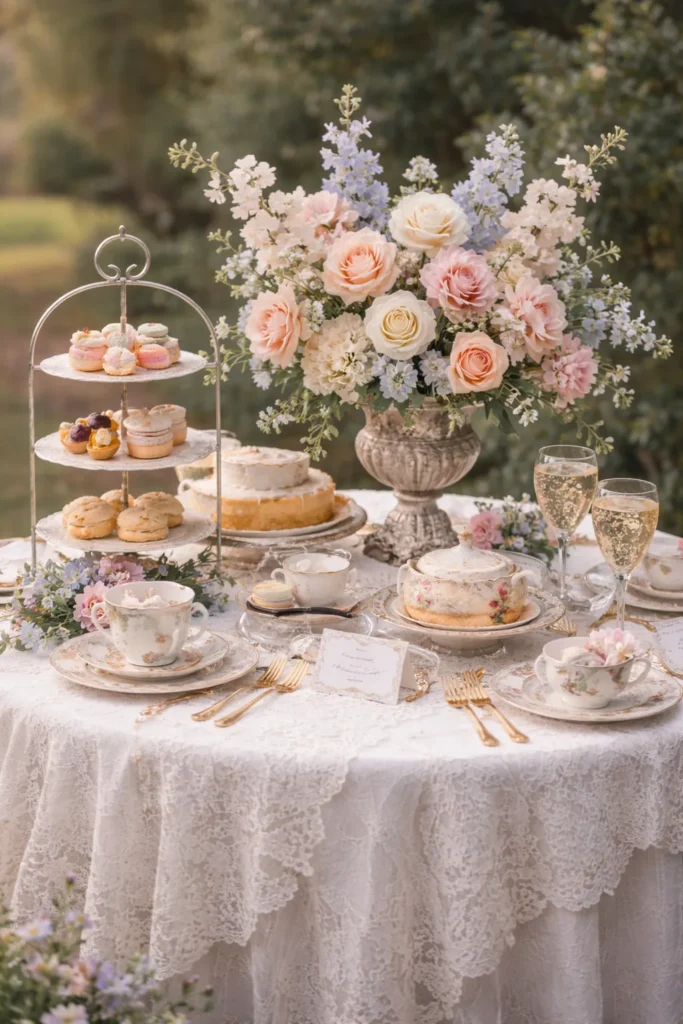
The Food Should Be Pretty, But It Also Needs Some Backbone
Pretty food gets all the attention, which makes sense. Tiny sandwiches and little cakes know how to pose. Still, I think a lot of tea party menus go too far into “fragile bite” territory. Then everybody eats three cucumber rounds and starts quietly hunting for actual substance.
I notice that every single time.
A Bridgerton tea party menu should look refined, but it should still eat like real food. That means balance. Give me beauty, yes, but also give me something that prevents guests from raiding the pantry an hour later.
That is not glamour. That is strategy.
The menu starts stronger when you mix soft, crisp, savory, and sweet. If everything tastes gentle, the table gets sleepy. You need a little salt, a little tang, and one item that practically winks when someone bites into it.
Here’s where I’d build that balance:
- Tea sandwiches with one classic filling and one richer option
- Scones with jam and cream, because obviously
- Mini quiches or tartlets for something warm and savory
- Fresh berries or grapes for brightness
- One dramatic dessert with visual flair
- One simple sweet that people grab without thinking
That last part matters more than it seems.
Hosts often chase novelty and forget familiarity. Yet familiar food calms a table. It gives people confidence. They will try the lavender cookie faster if an egg salad sandwich sits nearby acting normal.
There is also the issue of scale. Tiny food looks cute until it becomes annoying. A mini tart should still be worth the bite. A sandwich should not disappear like confetti. Delicate is lovely. Insignificant is not.
I’m a big believer in letting one food item steal the show.
Not seven. One.
That one “darling, look at this” moment could be a rose cake, a tray of sugared berries, or glossy little pastries. Then everything else can support it instead of staging a coup. Suddenly the table looks polished, and nobody has to fake enthusiasm over a dry cracker wearing cream cheese.
The Tablescape Is Where The Bridgerton Tea Party Either Sings Or Sulks
A table can hold food, or it can tell a story. That difference matters. With a Bridgerton tea party, the table should suggest a lovely little scandal might break out beside the sugar bowl. Too much? Maybe. Wrong? Absolutely not.
This theme needs atmosphere.
That does not mean clutter, though. I think people confuse “layered” with “crowded” all the time. They pile on teacups, cake stands, flowers, books, candles, pearls, ribbons, and random birds. Suddenly the table looks like a costume closet tipped forward.
No one needs that.
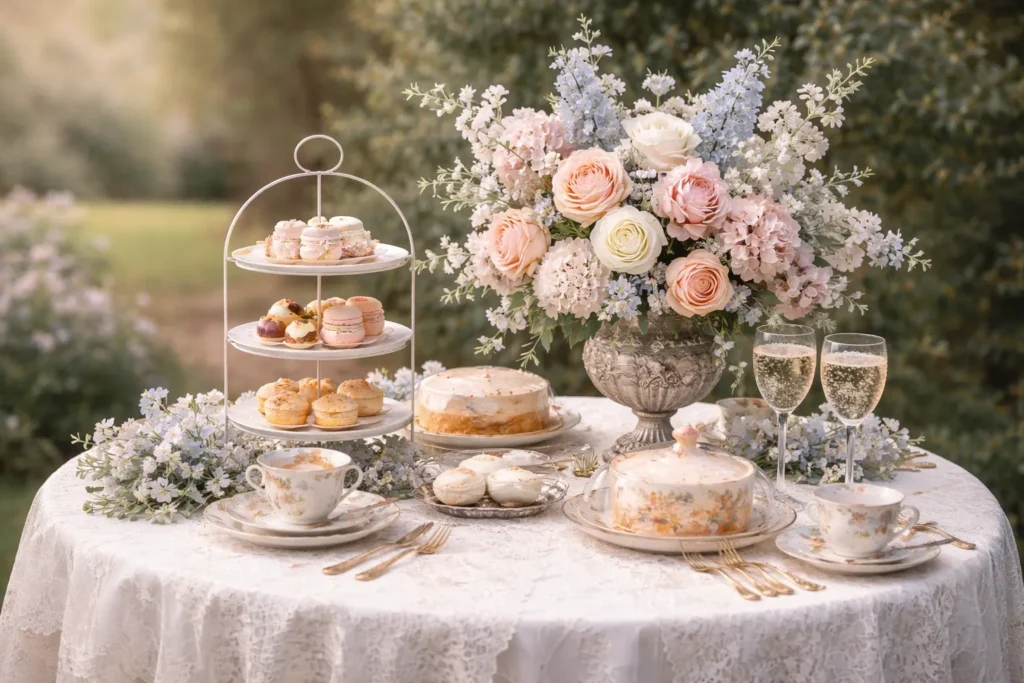
The best tablescapes give the eye places to rest. You want height, softness, and detail, but you also want breathing room. Otherwise, the whole setup looks stressed, and a stressed table is frankly contagious.
A few smart layers usually do the trick:
- A tablecloth or runner with softness, not stiffness
- Plates in white, floral, or trimmed patterns
- Mixed teacups if they share a general mood
- One or two lifted stands for height
- Low flowers that do not block conversation
- Taper candles for shape and a little drama
Notice what is missing? Random filler.
I do not think every empty inch needs decoration. Sometimes a folded napkin and a pretty spoon handle the job just fine. When every spot gets “something cute,” the eye stops caring. That is rude, but true.
I also think symmetry gets overrated here.
A slightly imperfect table feels more romantic than a rigid one. You want it curated, not frozen. Maybe the floral arrangement leans a little. Perhaps the cups mix without matching exactly. Even the ribbons should look tied by a person, not a machine having a nervous breakdown.
Then there’s the surprise factor.
One lovely detail can carry the whole mood farther than ten small ones. Handwritten place cards might do it. Peaches tucked into the flowers can be just as effective. In another setup, a cake stand that looks inherited may be the thing people remember. Whatever it is, that one memorable detail gives the table its little pulse.
And that is what people remember.

Let The Bridgerton Tea Party Borrow Its Personality From The Characters
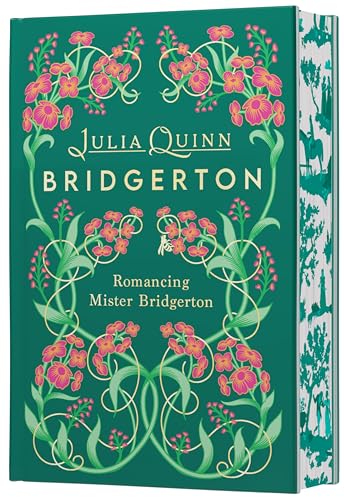
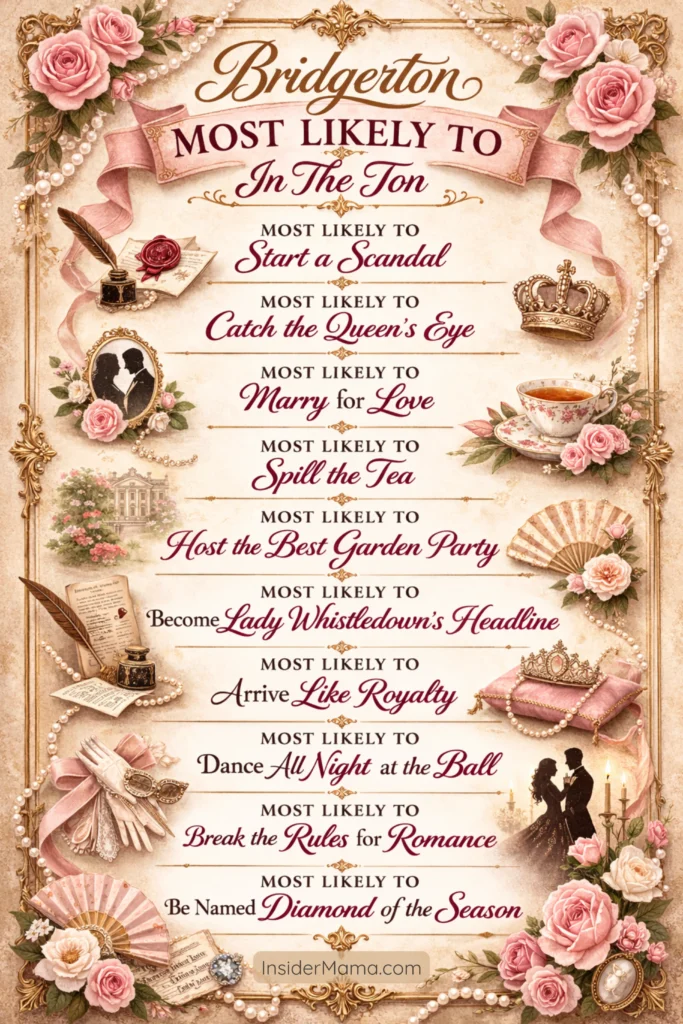
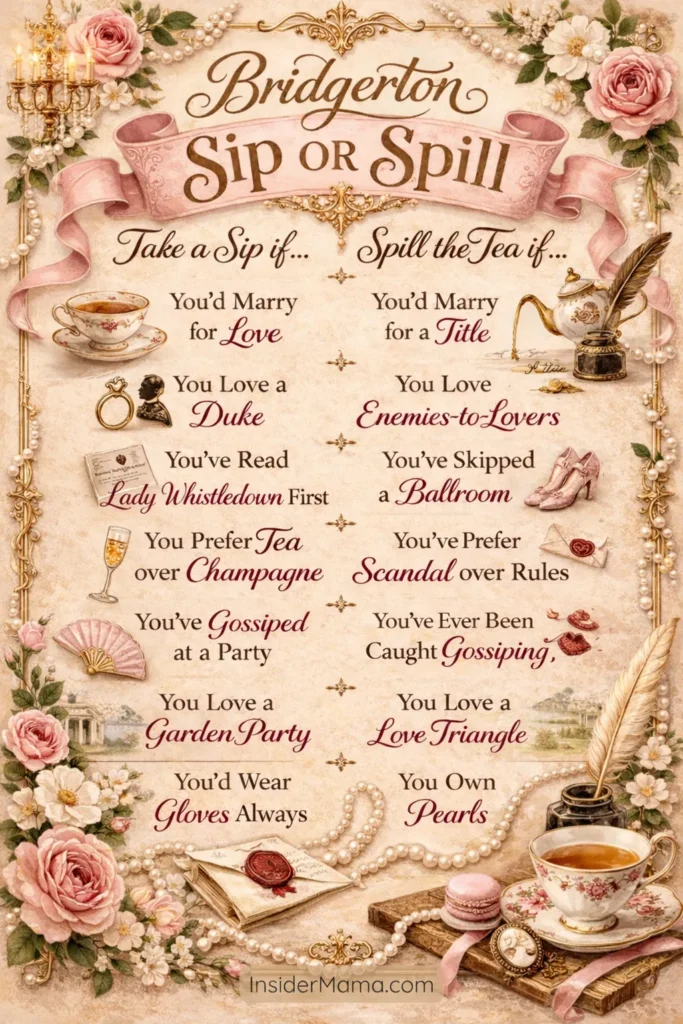
I think a Bridgerton tea party gets much better when the table starts borrowing actual personality from the characters. Otherwise, it can drift into generic pastel territory fast. The show is too specific for that, and that is exactly why the details should feel tied to people the audience already knows. Daphne brings polished sweetness, so I’d lean into soft blue details, delicate sandwiches, and flowers that look graceful without looking overworked.
Eloise should shift the tone a little because she is sharper and much less interested in pleasing a room. Because of that, I’d use one part of the table with cleaner lines, stronger tea, and details that look less precious. Kate Sharma adds depth, restraint, and confidence, so richer florals, deeper accent colors, and more tailored choices make sense around her influence. That contrast keeps the setup from looking too sugary.
Edwina fits the softer side of the table, so I’d connect her to romantic desserts, paler blooms, and the prettiest china in the room. Lady Danbury, though, deserves a stronger visual statement because every tea table needs one detail with authority. Her presence could come through darker candlesticks, bolder serving pieces, or one floral arrangement that quietly owns the table. Queen Charlotte should inspire the most theatrical touch in the whole setup, whether that means the tallest cake stand or the fanciest sweets.
Penelope Featherington gives you room for a hidden wink, and that is where the whole thing gets more fun. I’d work in one playful detail that rewards close attention, like cheeky menu wording or a folded note at each place setting. That is what makes the theme click. You are not just decorating a pretty table. You are building a room that actually echoes the cast.

The Dress Code Should Invite Fun, Not Trigger Panic
Nothing kills party momentum like guests texting, “Wait, what am I supposed to wear?” I’ve found that people love a dress code right up until it sounds difficult. Then suddenly everyone claims they own “nothing like that,” even while standing in front of a closet full of options.
A Bridgerton tea party dress code should open doors, not close them.
That means suggestion over pressure. You want people inspired, not cornered. If the invite reads like an audition notice, some women will opt out emotionally before the tea even steeps.
That would be tragic. Preventable, but tragic.
I like to frame the look as romantic, floral, soft, or garden-party pretty. That gives direction without making anybody chase a corset online at midnight. Some guests will go full duchess. Others will wear a sundress and earrings and call it done. Both can work beautifully.
A flexible dress note might include:
- Florals, lace, or puff sleeves
- Pastel shades or soft neutrals
- Pearls, ribbons, gloves, or pretty hair clips
- Tea-length dresses or flowy skirts
- Dressy flats, sandals, or low heels
- Optional “go extra if you want” encouragement
That last part helps more than you’d think.
Women want permission both ways. They want permission to dress up and permission not to overdo it. Once they have both, they usually land in a happy middle that looks charming in photos and comfortable in real life.
I also think the accessories do more work than the outfit itself. A simple dress can turn instantly more theme-friendly with pearl earrings, a ribbon, or a tiny handbag that looks mildly impractical. And yes, mildly impractical is often part of the appeal.
The common assumption is that period-inspired means costume. I don’t buy that. Costume feels literal. Style feels suggestive. The second one always looks better. A good tea party outfit should nod at the theme, not hit it over the head with a parasol.
That is a very important distinction.

Flowers, Fruit, And Tiny Details Do More Than Fancy Rentals
I love a rental list as much as the next woman, but I do not think rentals always deserve the spotlight. Sometimes the prettiest part of a Bridgerton tea party is the thing that looks almost accidental. A bowl of pears. A drooping rose. A ribbon tied a little crooked.
That kind of detail has charm.
Big decor pieces can be impressive, yet tiny touches make people lean closer. And when guests lean closer, the party starts working on a different level. It becomes something they notice instead of something they merely attend.
That is a strong shift.
Flowers, for starters, do not need to be formal to be beautiful. In fact, formal arrangements can look too polished here. I prefer garden-style bunches that look soft and slightly unruly. Let the blooms spread a bit. Let them look alive.
Fruit helps in the same way.
There is something absurdly pretty about fruit on a tea table. Maybe it is the old painting energy. Maybe it is the color. Either way, peaches, grapes, pears, figs, and berries all bring richness without making a scene.
Some easy details carry surprising weight:
- Satin ribbon tied around folded napkins
- Fruit tucked beside flowers or dessert stands
- Small framed quotes on the table
- Sugar bowls, jam jars, and creamers with shape
- Vintage books stacked under serving pieces
- Place cards written by hand
None of that needs to cost a fortune.
Actually, that is the whole point. People assume elegance demands expensive pieces, but I think styling matters more. When ordinary items get grouped with intention, they suddenly look collected rather than random. That’s a useful trick in any home.
Also, tiny details soften the edges of a setup.
Without them, the party can look like rented furniture waiting for a personality. With them, the room starts telling a story. Not a loud story. A murmured one. And frankly, murmured stories usually sound more interesting than shouted ones.

The Entertainment Should Nudge The Mood, Not Hijack It
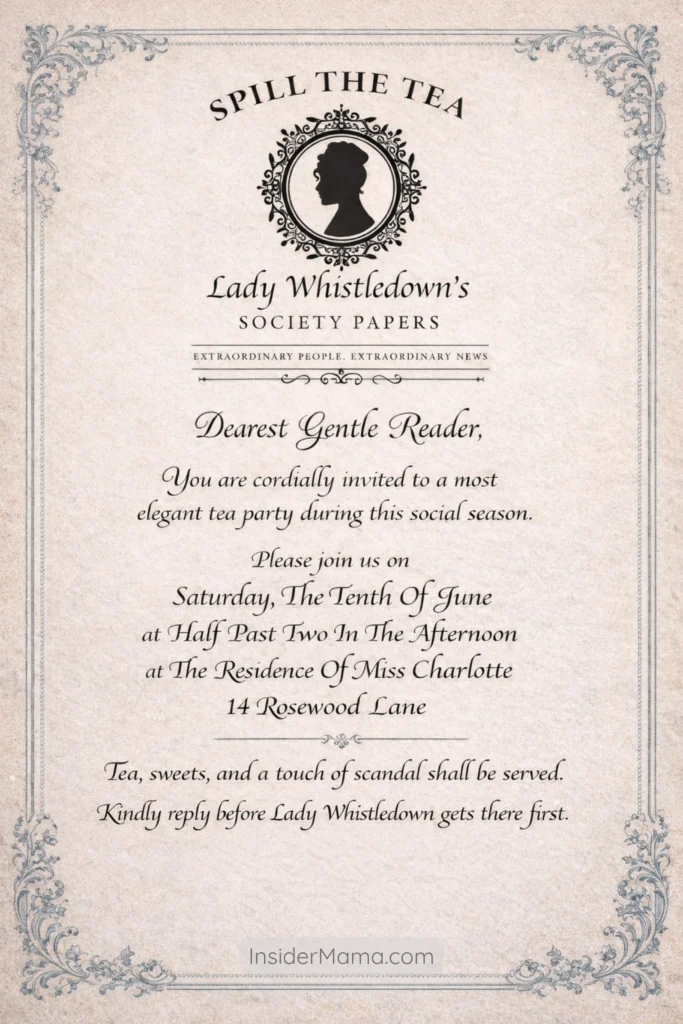
This is where hosts get tempted to overproduce. I get it. A theme this pretty makes people want games, scripts, playlists, favors, maybe a printed “society paper” by the plates. Suddenly the party starts auditioning for dinner theater.
That is dangerous territory.
A Bridgerton tea party works best when the entertainment supports the room instead of dominating it. Guests should talk more than they perform. The gathering needs a pulse, not a program.
I think that distinction saves the whole afternoon.
Music matters first. Soft instrumentals, classical covers, or light string pieces can shape the room beautifully. Once the soundtrack behaves, people start speaking in their “I’m being charming” voices without even noticing.
That alone is hilarious and useful.
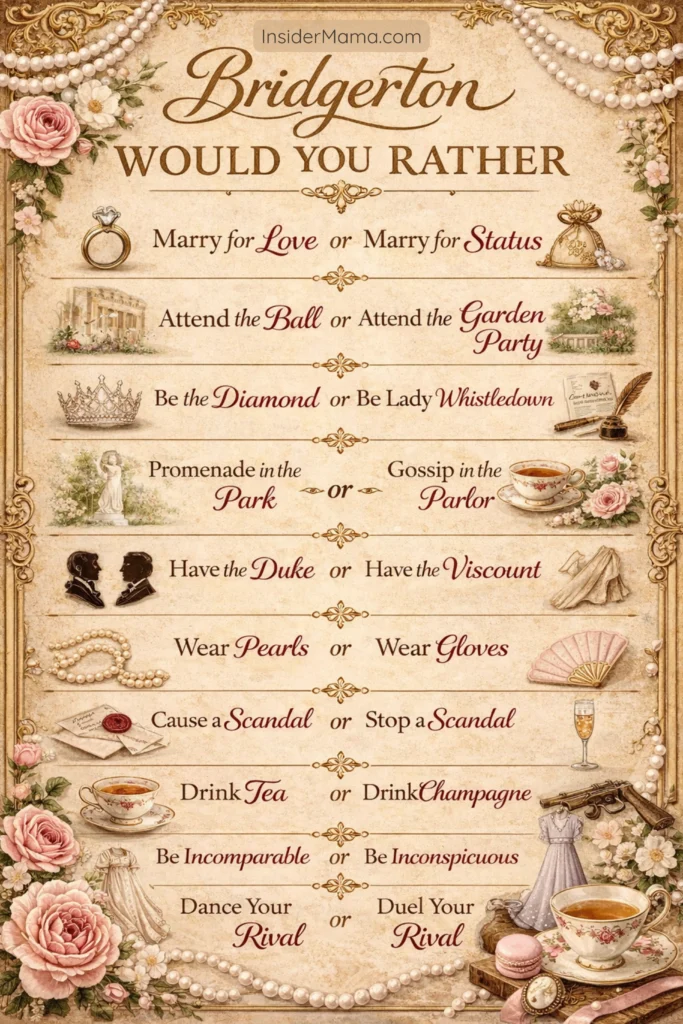
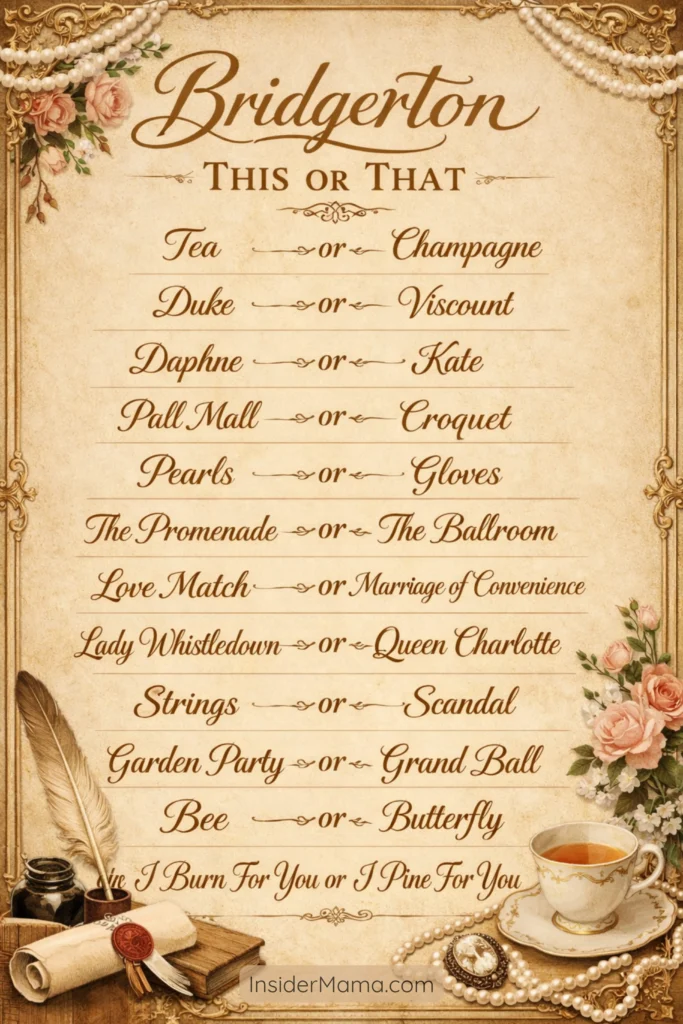
If you want more than music, keep it gentle:
- A teacup toast with one sweet line from each guest
- A favorite love story or period drama recommendation card
- A flower station for tiny take-home posies
- A “diamond of the season” ribbon or silly paper award
- A few conversation cards near the sugar and cream
Notice what is missing again? Complicated rules.
I do not think every gathering needs activities with instructions. Sometimes the room already has enough life in it. Too many planned moments can make guests self-conscious, and self-conscious guests are never the life of the party.
The better approach is giving people something to reach for if conversation dips.
That is why tiny prompts work so well. They sit quietly until needed. Then, when the table hits that little lull, someone reads one aloud and the whole thing picks back up without strain.
Also, a silly moment helps.
Not chaos. Not karaoke. Just one wink. A goofy title card. A mock etiquette note. A tiny dramatic flourish that says we are in on the joke. That kind of humor keeps elegance from turning stiff, and stiffness is the quickest route to a pretty but forgettable event.
The Budget Version Can Still Look Like Old-Money Daydreams
I think people get intimidated by this theme because they picture imported china, florist invoices, and a cake that arrives with security. Meanwhile, some of the loveliest setups come together from thrift stores, grocery flowers, and a host with good judgment.
That is the part nobody says loudly enough.
A Bridgerton tea party does not need elite money. It needs editing. There is a difference. Luxury is not always about spending more. Sometimes it is just about removing the obvious signs of haste.
That alone can change the whole room.
Thrifted teacups help. Plain white plates help. So do cloth napkins, grocery store roses, and cake stands borrowed from friends. Once everything shares a mood, the eye starts connecting the dots kindly.
Here is where I’d save without wrecking the look:
- Use sheet cake cut neatly instead of ordering custom desserts
- Buy flowers in one or two shades, not five
- Mix thrifted cups with simple neutral plates
- Use fruit as decor instead of extra table fillers
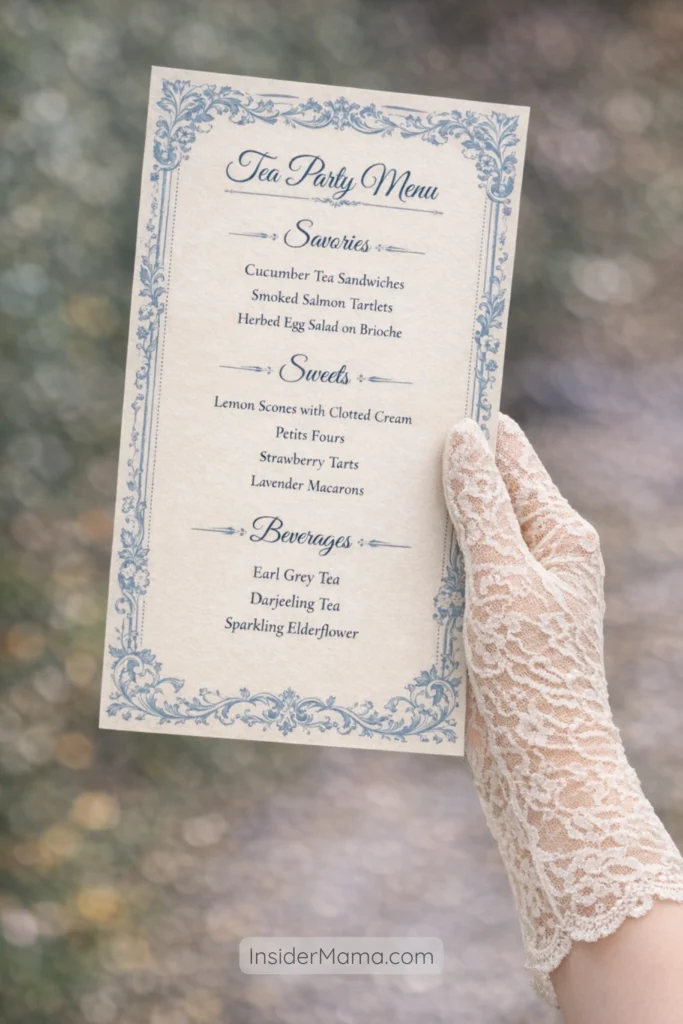
- Print menus or cards at home on textured paper
- Serve one standout tea and one crowd-friendly backup
That last one matters, by the way.
Guests love choices until choices look like chaos. Two teas can look intentional. Seven starts looking like a break room. I said what I said.
I also think fabric does more than fancy objects. A good runner, napkins with softness, or ribbon in the right color can lift an entire table faster than another tray of props. Texture is sneaky like that.
The biggest budget mistake is trying to recreate every detail at once.
You do not need to. In fact, trying too hard often cheapens the result. Better to pick a few details that carry weight and let them do their jobs. That restraint reads richer than an overstuffed setup ever will.
And yes, that is mildly unfair. Still true.
What Guests Actually Remember From A Bridgerton Tea Party
Hosts remember logistics. Guests remember moments. I think that difference explains so much. You might spend two hours worrying about cups, but guests usually leave talking about the candlelight, the cake, the flowers, or that one friend who committed very hard to pearls.
That is useful perspective.
A Bridgerton tea party lands when it gives people a little escape hatch from normal life. Not a giant one. Just enough. Enough softness, enough beauty, enough playful ceremony to make an ordinary afternoon feel slightly enchanted and a little ridiculous in the best way.
That is the sweet little trick.
People remember how the room made them behave. Lowered voices become part of the mood. Tiny desserts suddenly get treated with great seriousness. Even better, the setting gives everyone permission to be silly and elegant at once, so the laughter comes easier.
That blend is memorable.
They also remember one visual.
Sometimes the memorable thing is flowers spilling out of a pitcher. Other times, it’s sunlight catching the glasses. In another setup, a tower of desserts may look too pretty to touch until someone finally does. You do not need twenty standout details. You just need one or two worth noticing.
That is a relief, frankly.
A common assumption says guests mostly care about convenience. I think they care about atmosphere more than they admit. Not perfection. Not polish. Atmosphere. They want to walk into something that clearly has a point of view.
And when they do, they settle in faster.
That is why the best parties linger after they end. People carry them home in little fragments. A phrase. A color. A bite of cake. A thought like, “That was adorable, and now I want to host one too.”
Honestly, that might be the nicest outcome.
Not envy. Inspiration.
When a gathering makes people want to create beauty of their own, it did more than entertain. It nudged something awake. That is why this theme keeps pulling women in. It is not just pretty. It is persuasive.
The Real Secret Is Letting It Be A Little Extra
I think that is why I love this idea so much. A Bridgerton tea party gives women permission to lean into beauty without apologizing for it. That matters. So much of life runs on practical choices, fast meals, rushed outfits, and “good enough” tables. Then something like this comes along and says, what if we made the afternoon prettier on purpose?
I’m very into that.
Living in Orlando, I’m surrounded by places that understand immersive details, and that has changed my eye. I notice now when a setup commits halfway and when it fully leans in. Pinterest works the same way, honestly. The prettiest ideas are not always the biggest ones. They are the ones who know exactly what mood they want.
That still feels true here.
I do not think hosting needs to become a performance. Yet I also do not think we should keep shrinking lovely things until they become bland. There is room between stressful perfection and boring convenience, and this kind of party lives right there in the middle.
That middle is delicious.
Maybe that is the real appeal. Softness gets to be smart. Charm still has structure. Even a table of tea, flowers, and little pastries can carry real personality instead of just looking nice.
And nice is not enough.
I want memorable. I want guests reaching for one more photo. Even better, I want someone going home still thinking about the cake stand, the ribbons, or the way the table looked at three in the afternoon. That kind of image sticks.
So yes, I love a theme with old-world romance and a tiny wink.
Not because it is serious. Because it is not. This kind of party knows it is extra. Pearls at noon are mildly dramatic, and tiny desserts make grown women weirdly happy. That self-awareness is part of the charm.
And really, if we are going to gather, we might as well make it gorgeous enough to gossip about later.